In a nutshell
- 🍯 Sugar water attracts bees by mimicking nectar rich in carbohydrates; keep it a temporary aid, with garden offerings around 10–20% concentration to avoid drawing foragers from flowers.
- 🧪 Mix safely: use white granulated sugar only, dissolve in hot water and cool; provide landing spots; for an exhausted bee, offer a tiny 1:1 drop; beekeepers feed 1:1 (spring) and 2:1 (autumn) but never open-feed.
- 📍 Prioritise placement and hygiene: shallow dishes in shade, away from doors; replace daily, clean thoroughly, avoid dyes; use ant moats and be vigilant about fermentation and wasp attraction.
- 🌱 Balance aid with ecology: continuous syrup can distort behaviour and spread pathogens; focus on diverse forage, clean water, and habitat, keeping sugar water as a short-term intervention.
- 🌼 Plant UK-friendly winners—lavender, borage, thyme, rosemary, comfrey, foxglove, heather, and single-flowered roses—to deliver season-long nectar, with sugar water only as a strictly short-term backup.
Gardeners have long used sweet scents to beckon wildlife, and few visitors are as valuable as bees. A modest dish of sugar water can act like a beacon, mimicking the floral rewards bees naturally seek while giving observers a front‑row view of pollination in action. Yet this tactic demands restraint. Too much sweetness, in the wrong place, at the wrong time, can stress bee communities and skew their foraging. Used judiciously, though, it can provide a short boost during lean spells or refresh an exhausted bee. Think of sugar water not as a staple, but as a short, carefully managed invitation.
Why Sugar Water Draws Bees
Bees are guided by scent, colour, and the promise of carbohydrates. Nectar is their natural fuel, a blend of sugars—primarily fructose, glucose, and sucrose—diluted in water and enriched with trace compounds. A simple sugar-water solution reproduces the critical cue: accessible energy. When placed outdoors, it emits a faint, sweet signal that scouts can detect. They share locations via the waggle dance, routing foragers toward dependable food. That repeatability is precisely why a sweet mixture can be persuasive—and why it must be used sparingly.
Not all sweetness is equal. Bees select nectar with sugar concentrations typically ranging between 15% and 50%, depending on species and flower. Too dilute, and they waste energy evaporating water; too concentrated, and it becomes hard to drink. A light 10–20% sugar solution can pique curiosity without acting like a high-calorie siphon drawing bees away from blooms. Crucially, sugar water lacks pollen, minerals, and phytochemicals that flowers provide, meaning it cannot replace diverse forage. The best role for a sweet mix is temporary: a stepping stone in tough weather or a lab-like aid when observing bee behaviour in a controlled moment.
Safe Ratios, Timing, and Placement
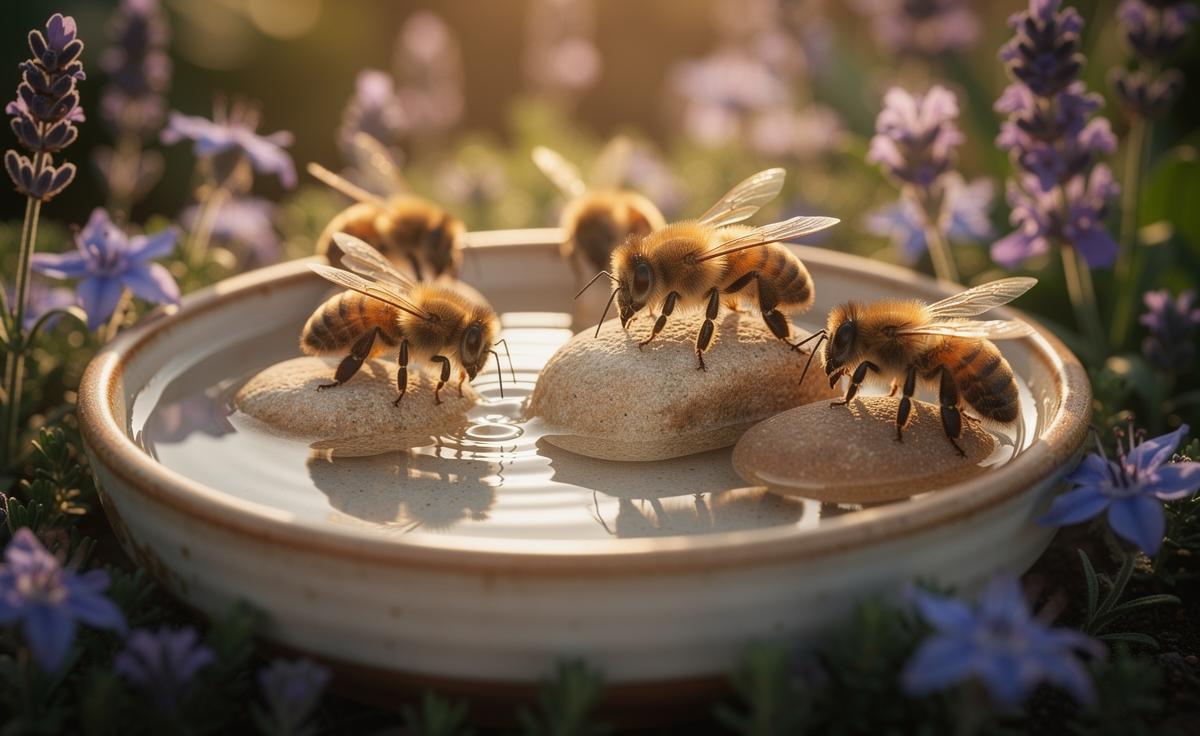
Success with sugar water is mostly in the details. Use white granulated sugar only—never honey, brown sugar, or artificial sweeteners, which can introduce pathogens or harm bees. Dissolve in hot, not boiling, water and let the mixture cool fully before offering. For garden observation or a brief energy boost, aim for 1 part sugar to 9 parts water (roughly 10%). For beekeepers feeding inside hives, different ratios (1:1 in spring, 2:1 in autumn) have distinct aims, but open feeding near hives is discouraged because it can cause robbing and spread disease. Always provide landing spots—pebbles, corks, or marbles—so bees don’t drown.
| Purpose | Suggested Ratio | Location | Change Frequency |
|---|---|---|---|
| Garden observation/occasional boost | 10–20% (1:9 to 1:4) | Shallow dish with pebbles, away from doors | Daily; discard leftovers |
| Emergency aid for a single exhausted bee | 1 drop of 1:1 on a spoon | On the ground, near the bee | One-off; remove after recovery |
| Beekeeper hive feeding (not open) | 1:1 spring, 2:1 autumn | Inside feeder, sealed from robbers | As needed; keep scrupulously clean |
Placement matters. Keep dishes in dappled shade to slow fermentation, at least five metres from doorways, and away from bird baths. Replace the mix daily, clean with hot water, and never dye the solution. Consistency and hygiene are non-negotiable because spoiled syrup can harm bees and attract wasps. If ants are an issue, elevate dishes on a stand with a water moat. Most importantly, think seasonally: in spring and summer, prioritise real flowers; reserve sugar water for cold snaps or drought, then taper off as blossom returns.
Balancing Aid With Ecology
The temptation is to keep the sweet tap flowing. Don’t. Continuous sugar-water feeding can distort bee behaviour, inflate wasp numbers, and mask gaps in your planting. Bees need more than calories; they require protein-rich pollen, micronutrients, and the chemical signals that help them navigate landscapes. Over-reliance on syrup erodes this ecological rhythm. There’s also a pathogen risk. Shared dishes increase contact between colonies, potentially spreading disease. That risk scales rapidly in warm weather when fermentation quickens and more insects crowd in.
So, think like a steward. Use the sweet mix as a short-term intervention, then invest your energy where it pays longest: plants. Lavender, borage, thyme, rosemary, comfrey, foxglove, heather, and single-flowered roses thrive in UK gardens and deliver nectar across seasons. Leave a shallow water source with stones for safe perching. Let a corner go a little wild. In high streets and balconies, window boxes of herbs can be transformative. If you keep bees, coordinate with local associations and avoid open feeding. The guiding principle is simple: create habitat first; keep sugar water as a carefully managed exception.
Sugar water can lure bees, quickly and visibly, and in rare moments it can save a single struggling forager. Yet the real magic lies in long-term abundance—living soil, continuous bloom, clean water, diverse structure. Treat a sweet dish like a match struck in the wind: brief, bright, useful, then gone. Build the hearth with plants. Your garden becomes a refuge when nectar and pollen, not syrup, do most of the talking. What will you plant, place, or change this season to invite pollinators sustainably while keeping that sugar-water safety net strictly short-term?
Did you like it?4.6/5 (29)