In a nutshell
- 🦋 Why it works: Fermenting orange peels release sugars and volatile compounds that attract Red Admiral, Comma, and Peacock butterflies, especially during the nectar gap.
- 🍊 Setup tips: Halve oranges to leave a shallow cup of pith, place on a dish in dappled shade, elevate to deter ants, refresh aroma by bruising, and replace every 2–3 days—never use mouldy peel.
- 🧼 Hygiene & risks: Keep stations small, clean, and seasonal; manage wasps, ants, and rodents with portion control and smart placement; rinse with hot water, not detergents.
- 🌱 Beyond citrus: Pair fruit with nectar plants (marjoram, sedum, verbena, ivy) and larval hosts (nettles, violets) to build habitat—fruit is a supplement, not a substitute.
- 📝 Seasonal strategy & tracking: Use fruit to bridge spring–summer–autumn gaps, observe which species visit, log sightings in the Big Butterfly Count, and adjust placement as patterns emerge.
Left with a bowl of orange peels after breakfast? Don’t bin them. Set them outside and watch as a small corner of your garden turns into a butterfly pit-stop. In the UK, late summer and early autumn often bring a nectar gap, when some borders tire and fewer flowers are in bloom. That’s precisely when fermenting fruit shines. Its sweet scent carries, its sugars fuel flight, and its moisture helps on hot days. Leftover citrus can offer a natural, low-cost boost for visiting pollinators without reshaping your planting scheme. It’s simple, practical, and oddly satisfying. Here’s how to make it work.
Why Butterflies Love Orange Peels
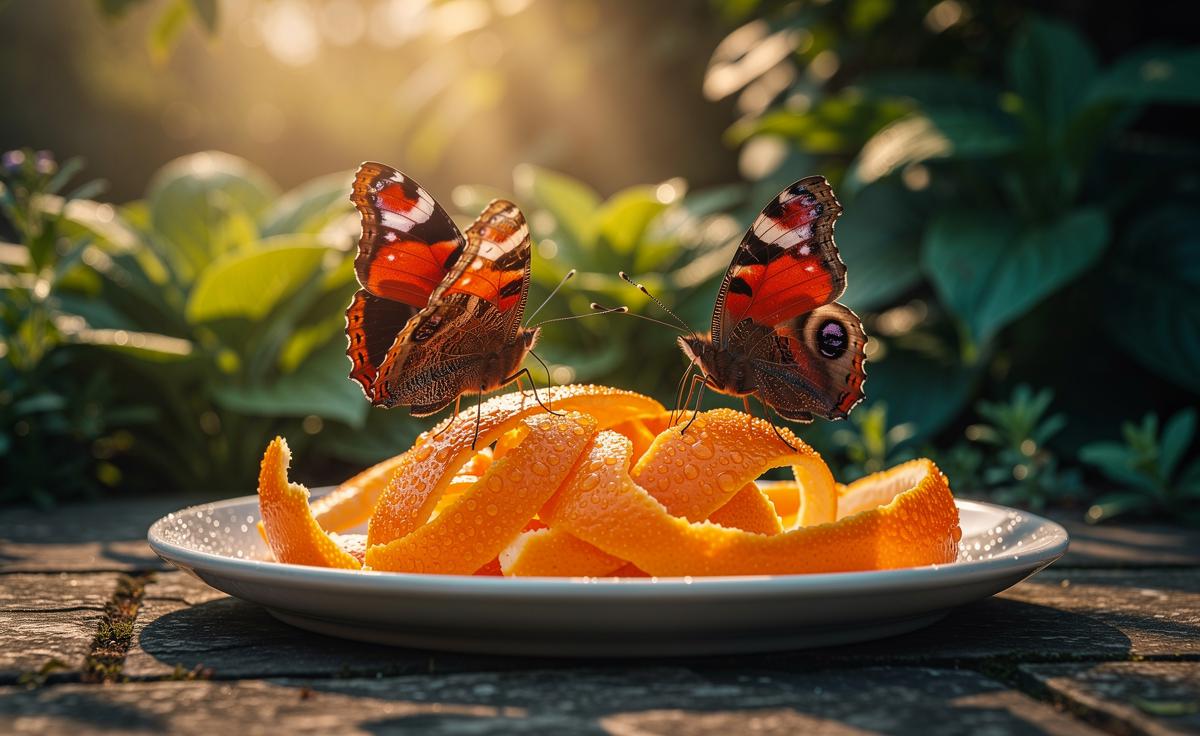
At the core is chemistry. Orange peels hold fructose and glucose. As they sit, yeasts on the surface kick-start gentle fermentation, releasing volatile compounds that travel on the breeze. Butterflies such as Red Admiral, Comma, and Peacock readily investigate these cues, much like they do tree sap or fallen plums. To a nectar-seeker at dusk or during a dry spell, ripe citrus smells like opportunity. The pith also retains moisture, and a thin film of juice provides easy sipping for a delicate proboscis.
There’s more than sugar at play. Trace minerals in the peel and juice support metabolism, while faint bitterness from citrus compounds doesn’t deter most fruit-feeding visitors. You might see males “puddling”, taking in salts that help with reproduction. The bright colour helps too. A bright disc on a muted patio stands out, acting like a visual flag amid tired foliage. Short distances, low effort, high reward.
During “hungry gaps”, fermenting fruit can outcompete flowers for attention. That doesn’t mean citrus replaces blooms. It’s a timely supplement. When your buddleia fades, an orange station can keep butterflies in the garden for longer, offering a reliable refuelling point before migration or hibernation.
How to Prepare and Place Orange Peel Feeders
Start with clean fruit. Halve an orange, scoop or score out most of the flesh, and leave a shallow cup of pith. The aim is a soft, juicy surface without large chunks that tip or rot too fast. Place the peels on a shallow saucer or a scrap of bark to stop them sticking to paving. A light press with a spoon releases extra juice. Keep it simple: peel, plate, shade.
Position matters. Choose dappled shade—under a shrub or by a fence—so the peel doesn’t bake dry. Raise the plate on a pot or small stake to reduce ant traffic and keep it clear of splashing soil. For balconies, use a small tray secured with a clip to avoid wind flip. Replace peels every 2–3 days in warm weather. Rinse the dish. Never use mouldy peel; blue or fuzzy growth is a no for butterflies and for hygiene.
Go light on quantity. One or two peel cups are plenty for a small garden. If wasps crowd the station, move it a few metres away from seating. Avoid scented cleaning products, pesticide residues, or copper-based fungicides nearby. A tiny droplet of water on the plate’s edge offers a safe sip. In cool spells, gently bruise the pith to refresh the aroma.
Balancing Benefits and Risks: Hygiene, Pests, and Predators
Like any wildlife feeding, fruit stations work best when kept tidy and temporary. Small, clean, and slightly shaded beats big, sticky, and neglected. Overripe fruit can pull in wasps, flies, and slugs. That’s not inherently bad—gardens are ecosystems—but you’ll want to manage where the action happens. Keep peel stations several metres from doors and play areas. Remove peels before heavy rain to avoid a sugary slurry that ferments too hard. Rinse plates with hot water, not detergent, and let them dry in the sun.
| Issue | Why It Matters | Action |
|---|---|---|
| Mould | Can deter butterflies; signals neglect | Replace peels promptly; hot-water rinse |
| Wasps/Ants | Crowding, stings near seating | Move station; elevate plate; keep portions small |
| Rodents | Unwanted night visitors | Bring peels in at dusk; no large fruit piles |
| Cats/Birds | Predation risk to resting butterflies | Place near cover; avoid open lawns |
Keep fruit stations short-term and seasonal. Use them as a bridge during late summer, heatwaves, or after storms when blooms are shredded. Avoid sticky traps or sprays anywhere nearby. You’re curating a brief, fragrant oasis—one that invites butterflies without rewriting the whole food web.
Beyond Oranges: Complementary Plants and Seasonal Strategy
Orange peels are a catalyst, not a cure-all. The most reliable way to welcome butterflies is to pair fruit with long-flowering nectar plants and larval host species. In sunny borders, try marjoram, scabious, knapweed, and sedum. Ivy blossom is a superb late-season source; so are heathers on poor soils. Buddleja is a classic, though you can balance it with hemp-agrimony and verbena for varied bloom times. For caterpillars, dog violets, nettles, and bird’s-foot trefoil support common garden species. Fruit is a supplement, not a substitute for habitat.
Think in seasons. Spring needs primroses, aubretia, and wallflowers. Summer wants lavender, oregano, and echinacea. Autumn calls for michaelmas daisies and ivy. Between these peaks, use oranges, apples, or banana slices to bridge gaps. On patios, compact containers—thyme, heliotrope, dwarf buddleja—give colour and nectar in tight spaces. In orchards or allotments, a few windfalls left under a tree can deliver the same effect as a peel plate, with less fuss.
Record what appears. Red Admirals often lead the charge; Commas and Speckled Woods aren’t far behind. Log sightings during the Big Butterfly Count to turn your fruit station into citizen science. Adjust placement and timing as you learn. A week of warm evenings can transform a quiet corner into a lively, winged salon.
With a couple of spare peels and a clean saucer, you can spin household waste into a nectar lifeline for butterflies that need an easy drink. It’s quick. It’s frugal. It teaches you to read the seasons, and it invites children to watch wildlife up close. Keep it tidy, keep it small, and keep it seasonal. What will you pair with your orange peels this year—new nectar plants, a shaded perch, or a log pile to turn a quick visit into a thriving habitat?
Did you like it?4.4/5 (28)