In a nutshell
- 🦋 Why it works: Sugar water mimics flower nectar (ideal 10–12% sugars: sucrose, glucose, fructose), giving fast energy; butterflies taste with feet/proboscis, so offer a sponge or wick for safe sipping.
- 🧪 Mix & serve: Use white granulated sugar at 1:9, dissolve in hot water and cool; avoid honey, brown sugar, dyes, and sweeteners; place in morning sun and refresh frequently (daily in heat).
- 🧽 Hygiene & setup: Clean feeders often (daily in hot spells, every 48 hours when cool), scrub if slimy; keep feeders small, use ant moats, and replace any overripe fruit regularly to prevent mould.
- 🌼 Garden design: Ensure succession planting—buddleia, verbena, marjoram, scabious, knapweed, ivy, sedum—and host plants like nettles and buckthorn; add basking stones and a mineral-rich puddling tray.
- 👀 Results & responsibility: Expect Peacock, Red Admiral, and Small Tortoiseshell; feeders should complement natural forage; avoid pesticides and pick warm, calm, visible spots to boost safe visits.
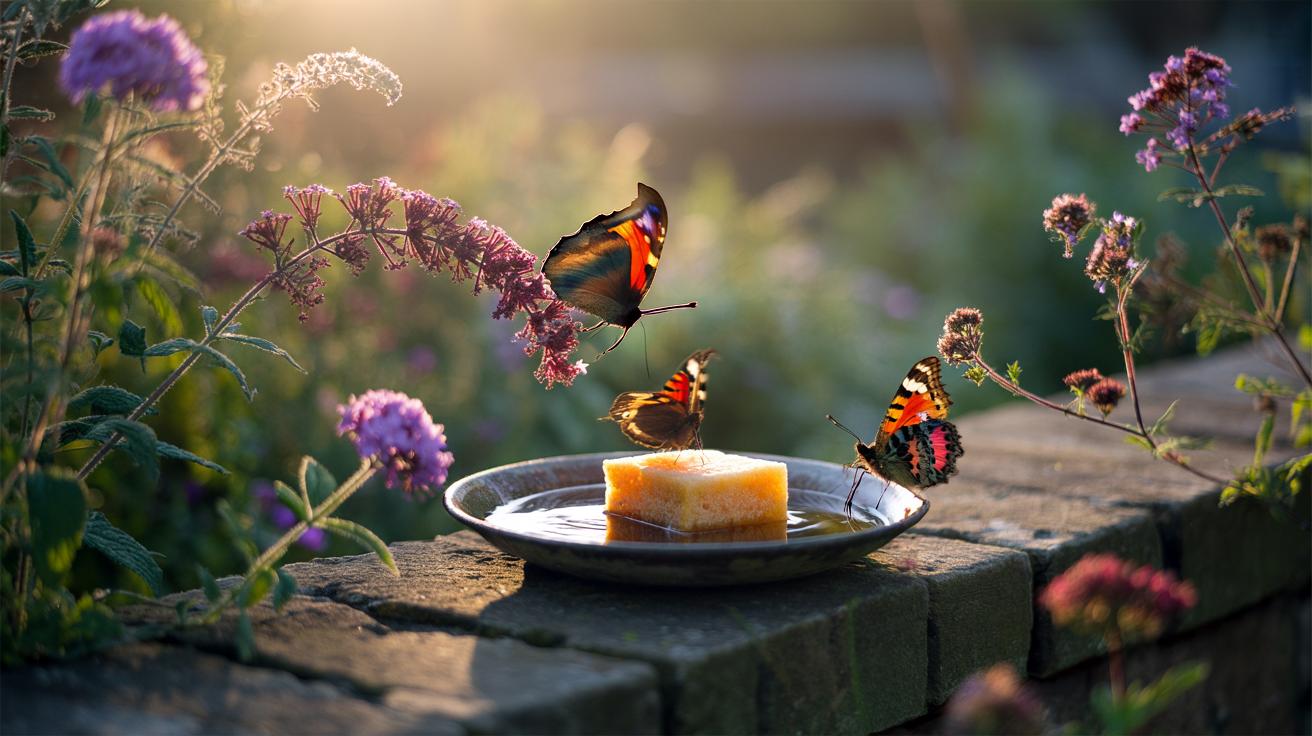
Visitors arrive on stained-glass wings, drawn by a scent almost invisible to us: sugar. In gardens across the UK, household sugar water—carefully mixed and responsibly offered—can tempt butterflies to pause, sip, and linger. The trick isn’t magic. It’s mimicry. Most adult butterflies feed on nectar, a solution of sugars and trace nutrients. By preparing a safe, low-strength syrup and pairing it with nectar-rich plants, you create a reliable pit stop for species like the Peacock, Red Admiral, and Small Tortoiseshell. Feeders should complement, never replace, natural blooms and wild forage. Done well, this sweet invitation turns a patio or balcony into a daily wildlife watch, and your garden into a story of flight.
Why Sugar Water Works for Butterflies
Butterflies burn fuel at astonishing speed. Their flight is powered by sugars—primarily sucrose, plus glucose and fructose—which plants package as nectar. A diluted syrup mimics that chemistry, offering quick energy that is simple to digest and fast to convert into heat for take-off, territorial patrols, and mate-seeking. Crucially, butterflies taste with their feet and proboscis; they detect dissolved sugars on contact. A sponge or wick soaked in a light solution presents a broad, safe sipping surface. Concentration matters: too strong risks dehydration and fermentation; too weak won’t entice. Aim for roughly 10–12% sugar, which aligns with many UK garden nectars and queues natural behaviour rather than overfeeding.
There’s another draw. Sugar-scented moisture can evaporate slightly, creating a faint plume that butterflies find while cruising hedgerows or borders. Once settled, they prefer warmth, calm air, and sun. Offer the feeder near heat-holding stone, at or just above bloom height, and watch as wary newcomers turn into repeat visitors. Balance is key. Provide clean water nearby for puddling, and keep your planting diverse so the sweet station is one option among many. Variety reduces crowding and helps limit disease transmission.
How to Mix and Offer the Sweet Solution
Use white granulated sugar only. Dissolve 1 part sugar in 9 parts hot water (about 10%). Cool before use. That’s it. No dyes, no honey, no brown sugar. Never use honey or artificial sweeteners—both can harm butterflies or promote harmful microbes. Pour the cooled mix into a shallow dish lined with a bright sponge, or use a small feeder with a cotton wick. The sponge reduces drowning risk and gives an easy landing surface. Position in morning sun, shaded by afternoon, and refresh frequently—daily in hot spells, every two days in cool weather. Rinse equipment with hot water; if it feels slimy, scrub with a brush and a pinch of baking soda, then rinse well.
| Item | Guidance |
|---|---|
| Sugar-to-water ratio | 1:9 (approx. 10%) |
| Best temperature | Cool before serving; place in morning sun |
| Cleaning frequency | Daily in heat; every 48 hours in cool weather |
| Do not use | Honey, brown sugar, dyes, sweeteners |
| Helpful extras | Sponge or wick; ant moat; shallow water dish for puddling |
| Placement | Near blooms, out of wind, cat-safe visibility |
Expect visitors to test and learn. Some arrive instantly; others take days. Keep the feeder small to limit waste and wasp interest. If ants intrude, hang the feeder with a water moat. For variety, offer slices of overripe fruit (banana, orange) on a dish, rinsed or replaced frequently to avoid mould. Cleanliness is non-negotiable for wildlife health.
Designing Your Garden to Keep Butterflies Visiting
A sweet station attracts; a planted buffet keeps them loyal. Think succession. Spring: primroses, honesty, and flowering willow. Summer: buddleia (butterfly bush), verbena bonariensis, marjoram, scabious, and knapweed. Autumn: ivy blossom and late sedum. These UK winners extend nectar from March to October, ensuring your garden pulses with life beyond the feeder. Add sunny, wind-sheltered corners, flat stones for basking, and rough patches where leaf litter can lie. Untidy edges are nurseries, not neglect. For caterpillars, leave nettles for Peacocks and Small Tortoiseshells, buckthorn for Brimstones, and bird’s-foot trefoil for common blues.
Pesticides are a deal-breaker. Avoid them, especially systemic formulations that taint nectar. Use gentle, manual controls and accept a few holes in leaves as the price of abundance. Site sugar stations near, not within, your densest flowers to distribute traffic and reduce jostling by bees or wasps. Keep feeders visible to you and open to the sky; predators dislike exposure. Finally, integrate a shallow tray with damp sand and a pinch of minerals for puddling. The richest butterfly gardens pair nectar, host plants, water, shelter, and modest, well-maintained feeders.
Offer sweetness. Offer habitat. Together, they bring colour, movement, and a gentle rhythm to everyday life. With a simple sugar-water mix, a clean feeder, and generous planting, you can turn breakfast on the patio into a field study of wings and sunlight. Keep it safe. Keep it small. Keep it regular. And keep watching. As your garden’s guest list grows, what mix of plants, perches, and puddles will you try next to welcome even more vibrant visitors?
Did you like it?4.5/5 (28)