In a nutshell
- 🌸 Used tea leaves act as a gentle, slow-release boost, adding potassium, micronutrients, and slight acidity that encourage bud formation and vibrant blooms.
- 🧪 Their tannins and polyphenols fuel beneficial soil microbes, improving nutrient cycling, soil structure, and water balance for sturdier, longer-lasting flowers.
- 🔧 Apply via hot composting, a thin mulch capped with bark, or a diluted weak tea feed (1:10), avoiding thick, wet mats that go anaerobic.
- 🌿 Best matches: camellias, azaleas, rhododendrons, hydrangeas, and container annuals; use sparingly with lime lovers like lavender and blend through compost for safety.
- ⚠️ Key cautions: choose plastic-free bags, exclude milk/sugar, rinse perfumed/oily blends, and remember tea is not a complete fertiliser—it complements balanced feeds.
Britain runs on tea, and your garden can, too. Those damp, earthy remnants at the bottom of the teapot are more than waste; they are a quiet catalyst for colour. When handled well, used tea leaves help plants channel energy into buds, petals, and lasting display. They add organic matter, trace minerals, and subtle acidity that many ornamentals relish. The trick is precision. Apply the right form, at the right time, for the right plants. Used tea leaves can act as a gentle, slow-release fertiliser that nudges stems toward prolific flowering. Done carelessly, they can clump or sour. Done thoughtfully, they sing.
Why Tea Leaves Spark Better Blooms
Flowering is resource intensive. Plants demand nitrogen for foliage growth, but they also crave potassium to regulate water use and drive bud formation. Used tea leaves contain modest amounts of both, plus micronutrients like manganese and fluoride in trace quantities. While not a complete feed, they supply a steady trickle of nutrition as they break down. Their polyphenols and tannins support a microbial bloom in the rhizosphere, improving nutrient cycling. This microbial lift frequently translates into sturdier stems and more abundant, longer-lasting flowers. It’s a subtle effect, but in containers and tired borders it can be striking.
Structure matters as much as chemistry. Tea leaf fragments lighten dense soils, improving aeration and water-holding capacity. That balance helps buds form without stress. Slight acidity from tea suits many flowering shrubs and bedding plants, making key nutrients—iron, phosphorus—more available. Think azaleas, camellias, hydrangeas (for bluer hues), and fuchsias. There’s also the carbon angle: decaying leaves add humus, supporting aggregated soil that resists compaction after heavy rain. In short: tea leaves don’t replace fertiliser; they amplify it by tuning the soil ecosystem. That synergy is what gardeners notice in richer colour and consistent blooming.
What about caffeine? In high doses it can inhibit germination and root growth. But in spent leaves, levels are faint. When applied sparingly and mixed into compost or mulch, any residual caffeine dilutes rapidly. The bigger risk is not chemistry but misuse—thick, wet mats of leaves can go anaerobic. Spread thinly, or blend with carbon‑rich materials like shredded paper or bark, and you’ll avoid sour smells and nutrient lockout.
How to Prepare and Apply Brewed Remnants
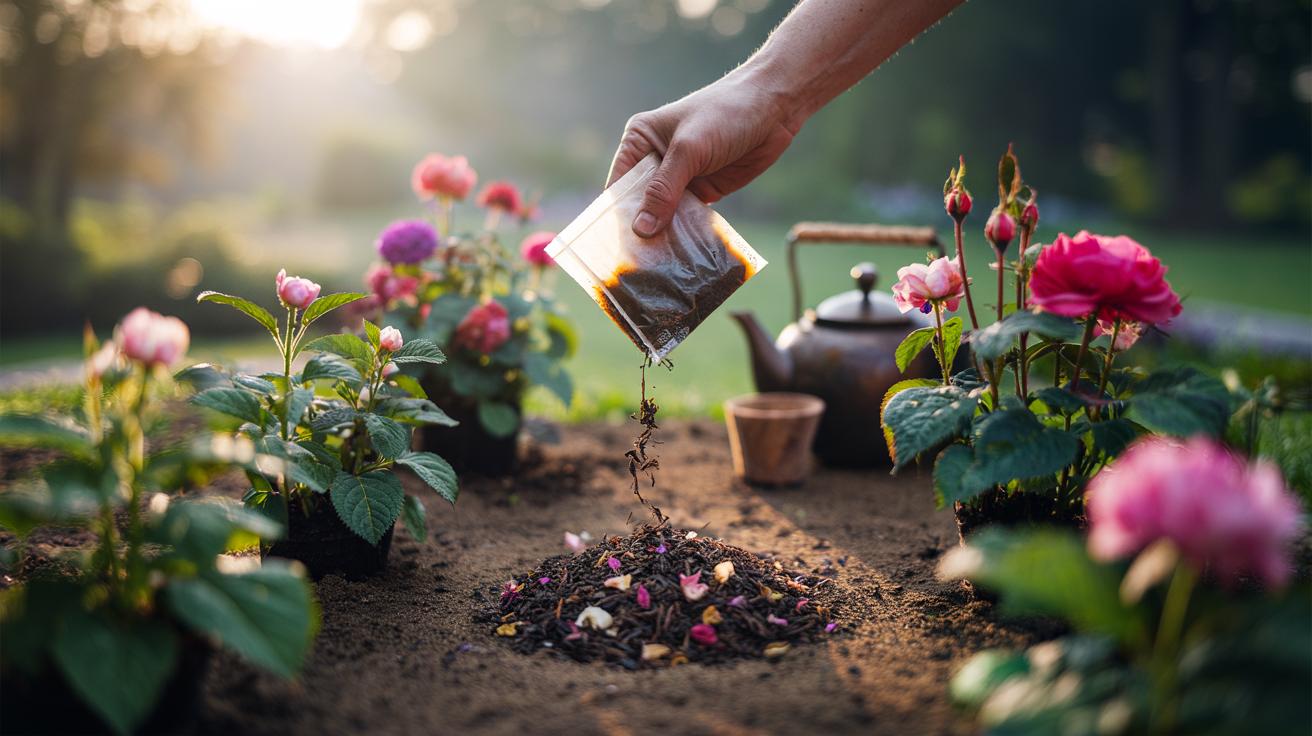
Three practical routes work best. First, composting: tear open bags (plastic-free only) and mix the leaves through your heap at a ratio of roughly 1 part tea to 20 parts browns. The heat neutralises any lingering caffeine and speeds decomposition, producing a balanced amendment that feeds flowers broadly. Second, mulching: scatter a fine layer—no thicker than 5 mm—around ornamentals, then cap with bark or leafmould. This suppresses weeds, moderates temperature, and drips nutrients as it decays. Third, a light liquid feed: steep a handful of used leaves in a bucket of water for 24 hours, strain, then dilute 1:10. Water in at the root zone during active growth.
Mind the hygiene. Remove staples and avoid tea bags containing polypropylene; use loose-leaf or certified plastic-free bags. Never apply leaves contaminated with milk or sugar—both invite pests and mould. Always rinse flavoured or oily blends before use, as aromatic oils can upset soil microbes. For pots, incorporate no more than 10% tea leaf volume into fresh compost to prevent compaction. Frequency is gentle but regular: fortnightly for liquid, monthly for mulching in the growing season. Stop feeding as flowering winds down to avoid pushing soft growth into autumn chills.
| Method | Best For | Frequency | Key Caution |
|---|---|---|---|
| Compost Mix | Beds, borders, shrubs | As compost is ready | Balance with dry browns |
| Thin Mulch | Roses, hydrangeas, fuchsias | Monthly in season | Avoid thick, wet mats |
| Weak Tea Feed | Containers, bedding | Every 2–3 weeks | Dilute 1:10; no milk/sugar |
Matching Tea to the Right Plants
Used tea leaves skew slightly acidic, so they flatter acid-leaning bloomers. Camellias, azaleas, rhododendrons, and blueberries respond with glossy foliage and generous bud sets. Hydrangeas can shift bluer where soils and water allow; tea won’t perform miracles, yet it nudges pH in the right direction while adding organic matter. Container stalwarts—fuchsias, petunias, begonias—appreciate the moisture regulation from a fine top-dressing under decorative mulch. Apply lightly and watch how individual cultivars respond over two to three weeks. That feedback loop matters more than any blanket rule.
Go easy with lime lovers. Lavender, clematis (many types), gypsophila, and dianthus prefer neutral to alkaline conditions. For them, composted tea leaves are safer than fresh additions, and only in small amounts blended through mature compost. Roses sit in the middle: they relish organic matter and potassium for flowering, but detest sour, sopping soils. On heavy clay, use tea leaves strictly via compost or under a bark cap to keep the surface breathing. Veg with showy flowers—tomatoes, courgettes—can benefit from the microbial lift, yet still need a proper high-potassium feed during truss formation. Tea complements specialist fertilisers; it doesn’t substitute for them.
Science, Myths, and Safety Tips
Myth one: tea bags always biodegrade. Many commercial bags contain plastic fibres that linger in soil. Solution: choose loose-leaf or plastic-free bags, and tear away any crimped seams. Myth two: tea is a complete fertiliser. It isn’t. Nutrient content varies by type and brew strength; used leaves are mild. Pair with balanced feeds or well-rotted manure for sustained performance. Myth three: more is better. Thick layers starve roots of oxygen. Thin, well-aerated applications deliver benefits without creating slimy, anaerobic patches. That’s the line between a thriving border and a sour, fungus-gnat haven.
Select teas wisely. Black and green teas are safe in moderation; rooibos is naturally low in tannins; heavily perfumed blends or chai with added oils should be rinsed first or skipped. Rinse leaves if your kettle is descaled with strong acids that might carry residues. Store brewed remnants in a ventilated tub and use within a few days to prevent mould. If in doubt, compost them hot. Finally, observe your plants. Slight leaf scorch or chlorosis signals overuse or pH drift. Adjust, water through, and resume with lighter, spaced applications. Gardening is measurement plus intuition—and a pinch of patience.
Tea leaves won’t turn a lacklustre border into Chelsea gold overnight, yet they offer a frugal, sustainable nudge toward richer colour and steadier flowering. Work with your soil, your climate, and your plants’ preferences, then let the microbes do the heavy lifting. Start small, keep notes, and refine. The cup that cheers can also feed. Where might a handful of brewed remnants make the biggest difference in your own patch—beneath a sulking camellia, in thirsty containers, or tucked under roses ready to burst?
Did you like it?4.5/5 (20)