In a nutshell
- 🌿 Potassium-rich banana peels support stomatal control, photosynthesis, and water-use efficiency, translating into sturdier, glossier foliage when used as part of a balanced feeding plan.
- 🧪 Safe, effective methods: prioritise composting; use a mild peel soak for a gentle tonic; or bury pieces 10–15 cm deep to avoid pests—go light in containers.
- 🌸 Best candidates include roses, tomatoes, peppers, and courgettes, with houseplants like pothos, rubber plants, and monsteras benefiting via compost or dilute feeds.
- 🧠 Myth-busting: peels aren’t a complete fertiliser, won’t cure chlorosis or repel pests; avoid overloading beds to prevent odours and vermin—consistency beats gimmicks.
- ♻️ Sustainability win: peels feed soil microbes, improve structure and moisture retention, and reduce waste—practical for UK gardens and houseplants alike.
Britain’s gardeners adore a thrifty tip, and few are thriftier than the humble banana peel. That leathery skin, so often binned, carries a quiet cache of nutrients that can nudge plants from passable to plush. The headline act is potassium, the element that helps regulate water movement, firm up stems, and support vibrant colour. Think of it as the leaf-polisher: unobtrusive, essential, steady. Used sensibly—through compost, liquid infusions, or trenching—peels can complement your feeding routine without fuss. Yet they’re not a miracle in a skin; they’re a supporting player in a balanced programme of soil care, watering, and light. Here’s how to make that support count.
Why Potassium Turns Leaves Lush
Potassium is the plant kingdom’s great regulator. It doesn’t build tissue like nitrogen does, but it keeps everything humming along. Inside leaves, potassium orchestrates stomatal control, opening and closing those tiny pores that manage water loss and carbon dioxide intake. Better control means improved water-use efficiency, which, in a fickle UK summer, can be the difference between perk and droop. It also activates enzymes tied to photosynthesis and carbohydrate movement, helping sugars flow from source to sink. The effect is subtle yet unmistakable: sturdier growth, richer greens, steadier performance.
When potassium is short, foliage often looks tired—edges brown, colour dull, resilience lacking. Feed it back in tandem with adequate nitrogen and phosphorus and leaves respond with renewed gloss. Banana peels contribute a modest, slow-release dose, rarely enough alone but valuable as part of a broader plan. Pair peels with composted manure or a balanced organic fertiliser to cover the full nutrient spectrum. Short term, expect improved turgor. Long term, expect plants that handle heatwaves, cold snaps, and dry spells with greater poise. Small input. Noticeable poise.
From Fruit Bowl to Flowerbed: Safe Ways to Use Peels
You’ve options. The most dependable route is composting. Chop peels into postage-stamp pieces and fold them through your heap with browns (dry leaves, shredded cardboard). Microbes break down the lot, binding nutrients into a stable humus that feeds slowly and improves soil structure. This avoids surface mess, deters pests, and delivers a more balanced fertiliser profile than peels alone. If you do only one thing with peels, compost them.
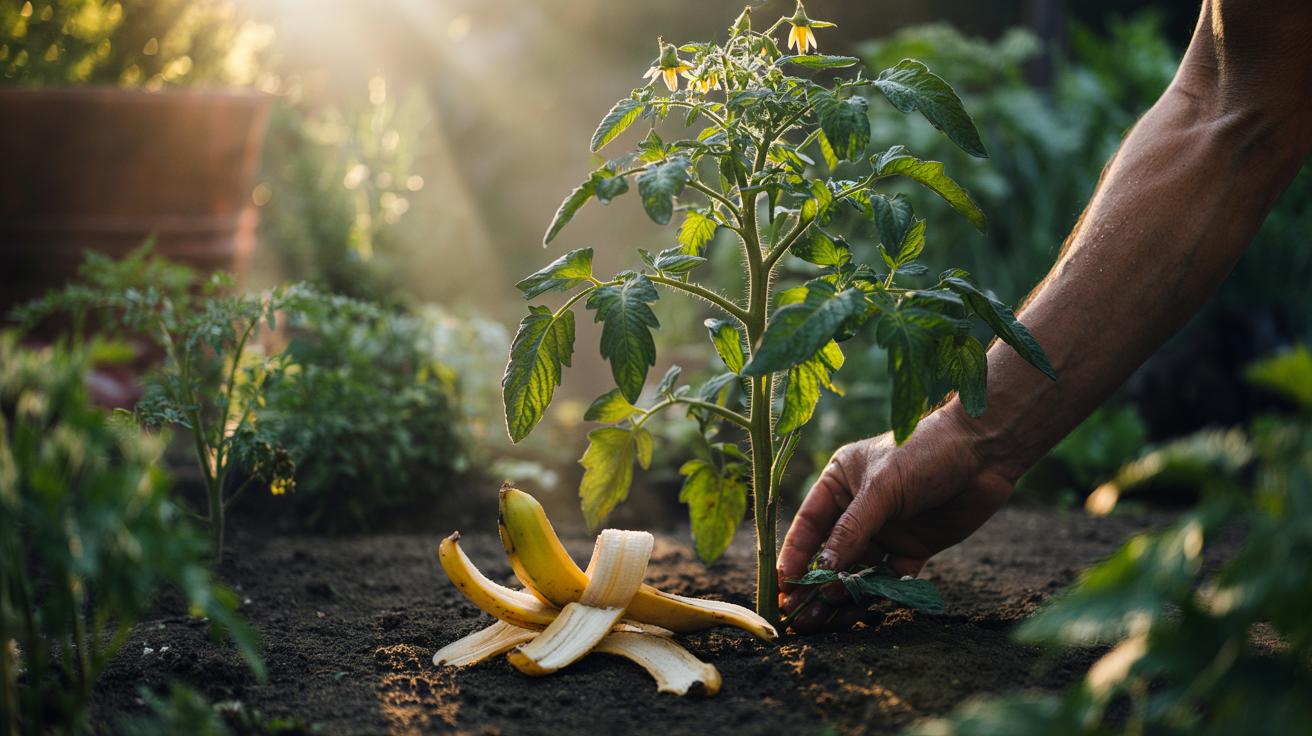
Want something faster? Make a simple peel soak: submerge chopped peels in a jar of rainwater for two to three days, then strain. Use the dilute liquid to water around established ornamentals and fruiting veg, not seedlings. The result is a very mild tonic with traces of potassium, calcium, and magnesium. It’s no complete feed, but it can complement your routine between main fertilisations. Alternatively, bury sliced peels 10–15 cm down the planting hole for roses and tomatoes, where decomposition won’t attract foxes or flies. In containers, go sparingly to avoid odours and fungus gnats. Keep expectations realistic: peels assist; they don’t replace a full, seasonal feeding plan.
Nutrient Profile and What Plants Benefit
Banana peels aren’t a silver bullet, but their mineral mix suits many UK favourites, especially heavy fruiters and glossy-leaf ornamentals. Tomatoes, peppers, courgettes, and roses respond well to steadier potassium availability, showing firmer tissues and more confident flowering. Among houseplants, pothos, rubber plants, and monsteras appreciate the gentle top-up when peels are channelled via compost or a mild soak. Seedlings and very young plants, however, prefer tidy, predictable feeds; keep experiments to mature specimens. Match the source to the plant’s stage and you’ll see the best return on those kitchen scraps.
| Component | Presence in Peel | Plant Role | Who Benefits |
|---|---|---|---|
| Potassium (K) | High | Stomatal function, water balance, stress tolerance | Roses, tomatoes, peppers, courgettes |
| Calcium (Ca) | Moderate | Cell wall strength, tip growth | Fruit set, leafy ornamentals |
| Magnesium (Mg) | Trace–Moderate | Chlorophyll core, photosynthesis support | All green foliage plants |
| Phosphorus (P) | Low–Moderate | Energy transfer, rooting | Transplants, flowering plants |
Because peels are relatively low in nitrogen, they won’t drive leafy growth on their own—use them alongside fish, blood and bone, or well-rotted manure. That pairing keeps leaves lush without starving blooms. For containers, apply lightly and monitor; confined soils reveal imbalances quickly. Outside, the soil food web softens edges and shares the bounty more evenly.
Common Myths, Practical Limits, and Evidence
Let’s separate romance from reality. The internet brims with claims that banana-peel water is a complete fertiliser or an instant cure for yellowing leaves. It isn’t. Peels are skewed toward potassium and lack substantial nitrogen; chlorosis often stems from iron or nitrogen shortages that a peel can’t fix. Another overreach? Pest control. There’s little robust evidence that peels repel aphids or slugs in any reliable way. Use peels for nutrition and soil health, not as a bug shield.
What does hold up is the role of organic matter. Whether composted peels or a light soak, you’re feeding microbes that, in turn, feed plants. Trials comparing kitchen-scrap compost with mineral feeds suggest steadier moisture retention and improved structure, especially on lighter soils common in new-build UK gardens. But there’s a ceiling: overloading beds with fresh peels can attract vermin and create anaerobic pockets. The balanced path is best—compost most peels, deploy the occasional liquid infusion, and rely on a proven, balanced fertiliser at key growth stages. Evidence favours consistency over gimmicks.
Banana peels are not a shortcut to Eden, but they’re a smart, sustainable nudge—a quiet way to support vigour, shine, and resilience while cutting waste. Treat them as a complementary feed and soil-builder, and let the rest of your craft—timely watering, pruning, right plant, right place—do the heavy lifting. Used well, potassium-rich peels help leaves look loved. What will your first trial be: the compost heap, a cautious jar-soak for your roses, or a discreet trench beneath that hungry tomato bed—and how will you measure the difference?
Did you like it?4.5/5 (23)