In a nutshell
- 🌱 Use unsulphured blackstrap molasses as a quick carbon source to fuel beneficial microbes, accelerate nutrient cycling, and improve soil structure for stronger plant growth.
- 🧪 Beyond sugars, it brings minerals—potassium, calcium, magnesium, iron—and acts as mild chelation, helping trace elements stay available within the soil food web.
- 🛠️ Apply with care: soil drench (1–2 tsp/L every 2–4 weeks), foliar spray (0.5–1 tsp/L monthly), and aerated compost tea (1 tbsp/10 L); dissolve in warm water and use dechlorinated water.
- ⚠️ It’s not a fertiliser; overuse can trigger microbial blooms, oxygen deficit, and temporary nitrogen lock-up. Avoid sulphured products, keep equipment clean, ensure tea aeration, and use half-strength in containers.
- 📈 Expect better tilth, root vigour, moisture management, and disease suppression; pair with compost, seaweed, or fish hydrolysate, start small, observe, and scale thoughtfully.
Gardeners are rediscovering an old pantry staple with surprisingly modern power. Molasses, the thick by-product of sugar refining, does more than sweeten biscuits. It energises soil life. When used carefully, this natural sugar sparks microbial activity, unlocks nutrients, and steadies plant health without synthetic quick fixes. Does that sound too simple? It isn’t. Soil is a living engine and microbes are its pistons. Give them fuel and the whole system hums. Feed the soil, not the plant is a mantra for a reason. Here’s how molasses, particularly blackstrap molasses, becomes a low-cost, high-impact ally for more vigorous growth and richer harvests.
What Is Molasses and Why It Matters
Molasses is the viscous syrup left after extracting crystal sugar from cane or beet. Each stage of processing concentrates different minerals; the final stage yields blackstrap molasses, darker and less sweet but rich in potassium, calcium, magnesium, and iron. Those nutrients are helpful, yet the real magic is its role as a readily available carbon source. Microbes can metabolise its simple sugars swiftly, dividing faster, cycling nutrients, and producing sticky biofilms that improve soil structure.
For organic growers, the detail to watch is “unsulphured” on the label. Sulphur dioxide can suppress microbial life and is a poor fit for soil food web gardening. The syrup’s low cost, long shelf life, and compatibility with composts and manures make it appealing for small beds and allotments alike. Molasses doesn’t feed plants directly; it powers the underground workforce that feeds them. In plain terms, it’s a catalyst: a teaspoon of energy that helps microbes multiply and mobilise nutrition locked in the soil’s bank.
How Molasses Feeds Beneficial Soil Life
Soils teem with bacteria, fungi, protozoa, and nematodes. Many are beneficial microbes that free up nutrients, form symbioses with roots, and build crumbly aggregates. Molasses provides a pulse of readily available carbohydrates that kick-starts microbial respiration. As colonies expand, they release enzymes that unlock phosphorus, solubilise micronutrients, and convert organic matter into plant-available forms. Some microbes also produce phytohormones and disease-suppressing compounds, creating a living shield around roots.
The knock-on effects are practical. Better aggregation improves aeration and water infiltration. That means stronger roots and fewer waterlogging woes. Fungal hyphae bind soil like threads in felt; bacterial glues add cohesion. A small, regular dose can transform tired dirt into living soil. There’s another advantage: molasses can act as a mild chelation aid, helping trace elements stay soluble long enough for uptake. Used with rock dusts or compost, it accelerates the handover from “stored” to “available”. The key, as ever, is balance. Too much sugar risks a short-lived bloom that strips oxygen. Thoughtful amounts deliver sustained vitality.
Practical Ways to Use Molasses in the Garden
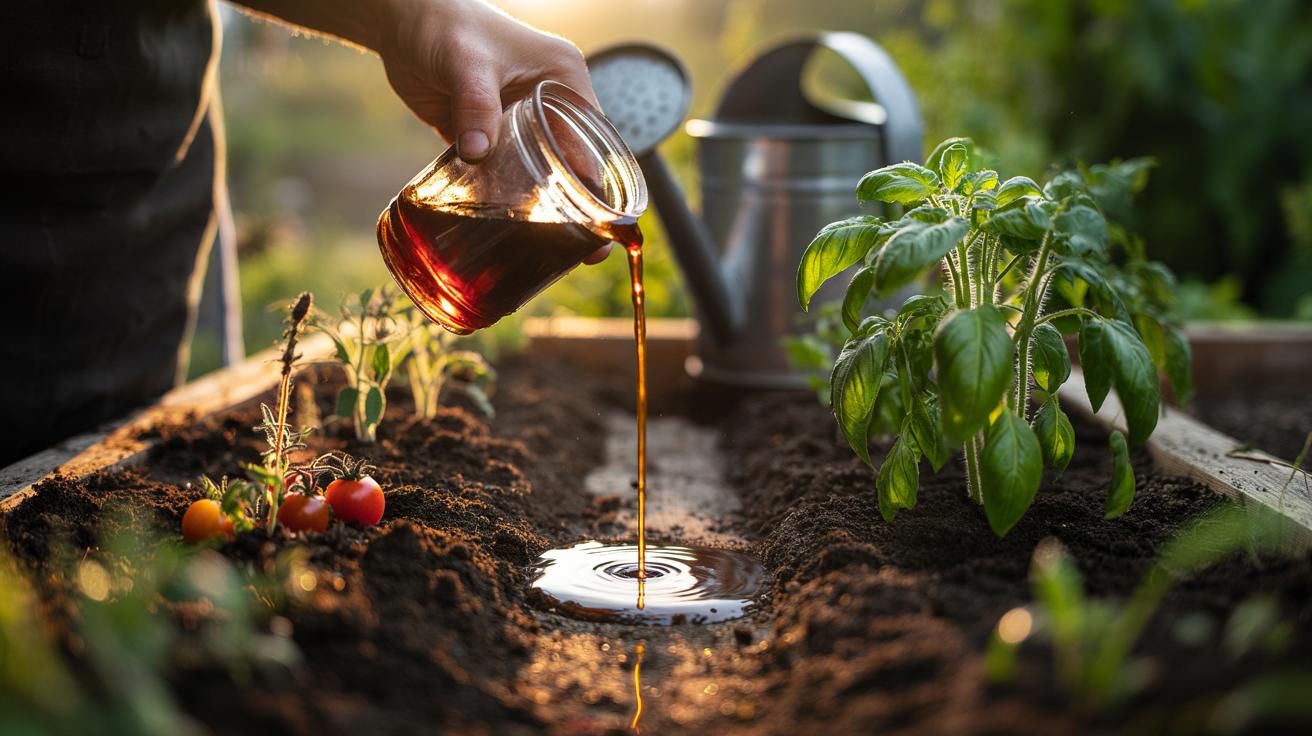
Application is simple, but precision pays. Stir molasses into warm water to dissolve, then dilute for soil drench, foliar spray, or compost activation. Always use unsulphured products. If your tap water contains chlorine or chloramine, let it stand or use a filter to avoid suppressing microbes. In cool, damp months, cut rates; in active growth, modestly increase frequency. Small doses, big results.
| Method | Typical Dilution | Frequency | Notes |
|---|---|---|---|
| Soil drench | 1–2 tsp per litre | Every 2–4 weeks | Apply to moist soil; avoid waterlogged beds |
| Foliar spray | 0.5–1 tsp per litre | Monthly | Spray early morning; add a drop of soap as surfactant |
| Compost/tea | 1 tbsp per 10 litres | Per brew | Feeds microbes during aerated compost tea brewing |
For seedlings, halve the above. For heavy feeders—tomatoes, squash, brassicas—stay at the lower end but keep steady. Many growers pair molasses with seaweed extract or fish hydrolysate, supplying trace minerals and amino acids alongside carbon. Water in after mulching to drive the sugars into the biologically active zone just below the surface.
Risks, Myths, and Best Practice
Let’s clear a few myths. Molasses isn’t a fertiliser in the conventional sense. It’s an energy source that mobilises nutrients already in your soil or compost. Apply too much and you can overload microbes, causing a temporary oxygen deficit and, paradoxically, nutrient lock-up as organisms grab nitrogen to balance the carbon feast. Use light, regular applications rather than heavy gluts. Another concern is pests; spillage can attract ants or wasps, so water in thoroughly and keep surfaces clean.
Blackstrap’s mineral content is useful, but it won’t cure gross deficiencies alone. Pair with well-made compost, balanced organic fertilisers, and pH management. In pots, be extra cautious: containers have limited buffering capacity, so start at half strength and watch for sour smells—an early warning of anaerobic conditions. Foliar use can add a light sheen and trace minerals, yet leaf burn is possible in hot sun; spray at dawn or dusk. Finally, if you brew aerated compost tea, provide vigorous aeration. Starved of oxygen, microbe populations crash, and pathogens can proliferate. The rule is simple: clean kit, fresh ingredients, and patience.
Used with intent, molasses turns soil life from a background hum into a chorus. It boosts microbial metabolism, improves structure, and nudges nutrients into the plant’s reach. The outlay is tiny; the impact can be striking. Start with a test bed, note changes in tilth, vigour, and yield, then scale up judiciously. Healthy soil is a living system that rewards consistency. As you refine your practice—rates, timing, companions—you’ll write your own recipe for resilient growth. Where will you try your first molasses experiment, and what signs of livelier soil will you look for?
Did you like it?4.4/5 (29)