In a nutshell
- 🌱 Coffee grounds boost overnight soil life: they fuel microbial activity, attract earthworms, and help the surface hold moisture, giving shallow-rooted veg a quick, noticeable lift.
- 🧪 Balanced benefits: typical NPK ~2–0.3–0.2 with near-neutral pH 6.5–6.8; think soil conditioner and micro‑mulch rather than a standalone fertiliser.
- 📏 Smart application: spread 3–5 mm thinly, rake into the top 2–3 cm, use roughly 1–2 litres/m² fortnightly, water after, and avoid thick, water-repelling mats.
- ♻️ Compost and containers: treat grounds as a “green” at 25–35% of a heap, add small layers to wormeries, keep pots to 5–10% mix, and pair with phosphorus sources for fruiting crops.
- 🔍 Myths and fixes: used grounds aren’t overly acidic, slug deterrence is mixed, caffeine levels are low; if crusting or nitrogen lock-up appears, thin layers, water well, and mulch or add a balanced feed.
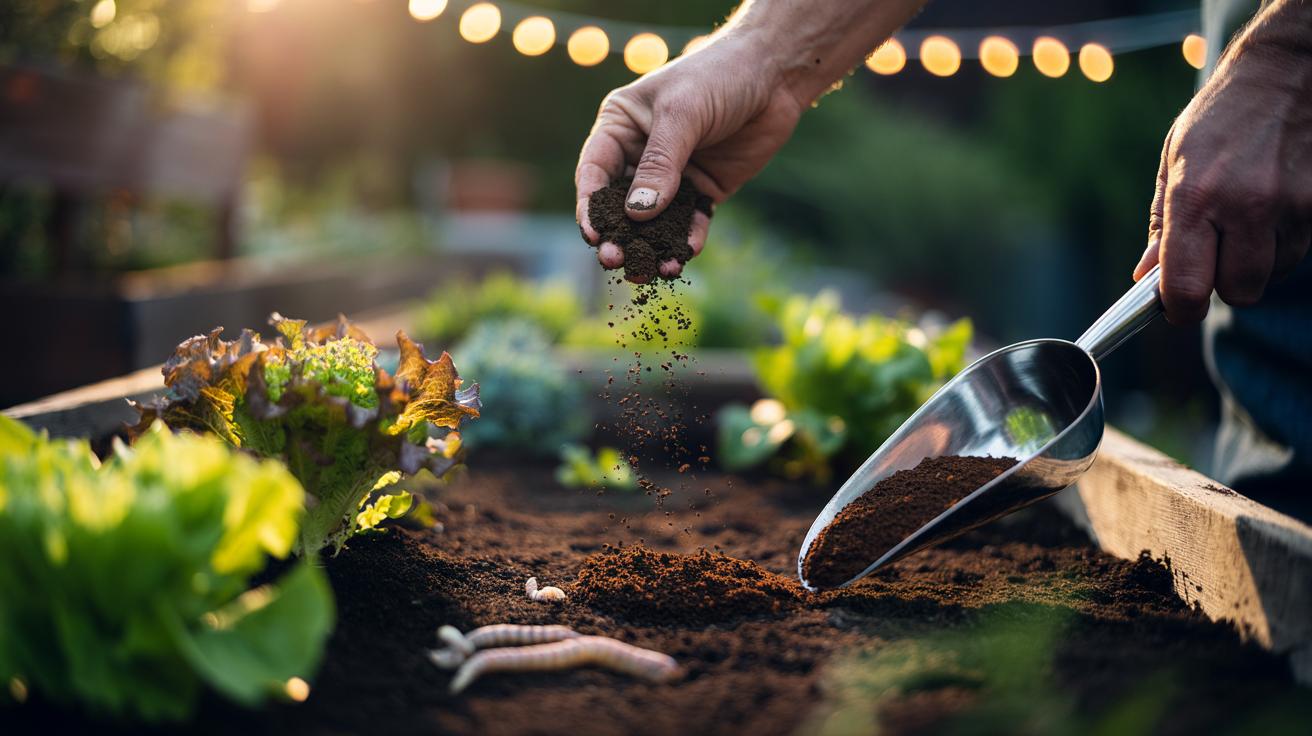
Last night’s espresso can be tonight’s fertiliser strategy. Savvy gardeners are using coffee grounds to supercharge vegetable beds, harnessing the stuff we usually bin to feed soils and stimulate life beneath the surface. The effect begins quickly. As grounds hold moisture and wake up microbes, the top few centimetres of soil become a bustling pantry for roots. Spread correctly, used grounds can enrich texture, support earthworms, and deliver a subtle nitrogen lift without synthetic inputs. There are caveats, of course, but nothing a bit of know‑how can’t solve. Here’s how your kitchen waste can help your veg put on growth by morning.
Why Coffee Grounds Supercharge Soil Overnight
When dusk falls, the soil doesn’t sleep. Microbes clock on. Coffee grounds arrive loaded with easily colonised organic particles and residual compounds that feed bacteria and fungi. As these organisms multiply, they release plant-available nutrients in micro-doses and build sticky glues that improve crumb structure. The result by morning can be subtle yet real: slightly cooler, moister soil at the surface, with a fresher, earthy scent and more active micro-life. Earthworms come up under cover of darkness, tugging flecks of grounds into their burrows; their casts add a quick pulse of fertility where roots can reach.
There’s also physics at play. Used grounds are porous and behave like tiny sponges. They help the surface layer retain dew and watering, slowing overnight evaporation and easing water stress in shallow-rooted crops such as lettuce, radish, and spring onions. In light, sandy beds, this moisture-holding effect can be noticed the next morning. In heavier soils, the benefit accrues gradually as structure improves. Applied thinly, coffee grounds act as a breathable micro-mulch that doesn’t smother, smoothing temperature swings that often stunt seedlings and stress fruiting veg.
Nutrients, pH, and Microbes: What’s Really in Used Grounds
Used coffee grounds aren’t a miracle fertiliser, but they’re a dependable, slow-release amendment. Typical analysis hovers around NPK 2–0.3–0.2, with meaningful amounts of magnesium, potassium, and calcium. The carbon-to-nitrogen ratio sits near 20:1, a sweet spot that encourages microbial activity without tying up too much nitrogen when applied modestly. Crucially, rinsed-by-brewing grounds trend near-neutral, often pH 6.5–6.8. They won’t acidify your beds overnight. What they will do is provide lignin- and cellulose-rich particles that fungi can lace together, improving tilth and aeration.
| Property | Typical Range | Why It Matters |
|---|---|---|
| Nitrogen (N) | 1.5–2.5% | Supports leafy growth; fuels microbes for quick cycling. |
| Potassium (K) | 0.2–0.6% | Improves fruit quality and disease tolerance. |
| pH (used) | 6.5–6.8 | Near neutral, safe for most vegetables. |
| C:N ratio | ~20:1 | Balanced; limited nitrogen “lock-up” at sensible rates. |
Evidence from composting studies shows grounds boost microbial biomass and temperature in mixed heaps, speeding decomposition of tougher “brown” materials. A small residue of polyphenols and trace caffeine remains, but in used grounds these are low and diffuse rapidly in moist soils. For most veg crops, the net effect is positive: livelier biology and improved structure, not a dramatic nutrient spike. Think of grounds as a catalyst and conditioner rather than a standalone feed.
How to Apply Coffee Grounds Safely in Vegetable Beds
The golden rule: keep it thin. Sprinkle used grounds at 3–5 mm across bare soil, then gently rake into the top 2–3 cm or cap with leaf mould or straw. Never leave a thick, wet mat on the surface; it can repel water and stunt seedlings. For established plants, aim for roughly 1–2 litres of grounds per square metre every fortnight during the growing season. Water afterwards to settle particles and wake up microbes. Evening applications make sense in warm weather: activity spikes overnight, and moisture loss is lower.
For compost bins, treat grounds as a “green”. Mix at up to 25–35% of the heap by volume with shredded cardboard, dried leaves, and prunings. In wormeries, add small handfuls layered with bedding; worms relish the fine texture. Seedlings and freshly transplanted plugs prefer gentler conditions, so compost grounds first or apply around, not on, tender stems. Pair with a balanced organic feed—seaweed extract or well-rotted manure—to cover phosphorus needs for flowering and fruiting crops like tomatoes and courgettes. If you brew daily, store grounds in a ventilated tub and use within a week.
Troubleshooting and Myths: From Slugs to Seedlings
Let’s clear the grounds. Myth one: “Coffee makes soil too acidic.” Not when it’s used. The brew takes most acids with it, leaving pH close to neutral. Myth two: “It’s a slug forcefield.” Evidence is mixed; some gardeners report fewer bites on brassicas, others see no change. Don’t bank on it as your only defence. Myth three: “Caffeine harms plants.” At the levels left in used grounds, measurable phytotoxicity is rare in open beds, though heavy, fresh dumps into pots can slow germination.
If leaves pale after a heavy top-dressing, you may have triggered mild nitrogen immobilisation at the surface. Remedy: water well, scratch in a light dose of general organic fertiliser, and thin the layer. If a crust forms, break it up and mulch over with compost. For container veg, be conservative—blend at 5–10% of potting volume or compost first to avoid hydrophobic patches. Odour or mould on stored grounds is a sign to dry them thinly or feed them to the compost heap. Practical, measured use turns waste into an asset without fuss.
Coffee grounds won’t replace a full fertility plan, yet they deliver fast wins you can feel under your fingertips: cooler, damp, better-textured soil and a livelier subterranean city. Used thoughtfully, they bridge the gap between sustainability and performance, trimming waste while nurturing robust vegetables. The trick is simple—small, regular applications, integrated with compost and mulch. Tonight’s cafetière can be tomorrow morning’s boost. How will you fold this everyday resource into your beds—thin mulch, compost accelerator, or a carefully judged blend in containers?
Did you like it?4.5/5 (21)