In a nutshell
- 🍌 Banana peels accelerate compost by offering easy sugars, soft cellulose, and a friendly carbon-to-nitrogen ratio that ramp up microbial activity and heat, pushing heaps quickly into the thermophilic phase.
- 🧰 Practical method: chop or blend peels, bury in thin layers with plenty of dry browns, keep moisture at “wrung-sponge” level, and turn weekly for aeration; freeze peels in winter and remove stickers.
- 🌱 Nutrient boost without myths: peels add potassium, phosphorus, and calcium; compost them first for slow-release benefits, reduce leaching with absorbent browns or a sprinkle of biochar, and avoid placing whole peels in planting holes.
- 🪰 Pest and odour control: bury peels 10–15 cm deep, cap with browns, use mesh or lidded bins, or pre-ferment with Bokashi; odours signal anaerobic pockets—fix with structure and airflow.
- ⚡ Results: faster breakdown, fewer smells, and nutrient-rich compost that improves soil structure and resilience—effective from small balcony bins to larger community heaps.
In British gardens and on cramped urban balconies alike, banana peels are the quiet accelerators of a thriving compost heap. They’re soft, sugar-rich, and quick to surrender to microbial appetites. In practice, that means noticeably faster breakdown when compared with tougher kitchen scraps or lignin-heavy leaves. Add them right and you can shave meaningful time off your composting cycle, especially during the warmer months. Pair peels with the right browns, maintain moisture, and keep the heap breathing, and you’ll see the temperature lift and the texture transform. This isn’t gardening folklore; it’s a practical edge that households can use to turn peelings into soil-building gold.
The Science Behind Faster Banana Peel Decomposition
Banana peels turbocharge decomposition because they present microbes with an easy meal. Think soft cellulose, scant structural defences, and plenty of accessible sugars. Microbial activity ramps up rapidly, driving the heap from a mesophilic phase to a warming, thermophilic burst. That heat spike is what shortens the calendar from weeks to days for the most labile fractions of your waste stream. Unlike woody prunings, peels don’t bottleneck enzymes; they invite them. The result is a lively microbial succession—bacteria first, then fungi and actinomycetes, each unlocking new layers of the peel’s chemistry.
There’s also balance at play. Relative to paper or autumn leaves, peels bring a comparatively friendly carbon-to-nitrogen ratio, moisture, and potassium salts that support cellular function. That combination helps inoculated microbes multiply quickly, provided you’ve mixed in enough dry browns to prevent sogginess. Oxygen is the other lever. Give the heap air and the peel’s sugars become fuel for aerobic respiration, not sour-smelling anaerobic fermentation. In short: fast food for microbes, plus air, equals fast compost.
Texture matters too. A peel’s thin walls are easily breached by frost, freezing, or a quick chop with a knife, exposing huge surface area. That extra edge brings faster colonisation and a tighter, hotter composting curve, especially in compact urban bins where airflow can be a limiting factor.
Practical Tips for Using Banana Peels in Home Compost
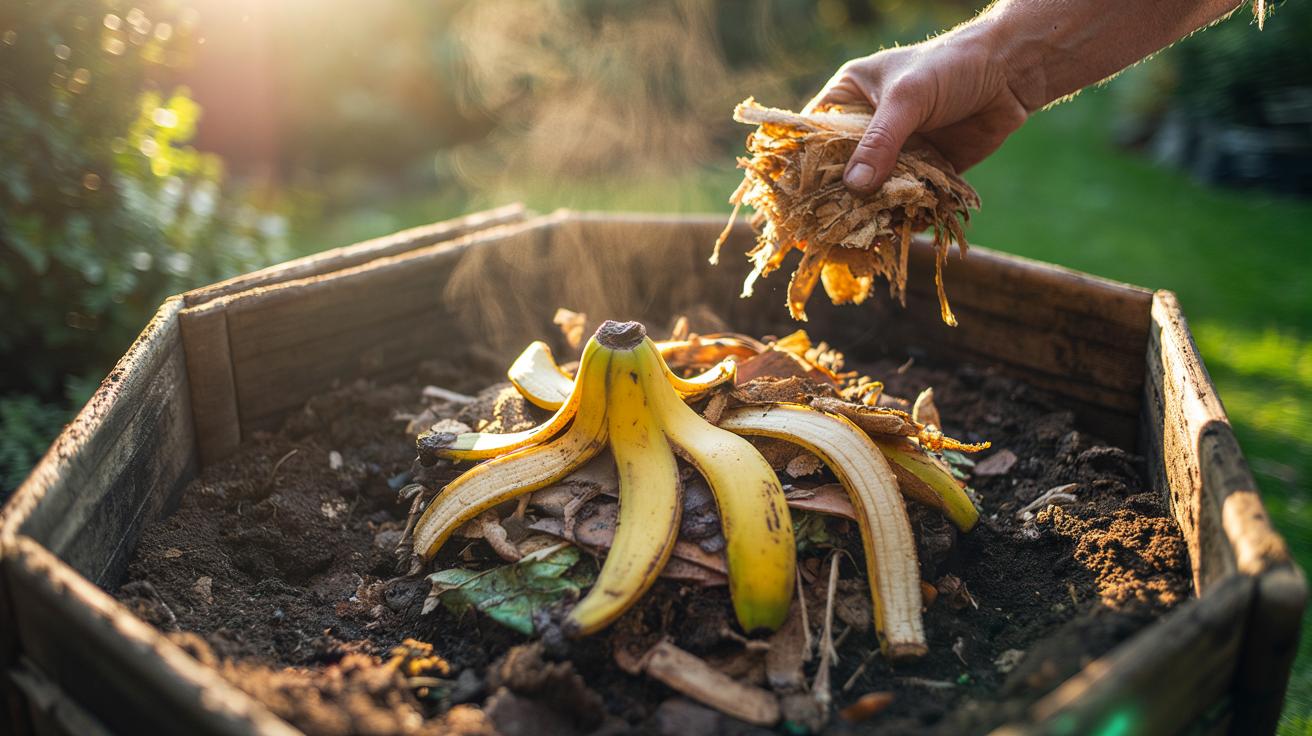
Preparation is half the speed. Tear or chop banana peels into postage-stamp pieces, then bury them midway into the heap, never just on top. Aim for a lasagne: one thin layer of peels, two layers of dry browns like shredded cardboard or straw. This ratio absorbs moisture, traps odours, and keeps flies at bay. If you’ve got a blender to hand, a quick pulse into a slurry exposes even more surface area, turning days into hours for initial microbial take-off.
Moisture control is your governor. Peels are wet; browns are dry. Squeeze a handful of mixed material—if it feels like a wrung-out sponge, you’re in the sweet spot. Too wet? Fold in more shredded paper or autumn leaves. Too dry? Add another peel layer or spritz with rainwater. Then aerate. A brisk turn with a fork every week introduces oxygen and redistributes the sugars, preventing hotspots that go anaerobic. Aeration keeps the process clean and quick.
Household hygiene matters. Remove the produce stickers. If pesticide residues worry you, give peels a quick rinse or choose organic. In winter, freeze peels before adding; ice crystals rupture cells and kick-start microbes when thawed. Vermicomposters should add peels sparingly and always covered—worms relish them, but concentrated fruit can invite mites or fruit flies. Small, mixed, and buried beats big, clumped, and exposed—every time.
Nutrient Benefits: Potassium-Rich Boost Without the Myths
Speed is only half the story. Banana peels bring a notable pulse of potassium, plus phosphorus, calcium, and micronutrients. In compost, those nutrients integrate into a stable matrix that releases slowly into soil, helping structure, water retention, and microbial resilience. Compost the peel first, then feed the plant—this avoids pests and gives you steadier nutrition. Skip the myth of dangling whole peels in planting holes; it’s slow, smelly, and inefficient compared with proper composting.
| Component | Banana Peel Contribution | Benefit in Compost |
|---|---|---|
| Potassium (K) | High relative to many scraps | Supports plant vigour; improves overall nutrient profile |
| Phosphorus (P) | Moderate | Root development; energy transfer in soils |
| Calcium (Ca) | Notable | Cell structure; helps buffer acidity in compost mixes |
| Moisture + Sugars | High | Accelerates microbial growth and heat |
There are caveats. Potassium is mobile, so overly wet heaps can leach it away—another reason to balance with absorbent browns and keep bins covered during downpours. A handful of biochar or mature compost layered with peels can capture soluble nutrients and odours. The headline: peels enrich your compost, but process beats gimmicks, and balance beats excess. Use them as a steady contributor, not a miracle cure, and you’ll see healthier, better-structured soil over the growing season.
Keeping Pests at Bay and Odours Down
Fruit flies love exposed sugars. So don’t offer a buffet. Bury peels by at least 10–15 cm and cap with a brown layer. If you can smell banana, so can rodents. Lidded bins help, but the real fix is oxygen and dryness at the surface, wetness and sugars inside. A weekly turn collapses fly breeding pockets and brings peels into the aerobic core, where heat knocks scent back and speeds decay.
Rodent-proofing is straightforward. Raise bins on paving, fit fine mesh under wooden bays, and avoid adding cooked food. If you’re in a flat, use a sealed caddy with a carbon filter and empty frequently into a hot communal heap or a well-managed home system. Bokashi pre-fermentation is a neat workaround: inoculate peels indoors, then bury the fermented mass in compost where it finishes fast with minimal smell.
Odour is a sign, not a fate. Sour notes mean anaerobic conditions; fix them with structure. Add shredded cardboard, twiggy prunings, or straw to open channels. Sprinkle a scoop of mature compost to inoculate fresh layers, and keep the mix at that wrung-sponge feel. Get air, moisture, and cover right, and even a banana-heavy week won’t advertise itself to the neighbourhood.
Banana peels are the nimble accelerators of home compost: easy carbon, a touch of nitrogen, abundant sugars, and a mineral bonus that lands as slow-release goodness in your beds. Work them small, bury them smart, and keep the heap breathing, and the calendar shortens without fuss. It’s a simple household habit with outsized soil rewards, from balcony pots to community gardens. What’s your next tweak—chopping finer, adding biochar, or trialling a hot-heap turn schedule to see just how quickly your peels can vanish into dark, crumbly compost?
Did you like it?4.5/5 (30)