In a nutshell
- 🌱 Uses light deprivation to smother weeds while keeping soil moist and cool, helping crops establish and reducing new germination.
- 📰 Safe materials: plain newsprint with vegetable-based inks; avoid glossy inserts; aim for 8–12 sheets overlapped and a 5–8 cm compost cap.
- 🛠️ Method: cut weeds low, pre-wet soil, lay and soak paper, add compost, then plant through X-cuts—keep mulch off stems to prevent rot.
- 🔄 Maintenance: top up mulch as it slumps; spot-smother tough perennials; manage slugs with wildlife-friendly tactics and secure edges in windy sites.
- 🌍 Environmental gains: builds the soil food web, reduces plastic use and herbicides, cuts runoff and future weeding—ideal for UK no-dig gardening.
Weeding can feel Sisyphean, especially in a British spring that seems to gift rain and rampant growth in equal measure. Yet there’s a quiet, low-tech tactic that flips the equation: lay down newspaper and let time, moisture, and microbes do the graft. This is sheet mulching, a deceptively simple practice that blocks light, starves weeds, and builds soil. It’s inexpensive, scalable for beds or borders, and kinder to the back than endless hoeing. The beauty is in how ordinary newsprint becomes a living barrier, then compost. Done well, it won’t just suppress unwanted plants; it reshapes the growing environment into something richer.
Why Newspaper Mulching Works
Newspaper is a porous carbon material that disrupts the conditions weeds need. Layered thickly, it excludes sunlight, throttles photosynthesis, and prompts understory vegetation to exhaust its reserves. Small annuals die quickly. Tough perennials weaken. Light deprivation is the central mechanism, but another force quietly joins in: biology. As the sheets dampen and soften, soil fungi and worms incorporate fibres, turning yesterday’s headlines into tomorrow’s humus.
Crucially, the paper lets rainfall percolate while slowing evaporation, maintaining steady moisture for crops above. That balance matters in dry spells on allotments and patio planters alike. When the soil stays cool and evenly moist, weed seeds are less likely to germinate en masse. You also buffer temperature swings in early spring, which can reduce stress on seedlings and make establishment smoother.
There’s a chemical backstory too. Modern UK newspapers overwhelmingly use vegetable-based inks and lignin-light pulps, making them safe in gardens. By contrast, glossy magazine inserts resist breakdown and can contain coatings that shed water. Skip those. The aim is a biodegradable, breathable barrier, not a plastic slick. Done correctly, you’re creating a temporary membrane that fades as your planting strengthens.
Materials and Preparation: What You Need
Gather the basics before you start. You’ll need a stack of plain newsprint, a hose or watering can, a nitrogen-rich top layer—well-rotted compost, leaf mould, or chipped bark—and, ideally, a sharp knife or shears for edge tidy-ups. Cardboard can join the mix on stubborn spots, but newsprint is nimbler around tight plantings. Think in layers: carbon below, nutrient above, and living roots settling through both.
Quality and thickness make the difference between a tidy transformation and a wind-blown mess. Aim for overlapping sheets that block light without sealing the soil. A top dressing protects the paper from sunlight, anchors it, and feeds your crop. Keep the mulch a few centimetres from stems to prevent rot, and water generously so the paper slumps into every crease and contour.
| Component | Recommended Amount | Notes |
|---|---|---|
| Newspaper | 8–12 sheets thick | Overlap edges by 10–15 cm |
| Compost/mulch | 5–8 cm layer | Holds paper, feeds soil |
| Water | Thorough soak | Pre-wet paper for easy moulding |
| Tools | Shears, gloves | Trim edges, protect hands |
For UK readers: councils often publish on vegetable inks, and local free sheets are fine. Remove staples and tape. Avoid glossy colour supplements and heavily coated flyers; they shed water and slow the biological handover you want.
Step-by-Step Layering Method
Start by reducing the standing biomass. Strim or cut weeds to ground level so the paper lies flat. Leave the trimmings in place unless they carry seed heads; they’ll decompose under the cap. Moisten the area lightly. Damp soil grips the paper and draws it down.
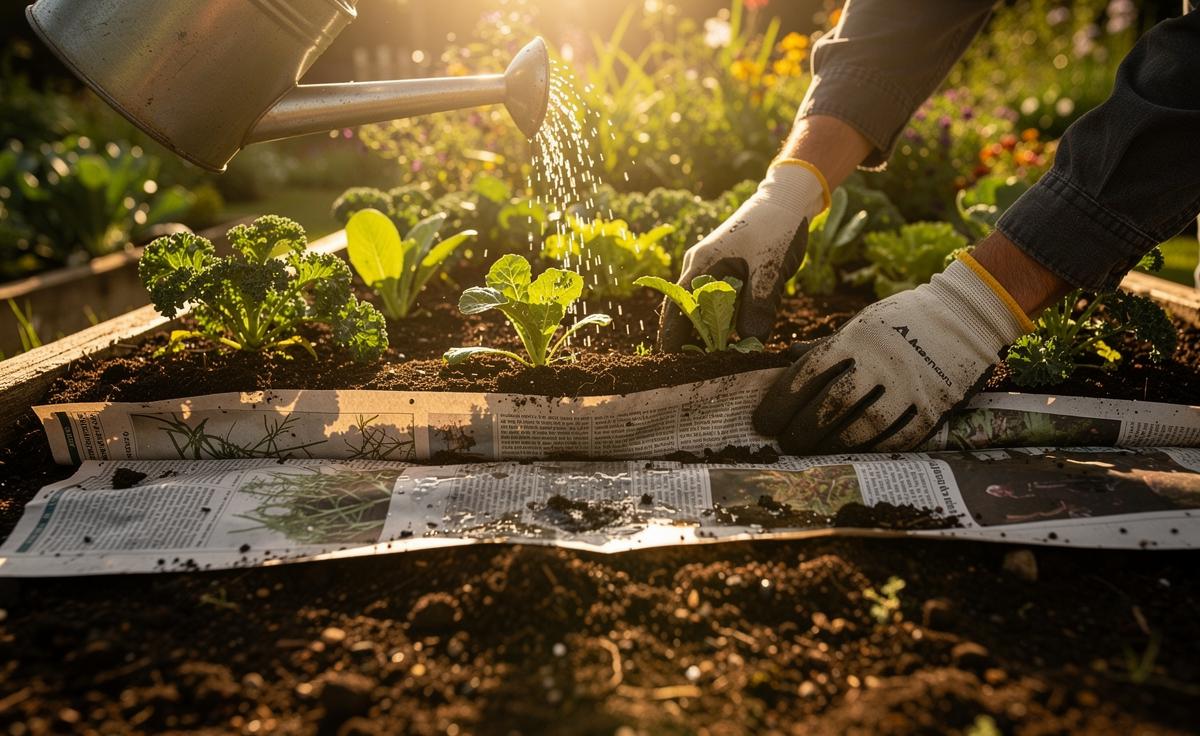
Lay the first layer: eight to twelve sheets deep, edges overlapped generously. Tear, don’t cut, around existing perennials to avoid neat seams that let light leak. Press sheets tight to contours. Now soak them. Water transforms crisp paper into a pliable skin that seals to the soil surface. Wet paper is less inviting to wind and far more welcoming to worms.
Add your top layer at once. Spread 5–8 cm of compost, leaf mould, or fine bark. This feed layer is where you’ll plant. For seeds, add a shallow band of compost on top and sow directly. For transplants, slice a neat X, peel back flaps, and tuck roots through into the soil below. Backfill with compost and tamp. Keep mulch a hand’s width away from woody stems to prevent collar rot.
Finish with the edges. Trim stray paper, pin corners with a handful of soil, and water again to settle dust and lock the sandwich. Check coverage: if you can see daylight at any seam, weeds can too. Close gaps now; it saves you a summer of regret.
Maintenance, Problems, and Environmental Impact
Expect the paper to soften within weeks and largely vanish by season’s end, especially in warm, wet summers. Top up the compost layer mid-season where it slumps. If a tough customer like couch grass or bindweed pokes through, don’t panic. Smother again: add another torn patch of newsprint and a fresh cap of mulch directly over the offender. Persistent rhizomes tire eventually under sustained darkness.
Slugs can shelter under cool, damp layers. Counter with wildlife-friendly tactics: encourage frogs and beetles, use beer traps at bed edges, and water in the mornings so nights are less slug-friendly. In windy sites, pin the perimeter with stones or wooden battens until the paper bonds to the soil. Keep watch after heavy rain; repair any exposed seams promptly.
The ecological upside is tangible. You’re diverting clean paper from the waste stream, eliminating the need for plastic membranes, and feeding the soil food web. Over time, you build tilth and reduce the weed seed bank, which shrinks future labour and pesticide temptation. Nutrient leaching falls as the mulch slows runoff. For no-dig gardeners in the UK—think of Charles Dowding’s methods—this approach dovetails neatly with a philosophy that values soil structure over spadework. Less digging, fewer weeds, richer soil: a rare triple win.
Newspaper mulching isn’t flashy, but it delivers: tidy beds, fewer weeds, happier soil. It also respects time. You lay the groundwork once and let biology take the lead, season after season. If you’re cautious, start with a single bed and compare it to a hand-weeded twin; the contrast within months is usually decisive. Light blocked, moisture managed, nutrients recycled—that’s the quiet alchemy. Where will you first test this simple, sustainable tactic in your garden, and what stubborn patch do you most want to see transformed?
Did you like it?4.7/5 (26)