In a nutshell
- 🌱 Newspaper mulch forms a light-blocking barrier that halts weed germination and weakens seedlings, while breaking down into organic matter that enriches soil.
- 🧱 Practical setup: weed and water, lay 6–10 soaked sheets with 8–10 cm overlaps, cut X-slits for plants, then cap with 5–7 cm organic mulch to seal out light and protect the paper.
- 💧 Key benefits: conserves soil moisture, stabilises temperatures, reduces the weed seed bank response to light/heat cues, and boosts microbial activity and earthworms—ideal with drip or soaker hoses.
- ♻️ Sustainability win: modern UK newsprint uses generally safe inks, decomposes within a season, and avoids the long-term mess of landscape fabric—delivering low-cost, low-waste weed suppression.
- ⚠️ Smart cautions: skip glossy inserts and plastic windows, monitor slugs/voles, and double layers for bindweed, couch grass, horsetail; on heavy clay or waterlogged beds, keep layers breathable.
Weeds don’t just spoil a border’s look; they steal water, nutrients, and space from cherished perennials. For many UK gardeners, the quiet star of the toolkit is newspaper mulch—cheap, abundant, and surprisingly effective. Laid in overlapping sheets and topped with organic matter, it shuts out light, blocks germination, and slows regrowth from shallow-rooted offenders. The method demands little tech and no harsh chemicals. It also dovetails with a more sustainable, soil-first ethic. This barrier approach deprives seedlings of the light and air movement they need to thrive, while holding moisture exactly where plant roots want it. Done carefully, it gives flower beds breathing room to flourish—through spring, and well into autumn.
Why Newspaper Mulch Works
At its core, smothering is about physics and plant physiology. Germinating weeds rely on radiant light and regular gas exchange to kick-start photosynthesis. Stack 6–10 sheets of newsprint and you create an opaque, breathable blanket that dims light to near zero. Starved of light, most annual weeds never make the leap from seed to seedling. Without their first energy harvest, they stall and die. For established seedlings, the layered paper forms a mechanical obstacle; stems buckle or bleach beneath.
There’s a moisture dividend, too. Newspaper slows evaporation, stabilising soil temperature and protecting the microbial community that powers nutrient cycling. Expect fewer flushes from the weed seed bank because fewer seeds see the cues—light and temperature fluctuations—that tell them to sprout. The paper is carbon-rich, but thin; when covered with compost or bark, it breaks down over a season without strangling soil life. Earthworms tug fragments underground, lightly incorporating organic matter. Unlike plastic membranes, newsprint decomposes, reducing long-term waste while still delivering season-long suppression. That’s the sweet spot: robust control today, healthier beds tomorrow.
Step-by-Step: Laying Newspaper to Smother Weeds
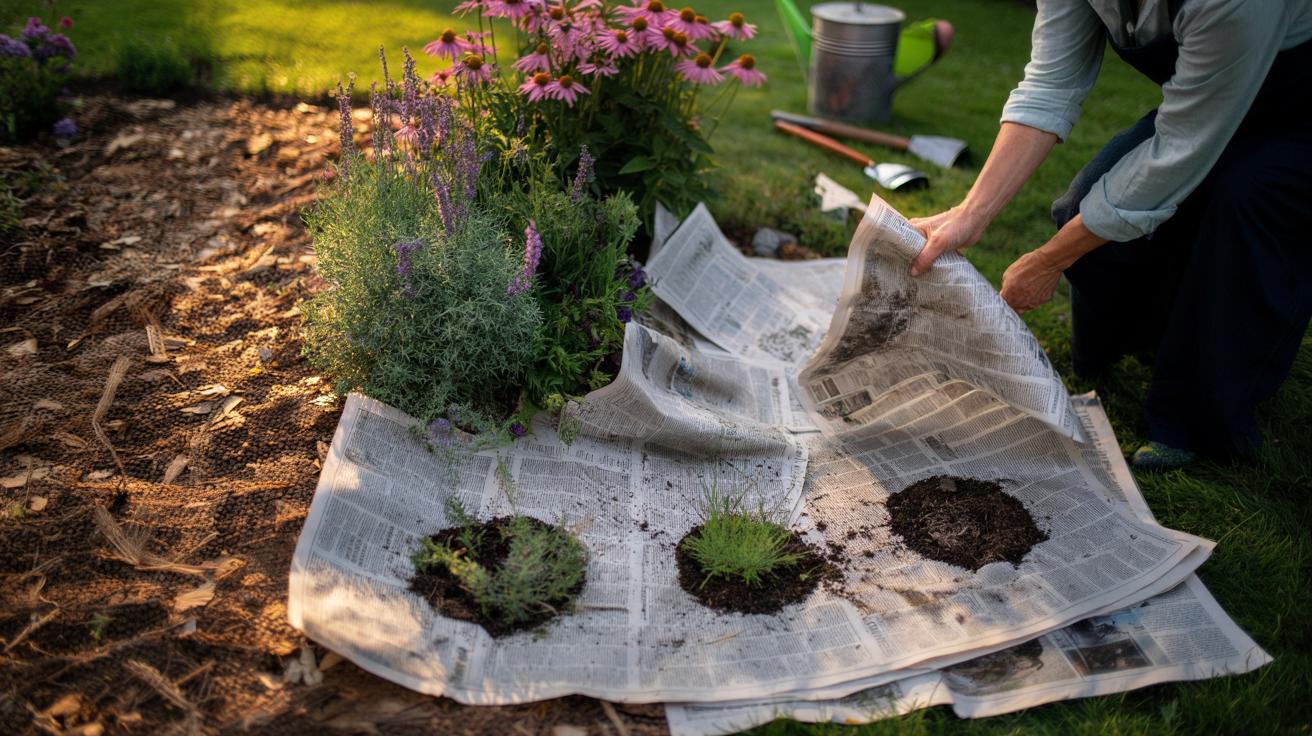
Start with a weeded, watered bed. Snip off tall growth at ground level and remove perennial roots where practical. Soak newspapers to make them pliable; wet paper hugs the soil and resists wind. Lay 6–10 sheets, overlapping edges by 8–10 cm so no light sneaks through. Cut neat X-shaped slits for existing plants, keeping stems clear. Always keep the paper uniformly moist during installation to prevent gaps and blow-away. Immediately cap the paper with 5–7 cm of organic mulch—composted bark, leaf mould, or green-waste compost—to hide the paper and block UV.
| Bed Type | Newspaper Layers | Top Mulch Depth | Typical Longevity |
|---|---|---|---|
| Newly Planted Perennials | 6–8 sheets | 5–7 cm | 1 growing season |
| High-Pressure Annual Weeds | 8–10 sheets | 7–10 cm | 1+ seasons |
| Path Edges/Border Lines | 10–12 sheets | 7–10 cm | Up to 18 months |
Work in cool weather or late day; heat dries sheets too quickly. Avoid glossy inserts and coloured magazine stock; modern UK black inks are typically soy/vegetable-based and safe. Overlap is non-negotiable. Seal edges with extra mulch, especially on slopes. Water the finished surface to settle it. Do not smother plant crowns or bury woody stems. Keep spare paper to patch any spring heave or animal-disturbed spots.
Smart Additions: Mulch, Moisture, and Soil Health
Pairing newspaper with the right top layer turns a good tactic into a great one. Compost or fine bark shields paper from UV, slows drying, and creates a neat finish. The duo cuts watering needs and keeps beds cooler during heat spikes. In sandy soils, moisture savings can be dramatic. In heavy clay, the paper’s breathability aids aeration while the mulch buffers rainfall extremes. This simple sandwich—paper beneath, organics above—builds soil structure while keeping weeds at bay.
Worried about nitrogen tie-up? Newsprint has a high carbon-to-nitrogen ratio, but it’s thin and transient. Add 1–2 cm of mature compost under or over the paper, and plants won’t notice a dip. Feed heavy feeders as normal. Earthworms will incorporate decaying fibres, boosting microbial activity. For irrigation, drip lines or porous hoses sit happily atop the paper, under the mulch, delivering water straight to roots with minimal waste. In slug-prone gardens, rough-textured mulches deter movement; check hiding spots near edging. Spot-weed promptly at holes for new plants—any light leak is an invitation.
Safety, Sustainability, and When Not to Use It
Today’s UK newsprint is generally safe, but avoid glossy leaflets, plastic windows, or heavily inked magazine stock that can shed microplastics or slow decay. Remove staples and tape. For aggressive perennials—bindweed, couch grass, horsetail—newspaper helps but may not defeat rhizomes on its own. Double the layers, edge meticulously, and hand-lift escapes. Where voles or slugs are rife, monitor under mulch; adjust materials if pests surge. On waterlogged sites, use fewer layers to keep oxygen flowing. Cardboard works similarly, but it is denser; punch extra holes on clay soils to avoid anaerobic pockets.
Compared with landscape fabric, newspaper is low-cost and kinder to soil life. It avoids the long-term headache of fraying geotextiles that entangle roots. It also plays well with a seasonal refresh—top up mulch each spring and let last year’s paper vanish into humus. Cost-wise, it’s hard to beat: saved broadsheets, a wheelbarrow of compost, and an hour’s work. The payoff? Weed suppression, moisture savings, and a cleaner canvas for your planting design. If you crave tidy borders without chemicals, this is the most forgiving start.
Newspaper mulching isn’t a silver bullet, but it resets the balance in your favour, fast. It steals light from your weeds, not your flowers; it banks moisture, calms temperature swings, and feeds the soil community that keeps beds resilient. The method scales—from a single rose bed to an entire border—using materials you likely already have. After one season, the paper disappears and the soil looks richer, darker, more alive. Ready to roll out a quieter, cleaner way to garden—what border will you smother into beauty first?
Did you like it?4.4/5 (29)