In a nutshell
- 🌱 Newspaper mulch acts as a biodegradable barrier to block light, smother weeds, moderate moisture and temperature, and feed soil life via worms and microbes.
- 🧰 Step-by-step: moisten soil, lay 6–10 sheets with 10–15 cm overlap, pre-wet, leave gaps at stems, add 5–8 cm organic mulch on top, then water; plant through by tearing a cross.
- 📰 Safety and sustainability: UK newsprint typically uses soy or water-based inks; avoid glossy pages and coated inserts to keep residues out and ensure decay.
- 🐞 Practical tips: double layers for bindweed, couch grass, or bramble; keep mulch off stems for slug management; minor nitrogen drawdown is offset with a sprinkle of compost; pin or weight on slopes and adjust for pots.
- 📊 Quick metrics: expect 8–14 weeks decomposition, thorough watering on install, and best results in no-dig beds, paths, and around fruit, improving moisture retention and soil tilth.
Here’s an old newsroom trick for the garden: put yesterday’s headlines to work beneath your beans. Layering newspaper as a biodegradable barrier shuts out light, smothers annual weeds, and steadies soil moisture, all without plastics or pricey mats. It looks low-tech. It’s quietly effective. Worms adore the damp cellulose, drawing it down and lifting fertility in their wake. Over a season, the paper breaks into humus, leaving no waste behind. For UK growers—from balcony pots to allotment rows—this is a thrifty, scalable method that pairs neatness with ecology. Turn clutter into cover, and weeds into yesterday’s story.
How Newspaper Mulch Works and Why It’s Biodegradable
The principle is simple: block light, starve weeds. Newspaper fibres create a dense, breathable blanket that prevents photosynthesis, so weed seedlings never gain a foothold. At the same time, the paper lets air and water through, evening out swings of temperature and moisture that stress young crops. Unlike plastic, this cover is alive to the soil’s rhythms. Earthworms, fungi, and bacteria digest the cellulose, gradually folding it into structure-building organic matter.
Most modern UK newsprint uses soy or water-based inks, making it safe for vegetable beds. As the paper breaks down, it adds carbon that complements high-nitrogen additions like grass clippings or poultry manure. That balance supports crumb formation and reduces crusting after heavy rain. Do not use glossy magazine inserts or heavily coloured, coated pages—these resist decay and can shed microplastics. In practical terms, think of newspaper mulch as a temporary, weed-suppressing mulch with a final act: feeding the soil food web. Quietly, steadily, it improves tilth and fosters the conditions that outcompete weeds in the longer term.
Step-by-Step: Laying Newspaper as a Weed Barrier
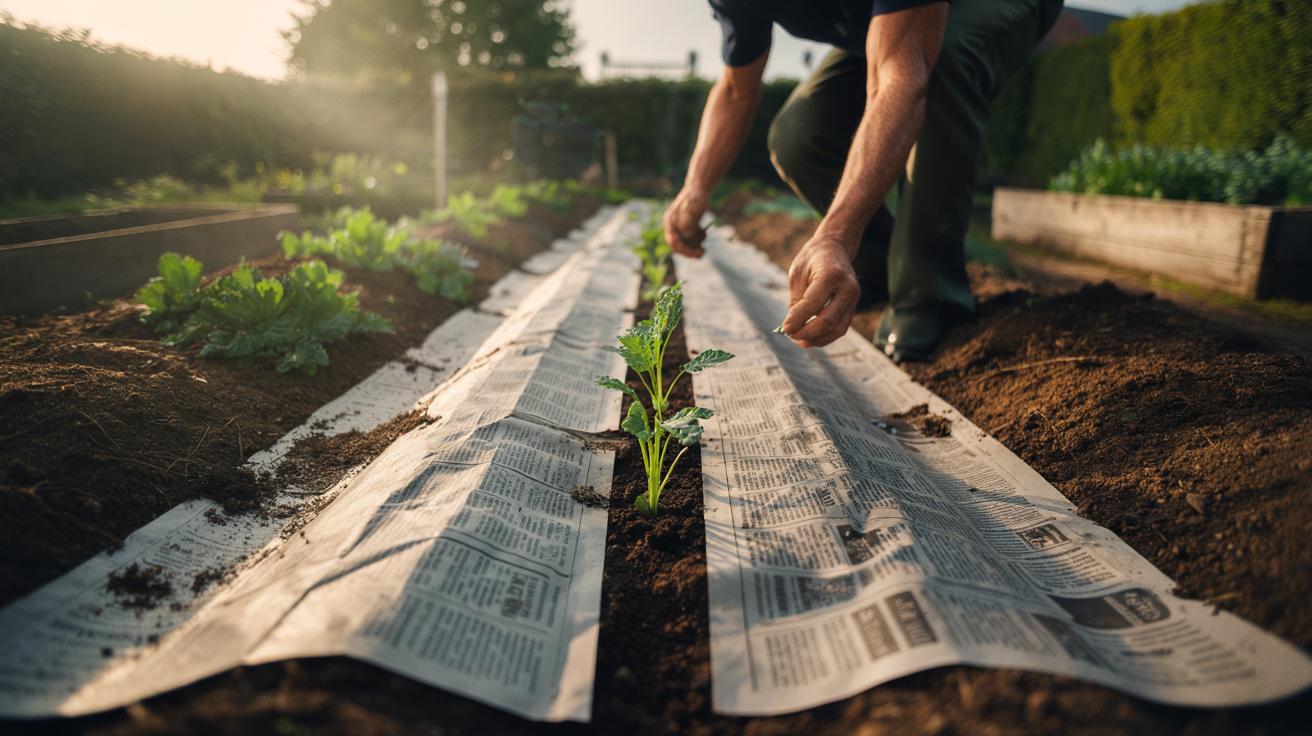
First, water the bed or wait for rain; damp soil helps the paper settle. Pull or slice tall weeds at ground level. Then lay 6–10 sheets of standard newsprint, overlapping edges by a hand’s width. Overlap matters—leave no slivers of light for weeds to exploit. Pre-wet each layer with a rose-can to make it pliable and windproof. Around stems, leave a neat gap to avoid rot. Top the paper with 5–8 cm of organic mulch—compost, leafmould, or wood chips for paths—so it stays shaded and snug. Water again to knit the sandwich together. You can plant immediately by tearing a cross, or pre-lay the barrier weeks earlier to de-fang a weedy patch.
For quick reference on materials and timings, use the guide below. Keep mulch a few centimetres back from soft stems and tree trunks to maintain airflow.
| Item | Rule of Thumb | Why It Matters |
|---|---|---|
| Newspaper layers | 6–10 sheets (12+ for tough weeds) | Ensures light-blocking, slows breakthrough |
| Overlap | 10–15 cm | Prevents gaps where weeds can emerge |
| Top mulch | 5–8 cm | Weighs paper down, improves moisture retention |
| Decomposition | 8–14 weeks in season | Breaks into humus, no waste to remove |
| Watering | Thoroughly at install, then as needed | Activates microbial decay, prevents lift-off |
Practical Tips, Pitfalls, and Environmental Considerations
Windy day? Pre-soak stacks of paper in a trug and work in small sections. For bindweed, couch grass, or bramble, double the layers and extend the cover beyond the patch; repeat if shoots probe through. In slug-prone plots, avoid creating damp tunnels against soft stems—clear a ring so predators can patrol. If you’re worried about nitrogen drawdown, dust the soil with a light scatter of mature compost before laying paper; the effect is minor but the reassurance is real. Skip coated, glossy, or metallic-print pages, which decay poorly and may shed unwanted residues.
Newspaper excels in no-dig beds, around fruit bushes, and across paths. It’s less ideal on steep slopes prone to runoff unless pinned and mulched generously. Irrigation lines can sit below or above; test emitters to ensure flow isn’t impeded. In pots, use fewer layers and poke extra drainage holes to keep roots breathing. Remember, this is a season-long fix, not a forever membrane. When it melts back into the soil, it leaves structure, not rubbish—exactly the point for gardeners who favour circular, low-waste practices.
Newspaper mulch is ordinary magic: cheap materials, careful layering, and nature does the rest. Weeds fade, soil breathes, and the whole plot looks tended rather than battled into submission. It’s a tactic as friendly to wallets as it is to worms, and it scales—from a tomato tub to a full allotment row. Use what you have, observe the results, and adjust the thickness to match the weeds you face. Ready to trade crinkled pages for cleaner beds and fewer hours on your knees—what patch of ground will you trial first, and how will you measure the difference it makes?
Did you like it?4.6/5 (21)