In a nutshell
- 🌙 Overnight stabilisation: charcoal’s adsorption binds soluble toxins, tames odours, and smooths moisture swings fast, while true breakdown takes time—think immobilisation, not instant removal.
- 🧪 How it works: vast pore networks raise cation exchange capacity (CEC), gently buffer pH, and scaffold beneficial microbes; choose clean biochar or activated charcoal and avoid briquettes with additives.
- 📏 Application made simple: mix 1–5 L/m² into beds and 5–10% by volume in containers; pre-charge with compost tea or diluted nutrients, then water in and pair with quality compost.
- ⚠️ Know the limits: heavy metals and persistent herbicides aren’t erased overnight; confirm risks with accredited lab tests and support remediation with neutral pH, organic matter, and cover crops.
- 📊 Right product, right place: coarse biochar for beds (adsorption + aeration), fine activated charcoal for pots (high surface area), and additive-free lump for quick odour control—always verify purity.
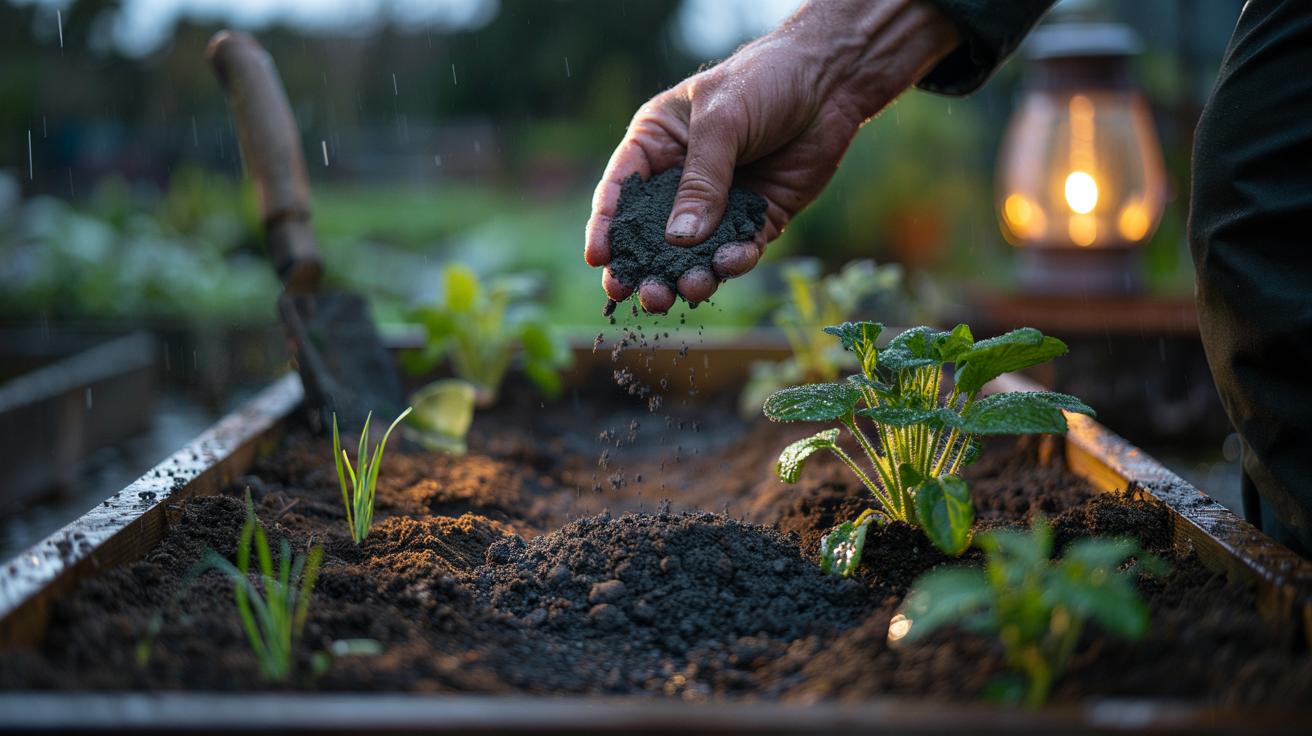
Gardeners have whispered about it for years: a scoop of charcoal sprinkled into a tired bed, a night of quiet rain, and by morning the soil smells sweeter and plants look perkier. Folklore? Partly. But there’s sound science behind the swift change. Charcoal, particularly horticultural charcoal and biochar, acts like a microscopic sponge, trapping problem compounds and steadying moisture. It won’t wash away sins in a single dusk-to-dawn, yet it can make a bed feel newly balanced. The trick is understanding what it really does fast, and what takes time. Used wisely, charcoal helps detoxify, stabilise, and breathe life back into garden soils.
What Makes Charcoal a Soil Detoxifier
At the heart of charcoal’s detox power is adsorption—a surface-based cling rather than deep chemical reaction. Each fragment is riddled with pores, creating an immense internal area where dissolved compounds stick. Much of the “overnight” magic is simply contaminants being held safely on these surfaces, out of immediate circulation. That includes some herbicide residues, odorous amines, and excess nutrients like ammonium that can burn roots or fuel algal slicks in runoff.
Charcoal also boosts cation exchange capacity (CEC), the soil’s ability to hold onto nutrient ions without leaching them away. It lightly buffers pH, easing acidic spikes and creating friendlier conditions for microbes. Think of it as fitting your bed with a breathable filter. Water moves. Air moves. Problem molecules get parked rather than marauding through the rhizosphere. The result is calmer chemistry by morning and fewer stress signals from seedlings.
Not all charcoal is equal. Biochar made from clean woody feedstocks, produced at moderate pyrolysis temperatures, typically offers a balanced pore structure for garden use. Avoid barbecue briquettes or anything with binders, saltpetre, or perfumes—these can add toxins, not remove them. In potting mixes, a finer activated charcoal can be ideal, though it’s pricier. In beds, a coarser grade prevents compaction and keeps pore networks open for air and roots.
Overnight Effects: What Realistically Changes by Morning
Set expectations. Some changes are fast. Others aren’t. By morning you may notice fresher odour, clearer runoff after watering, and a slight lift in wilting-prone plants. That’s charcoal doing quick triage: grabbing volatile compounds, binding a share of soluble toxins, and moderating moisture swings. For beds that received too much manure or liquid fertiliser, charcoal can intercept nutrients that would otherwise leach, easing the shock to root membranes.
Microbial dynamics also shift. The porous matrix offers refuges for beneficial bacteria and fungi, including nitrogen-cyclers that stabilise ammonium and nitrate. While full microbial colonisation takes weeks, the scaffolding is instantly present. Roots sense this refuge. Their exudates spread more evenly, and water films cling where they’re needed. These micro-changes translate into fewer droops at midday and slightly steadier leaf colour—small signals, but real.
What won’t happen overnight? Heavy metals won’t vanish. Deep-bound herbicides won’t magically degrade in hours. Charcoal immobilises many contaminants faster than it breaks them down, reducing bioavailability but not eliminating the source. That still counts as detox in practical terms for seedling safety and runoff quality. Think of the first night as stabilisation. The longer work—microbial processing, gradual mineral complexing, improved crumb structure—starts at dawn and continues for seasons.
How to Apply Charcoal Safely and Effectively
Use clean, plant-grade biochar or horticultural charcoal. For open beds, mix 1–5 litres per square metre into the top 5–10 cm, depending on soil and problem severity. In containers, aim for 5–10% by volume. Pre-charge the charcoal—soak it in compost tea, diluted urine (1:10), or fish hydrolysate for 24 hours—so it doesn’t temporarily draw nutrients away from crops. Water in thoroughly to seat particles and start adsorption immediately.
Pair with finished compost. The organic matrix complements charcoal’s structure, populating pores with life and balancing nutrient flows. For acidic soils, charcoal plays well with ground limestone; for sandy, leaky profiles, it slows nutrient escape. Avoid ash substitutions: wood ash is alkaline and soluble, not porous like charcoal, and can swing pH too far.
| Charcoal Type | Best Use | Key Benefit | Notes |
|---|---|---|---|
| Biochar (coarse) | Garden beds | Adsorption + aeration | Blend 1–5 L/m²; pre-charge |
| Activated charcoal (fine) | Potting mixes | High surface area | Costly; use 5–10% by volume |
| Lump charcoal (additive-free) | Emergency odour control | Rapid odour adsorption | Crush; check for purity |
Never use briquettes or coloured briquettes. They can contain binders, anthracite fines, or ignition aids that harm soil life. If uncertain, ask for a product specification or choose certified biochar. Keep dust down with light misting, and wear a mask while crushing and mixing.
Evidence and Limits: What Charcoal Cannot Do
Charcoal is powerful, not magical. It won’t reverse decades of industrial deposition or cleanse soils laced with lead paint scrapings in a night. What it does do quickly is reduce the bioavailability of many contaminants, buying time for biology and gardeners to act. In studies across temperate soils, biochar has immobilised cadmium and lead by sorption and mineral complexing, while curbing pesticide mobility. Yet performance depends on feedstock, pyrolysis temperature, particle size, and existing soil chemistry.
Testing matters. If you suspect heavy metal hotspots or persistent herbicides (e.g., clopyralid carryover in manure), send a sample to a UK-accredited lab. Charcoal can help immobilise, but safe vegetable production needs numbers, not hope. Combine strategies: add compost for microbial throughput, keep pH near neutral for metal immobilisation, and grow hyperaccumulators on sacrificial plots if remediation is the goal, not harvests.
Policy counts too. Track your inputs. Know your manure source. Charcoal works best as part of a system: clean feedstocks, steady organic matter, smart watering, and seasonal cover crops. Over months, you’ll see richer aggregates, livelier worms, and steadier yields. Overnight? Expect calmer chemistry and fewer shocks. That’s still a win worth having.
Charcoal earns its reputation because it takes the edge off troubled beds fast while building long-term resilience underfoot. Used correctly—clean source, right dose, pre-charged—it stabilises nutrients, shelters microbes, and binds a raft of troublemakers before they reach roots or waterways. It’s not a silver bullet, but it’s a dependable filter and frame for soil life to flourish. If your garden had one new habit this season, would a quiet sprinkle of charcoal be it—and how might you trial it, bed by bed, to see the difference for yourself?
Did you like it?4.3/5 (30)