In a nutshell
- 🌶️ Cayenne pepper deters squirrels because capsaicin irritates mammalian nerves; birds are largely unaffected, making it ideal around feeders.
- 🧪 Use safe application methods: light dry sprinkle, capsaicin spray with a surfactant, bulb pre-coat, and feeder approach rings—test first, wear gloves, avoid edible leaves.
- ☔ Weather weakens potency—rain, dew, wind, and sun degrade oils—so reapply after rain, target entry points, and keep doses modest for consistent results.
- 🛡️ Blend spice with smart defences: baffles, distance from launch points, tight compost lids, mesh bulb baskets, and scent/texture rotation—stay humane and aligned with the UK Animal Welfare Act.
- ✅ Expect practical gains: a low-cost, non-lethal deterrent that cuts raids, protects seedlings, and keeps peace with neighbours and pets when used thoughtfully.
Every spring, British gardeners wage a familiar battle: new shoots nipped overnight, bulbs excavated like truffles, and bird feeders shaken until empty. Enter a humble staple from the spice rack. Cayenne pepper offers an affordable, non-lethal deterrent that takes aim at a squirrel’s hyper-sensitive senses without harming the wider ecosystem. It’s quick to deploy and easy to refresh. Results can be immediate. Yet it isn’t magic, and it isn’t permanent. Consistency matters, weather matters, and placement matters. Used thoughtfully alongside good garden hygiene and a few clever barriers, this fiery powder can tip the balance back in your favour—while keeping the peace with wildlife and neighbours alike.
Why Cayenne Works on Squirrels
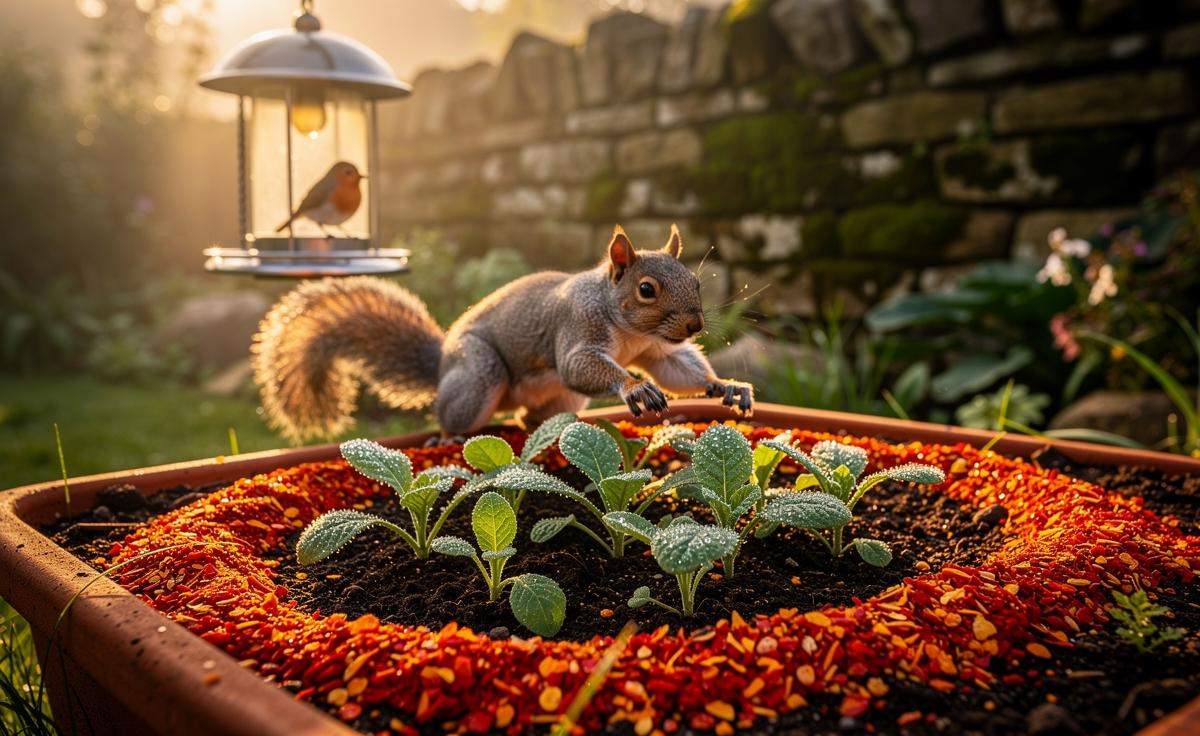
Squirrels are bold, curious, and opportunistic. They are also mammals with nerve receptors exquisitely tuned to pain and irritation. The key molecule in cayenne pepper is capsaicin, which stimulates the trigeminal nerve in mammals, producing an intense burning sensation in the mouth and nose. To a squirrel, a dusting of cayenne on bulbs, compost lids, or the rim of a planter is a blazing stop sign. Birds, by contrast, have far fewer capsaicin receptors and typically ignore the spice, which is why many gardeners confidently use pepper around feeders. It puts off the thieves without silencing the songbirds.
There are caveats. Rain and dew dilute potency. Wind can relocate powders. Strong odours fade as oils volatilise in sunlight. That means your deterrent must be maintained. It’s also wise to keep cayenne off edible leaves and to apply it in a targeted way to avoid unnecessary spread. When used with care—gloves on, mask handy, and no rubbing of eyes—cayenne is a practical, animal-friendly deterrent that slots neatly into a broader garden defence plan.
How to Apply Cayenne Safely in the Garden
Start simple. Sprinkle a light ring of cayenne—just a pinch per plant—around vulnerable seedlings, newly planted bulbs, or the base of raised beds. A dusting on the soil surface deters digging. For planters and window boxes, mix a teaspoon of pepper with a small scoop of topdressing or grit to keep it in place. For a spray, combine cayenne with water and a few drops of washing-up liquid as a surfactant. Always test on a spare leaf first. Avoid breezy days, keep it off your face, and store the spice away from children and pets. Reapply after heavy rain, and lightly after morning dew during active squirrel periods.
Target entry points. The lip of compost bins. The wooden edge squirrels use to vault onto bird feeders. The exact dig sites you’ve seen churning. If you want to treat bulbs at planting, roll them gently in a mix of cayenne and sharp sand before covering. Do not overdo the dose—more isn’t better, and clumps wash into the soil. Reapply after rain or irrigation for consistent results. The guide below keeps it tidy and repeatable.
| Method | Ratio/Amount | Frequency | Best For | Notes |
|---|---|---|---|---|
| Dry sprinkle | Pinch per 20–30 cm | After rain; weekly in season | Seedlings, bulb beds | Apply calm days; keep off edible leaves |
| Capsaicin spray | 1 tsp per 1 L water + 2–3 drops washing-up liquid | Every 3–5 days | Planter rims, fence tops | Patch test first; avoid flowers in bloom |
| Bulb pre-coat | 1:4 cayenne to sharp sand | At planting | Tulips, crocus | Wear gloves and a mask |
| Feeder deter ring | Thin smear on approach ledge | After rain | Bird feeders | Keep off feed ports; birds unaffected |
Blending Cayenne With Smart Squirrel Deterrence
Think like a reporter at the scene: where’s the access, what’s the motive, and when does the culprit strike? Cayenne works best when it covers those choke points while you reduce rewards. Fit baffles on feeder poles and site them at least two metres from launch points. Swap flimsy lids for tight ones on compost and food caddies. Harvest fruit promptly. Lift bulbs into mesh baskets if you’ve an acrobat in residence. Remove the prize and the chase slows.
Scent fatigue is real, so rotate cues. Alternate cayenne with crushed garlic skins, peppermint oil on cloth pegs, or aromatic mulch like pine needles. Use motion and texture too—coarse gravel on top of pots, a wobble board beneath a favourite fence run. Crucially, keep it kind. The UK’s Animal Welfare Act bars methods that cause unnecessary suffering; pepper as a surface deterrent is widely considered acceptable when used responsibly. Finally, think of neighbours and pets: apply lightly, avoid windy applications, and post a friendly note if you’re treating shared boundaries. The result is a layered, humane defence that trades cruelty for craft.
Used with a cool head and a steady hand, cayenne pepper can turn the tables on garden bandits without poisoning the plot or breaking the bank. It is adaptable, quick to top up, and compatible with barriers, tidy habits, and clever planting. Yes, rain asks for repeats. Yes, curious pets need consideration. Yet the gains are tangible: fewer raids, calmer beds, and a bird table for birds again. Ready to test this low-cost strategy on your patch—where will you place your first defensive line, and how will you measure success over the coming fortnight?
Did you like it?4.4/5 (23)