In a nutshell
- 🌱 Cinnamon powder supports rooting by creating a dry, mildly antiseptic barrier; its cinnamaldehyde curbs microbes so a protective callus forms—yet it’s not a rooting hormone.
- 🛠️ Apply a light dusting to a clean, diagonally cut stem below a node, then place into a free-draining medium; water sparingly, ensure airflow, and keep powder above waterline during water propagation.
- 🛡️ The spice’s antifungal edge reduces losses to pathogens like Pythium; it prevents, not cures—so recut above rot, use fresh media, and maintain strict hygiene.
- 🧪 Compare tools: rooting hormones (IBA/NAA) boost tough woody cuttings, while cinnamon offers baseline biosecurity; you can combine them by protecting tissue just above the hormone-coated tip.
- ⚠️ Use plain cinnamon, store dry, avoid an avoid thick slurry or overwatering, keep it off hormone-treated bases, and prioritise light, warmth, and breathable mixes for reliable rooting.
Gardeners have a secret that costs pennies and lives in the spice rack. A light dusting of cinnamon powder on freshly cut stems can encourage cleaner healing, reduce infections, and improve strike rates for cuttings. It’s not magic. It’s practical plant care, grounded in hygiene and simple chemistry. Dusting fresh cuts helps plants seal and root without a petri dish of pathogens. Whether you’re multiplying mint on a windowsill, rescuing a snapped tomato side shoot, or dividing a houseplant, cinnamon offers a quick, accessible assist. Here’s why it works, how to use it properly, and where it outperforms pricier products—and where it doesn’t.
Why Cinnamon Encourages Root Growth on Cuttings
Rooting demands energy, moisture control, and a wound that stays clean. Cinnamon contributes by creating a dry, mildly antiseptic barrier around the cut, limiting the advance of fungi and bacteria that would otherwise colonise the exposed tissue. The spice’s key compound, cinnamaldehyde, has well-documented antimicrobial activity. That buys time. With infection pressure reduced, the cutting can form a callus—that corky, protective layer—from which new roots push. Think of cinnamon as a defensive midfielder: it doesn’t score the goal, but it keeps the path clear.
Cinnamon is not a rooting hormone. It doesn’t supply auxins like IBA or NAA, so it won’t trigger roots in hard-to-root woody species by itself. What it does, reliably, is reduce rot, wick excess surface moisture, and discourage gnawing by fungus gnats or opportunistic moulds. In easy and moderate cuttings—basil, pothos, coleus, begonia, many succulents—that’s often all you need. The result: fewer losses, steadier early growth, and cleaner heel tissue that transitions quickly into active rooting.
How to Apply Cinnamon to Cuttings and Wounds
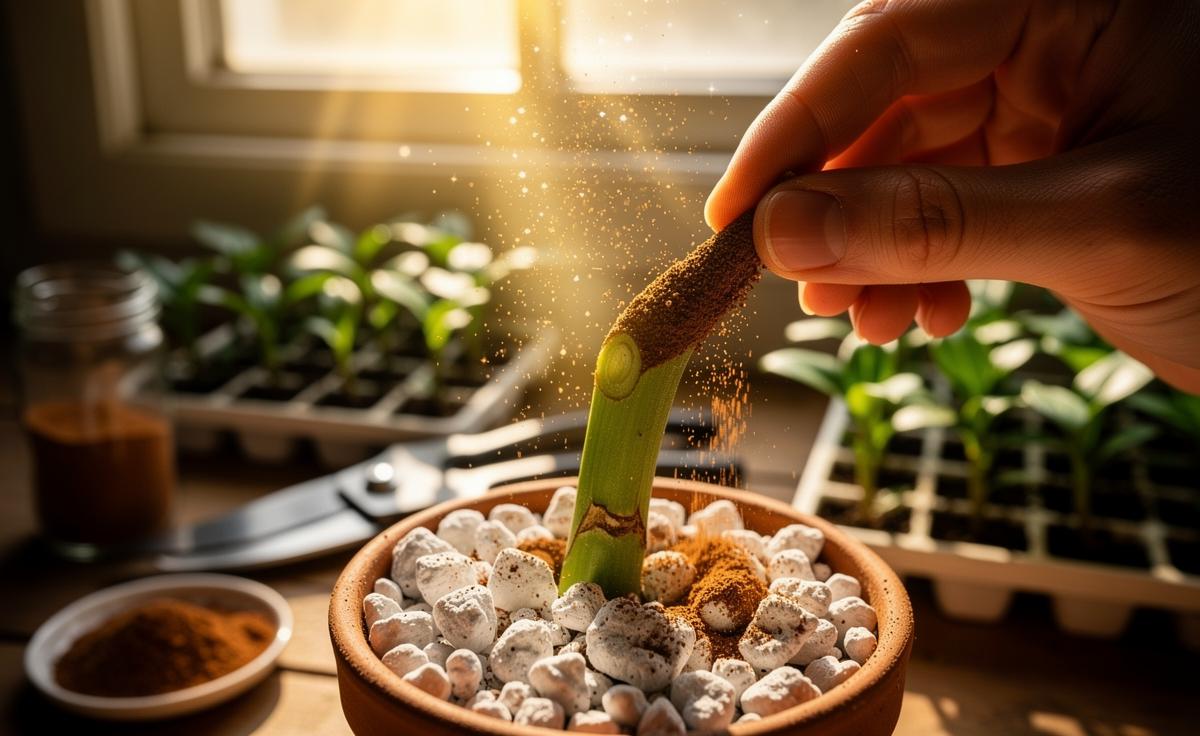
Start clean. Sterilise your blade, take a sharp, diagonal cut just below a node, then pat the end dry with a paper towel. Dab the cut end into a saucer of finely ground cinnamon so the thinnest veil adheres—no thick crust. Tap the excess. Use a light dusting: more powder can seal too tightly and slow rooting. Insert into a free-draining medium (perlite, sand, or a peat-free mix), and firm gently. For divisions or snapped shoots, dust any exposed flesh before replanting or staking.
Water sparingly at first. You want moisture in the substrate, not a swamp around the wound. Bottom watering or a brief mist avoids washing the powder away. If you’re water-propagating in a jar, apply cinnamon only to the upper wound and keep that part above the waterline; the powder will simply disperse if submerged. For succulents, let the cut callus for 24–48 hours, then dust with cinnamon and pot up; this combination is exceptionally rot-resistant. Good airflow matters as much as the spice, so avoid stagnant humidity domes unless the plant truly requires them.
Disease Prevention: The Antifungal Edge
Fresh plant wounds are a buffet for pathogens—notably the fungi behind damping-off and stem rots. Cinnamon’s antifungal action suppresses spore germination at the wound surface, where it counts most. That means fewer losses to Pythium-style mush and a lower chance that opportunists will invade before callus tissue forms. It’s a local, surface-level shield, not a cure-all. Cinnamon reduces risk; it doesn’t sterilise the entire plant.
Use it alongside other clean-culture habits: fresh, peat-free media; washed pots; and careful watering. If a cutting is already brown at the base or smells sour, remove the rot, recut above healthy tissue, then dust again. Cinnamon won’t reverse established infections, but by trimming and reapplying, you reset the clock in your favour. On mature plants, a light dusting on pruning cuts—especially in humid greenhouses—helps those wounds dry cleanly. This is invaluable with soft herbaceous growth and houseplants prone to mould in winter.
Cinnamon Versus Rooting Hormones: What to Expect
For many soft cuttings, cinnamon alone equals or beats “nothing” while costing less than commercial gels. But synthetic rooting hormones (IBA/NAA) still win on hard-to-root species and woody cuttings. The choice depends on plant type, your environment, and appetite for precision. Think of cinnamon as baseline biosecurity; hormones are performance enhancers. You can combine them: dip the base in hormone as directed, then, once tacky, dust a whisper of cinnamon slightly above the treated zone to guard exposed tissue without smothering the hormone-coated tip.
| Method | Pros | Cons | Best For |
|---|---|---|---|
| Cinnamon Powder | Antifungal, cheap, accessible, reduces rot | No auxin; may be less effective on woody stems | Soft cuttings, succulents, houseplants |
| Rooting Hormone (IBA/NAA) | Boosts root initiation, reliable on difficult species | Cost, expiry, misapplication risks | Woody shrubs, fruit bushes, roses |
| Nothing | Free, simplest possible method | Higher failure rates, more rot in humid settings | Very easy plants in ideal conditions |
In UK homes with variable winter humidity, cinnamon closes the hygiene gap nicely. For spring shrub pruning, reach for hormone first, cinnamon as the clean-up act. Match the tool to the plant and you’ll avoid both overkill and disappointment.
Safety, Sourcing, and Common Mistakes
Buy plain culinary cinnamon—no sugar, no blends. Cassia and Ceylon both work; strength differences are minor for horticultural use. Store it airtight and dry. When applying, avoid clouds of dust: it can irritate skin and lungs. Wear a light mask if you’re treating many cuttings. Never paste cuts with a thick, wet cinnamon slurry; it traps moisture and starves the wound of oxygen. Aim for a dry, delicate coat.
Common mistakes? Drowning the cutting after application; using old, contaminated media; dipping the entire stem rather than just the wound; and expecting hormonal results from a non-hormonal aid. With succulents and cacti, patience pays—allow a proper callus to form before dusting and potting. If pairing with rooting hormone, keep cinnamon off the hormone-coated base. And remember, environmental basics still rule: bright, indirect light, stable warmth, and a breathable mix will do more for roots than any additive. Cinnamon works best as part of a clean, consistent routine.
Used thoughtfully, cinnamon powder turns messy cut surfaces into tidy, protected launchpads for roots. It’s quick, frugal, and surprisingly effective in the average British home where damp and drafts conspire against young plants. Treat the wound, water with restraint, keep the air moving, and let the callus do its quiet work. Think hygiene first, hormones if needed. What plant on your shelf—or in your garden—would benefit most from a pinch of cinnamon on its next cutting, and how will you set up the conditions to let it shine?
Did you like it?4.6/5 (21)