In a nutshell
- 🌸 Epsom salts (magnesium sulphate) rapidly correct magnesium deficiency, restoring chlorophyll and tightening bud set for richer blooms, often greening leaves within 3–7 days.
- ⚗️ How it works: magnesium sits at the heart of chlorophyll, while sulphur fuels protein enzymes; pair with phosphorus and potassium for balanced, sustained flowering.
- 📏 Practical use: apply a foliar spray at 1 tbsp/gal (15 g/4 L) for 2–3 weeks, or a soil drench at 1–2 tbsp/gal for roses, tomatoes, and container annuals—start low in pots.
- 🧪 Track impact with an A/B trial: count buds, measure flower size and colour weekly, and verify with a soil test to confirm Mg status and pH.
- ⚠️ Myths and risks: not a cure-all; excess magnesium can hinder calcium and potassium uptake—avoid build-up, spray in cool hours, and use targeted, low-dose sustainability practices.
Gardeners often whisper about a quick, affordable fix for sullen blooms. That remedy is Epsom salts, the familiar, crystalline form of magnesium sulphate (MgSO4·7H2O). Applied with care, it can kick-start colouring, tighten bud set, and deepen leaf tone with remarkable speed. The science is simple: magnesium sits at the heart of chlorophyll, while sulphur underpins vital proteins and enzymes. When flowering plants stall, this duo frequently restores momentum. Results can be rapid. Leaves green up. Buds push on. Used correctly, magnesium acts like a short, sharp nudge rather than a blunt-force feed. Think of it as a precise tune-up, not a miracle cure.
Why Magnesium Sulphate Sparks Faster Flowering
Flowering drains plants of resources. Magnesium is central to chlorophyll, so any shortfall curbs photosynthesis and energy, hampering bloom formation. Magnesium deficiency is a hidden brake on bloom production. You’ll often see interveinal yellowing on older leaves, brittle foliage, and reluctant buds. Because Epsom salts dissolve readily, both soil drenches and foliar sprays deliver magnesium quickly. The sulphur component also matters, feeding amino acid synthesis and helping plants build the proteins driving bud development.
Unlike many fertilisers, magnesium sulphate is effectively pH-neutral in solution. That makes it a flexible option for borders, containers, and greenhouse crops where soil reaction varies. Foliar sprays are the fastest route during active growth, especially in cool spells when roots lag. Expect leaf colour to improve first, often within a week, followed by tighter, more confident bud set. In soils already rich in magnesium, the response may be modest; the real gains appear where deficiency or heavy flowering demand exists.
It’s not a substitute for a balanced regime. Phosphorus drives root and bloom initiation; potassium hardens tissue and powers flowering. Think synergy, not a solo act. Pairing Epsom salts with a general-purpose feed often turns a good display into a great one.
Practical Dosages and Application Methods
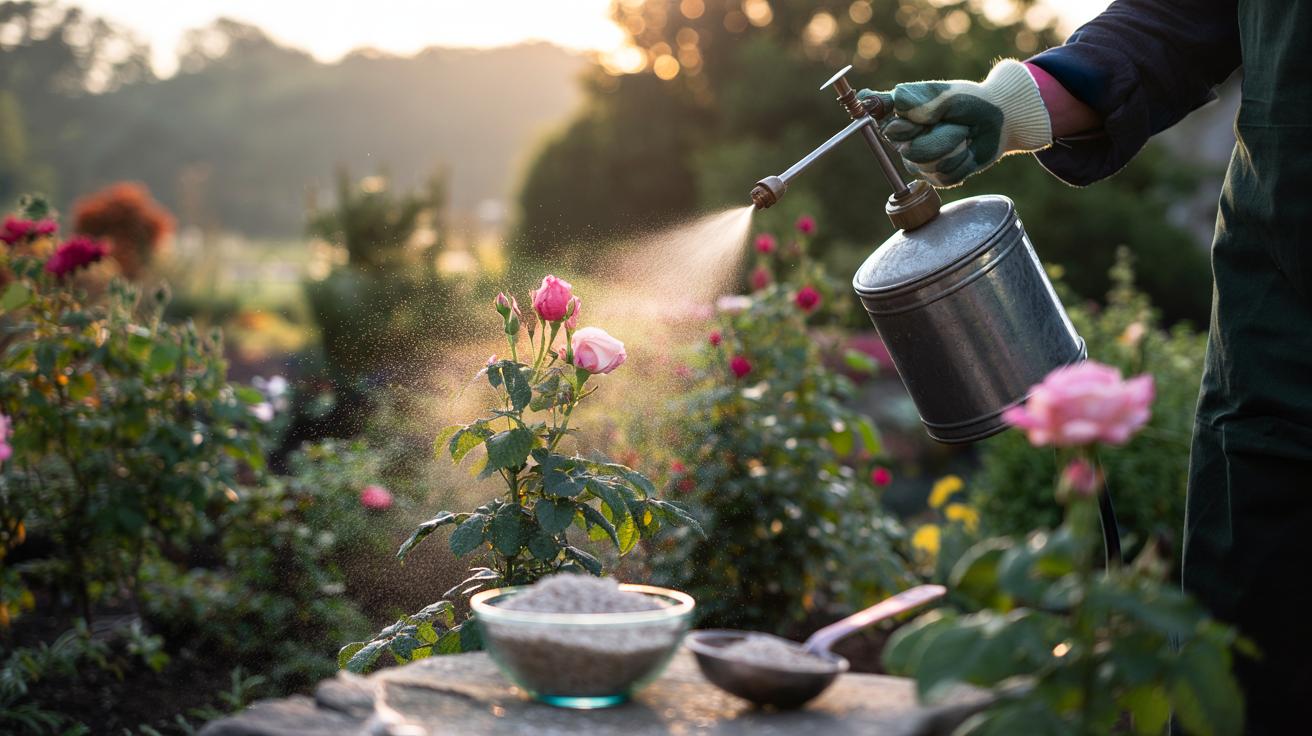
For speed, mix a foliar spray at 1 tablespoon per gallon (about 15 g per 4 L) and mist leaves in the cool of morning. Spraying weekly for two to three weeks can reset pale, reluctant plants. For a soil drench, dissolve 1–2 tablespoons per gallon (15–30 g per 4 L) and water around the root zone, especially for roses, tomatoes, peppers, fuchsias, pelargoniums, and hungry bedding displays. In containers, start low: salts accumulate faster in pots than in beds. Always test on a few plants first.
| Plant Type | Method | Rate | Frequency |
|---|---|---|---|
| Roses | Soil drench | 1–2 tbsp/gal (15–30 g/4 L) | Monthly in bloom period |
| Tomatoes & Peppers | Foliar spray | 1 tbsp/gal (15 g/4 L) | Every 10–14 days |
| Container Annuals | Soil drench | 1 tbsp/gal (15 g/4 L) | Every 3–4 weeks |
| Azalea/Camellia | Foliar spray | 0.5–1 tbsp/gal (7–15 g/4 L) | Monthly, light touch |
| Lawns (Greening) | Hose-end spray | 1 tbsp/gal (15 g/4 L) | As needed, spring–summer |
Use rainwater where possible; hard water can dull foliar absorption. Do not mix with highly alkaline solutions. Never exceed label-safe concentrations, especially under glass, where evaporation concentrates salts. After heavy rain, a light top-up can restore momentum. In cool soils, sprays outperform drenches. In warm, active soils, drenches excel. Pair with a balanced, potassium-forward fertiliser to sustain the bloom drive without forcing lush, sappy growth.
Rapid Results: What to Expect and How to Measure
The first sign is colour. Leaves shift from washed-out to a richer green in 3–7 days after foliar treatment. Buds often feel firmer to the touch, and trusses set more evenly. Look for cleaner veining, fewer yellow margins, and a steadier, upright habit. In flowering crops like roses and peppers, you may see an uptick in bud numbers over 10–21 days, especially where plants were previously magnesium-limited. That speed is the appeal: magnesium sulphate corrects a bottleneck, which translates quickly into visible performance.
Test it. Run a simple A/B trial across two matched beds or pots. Feed one set your normal regime, add Epsom salts to the other. Count buds, measure flower diameter, and note colour intensity weekly. Photographs help: same light, same angle, no filters. Data beats hunches when deciding if a tweak earns its place in your routine. If gains are modest, your soil may already supply enough magnesium, or the limitation may be phosphorus, potassium, water, or temperature. Adjust the rest of the toolkit first, then re-check.
For precision, use a home soil test or laboratory analysis to confirm magnesium status and pH. Balanced nutrition equals reliable bloom.
Common Myths, Risks, and Sustainability
Myth one: Epsom salts fix everything. They don’t. They help when magnesium or sulphur are limiting factors, not when pests, drought, or cold are the real culprits. Myth two: more is better. It isn’t. Excess magnesium can antagonise calcium and potassium uptake, inviting blossom-end rot risks in tomatoes and soft growth in ornamentals. In containers, salts accumulate; leach pots with plain water every few weeks. In open ground, sensible rates and seasonal rainfall generally prevent build-up.
Worried about “salt” in the name? This isn’t table salt. It’s a neutral salt of magnesium and sulphate, highly soluble and gentle at horticultural doses. Use clean equipment, avoid midday spraying to reduce leaf scorch, and keep solutions off blooms where spotting would ruin a show. If leaves look stressed after treatment, pause and flush with water. Always integrate Epsom salts with compost, mulch, and a balanced fertiliser plan: organic matter buffers nutrients and steadies moisture, the real backbone of consistent flowering.
From a sustainability lens, targeted, low-dose applications cut waste. Buy only what you’ll use. Store dry. Share with an allotment neighbour rather than stockpiling a sack you’ll never finish.
Used wisely, Epsom salts act as a swift, precise tune-up for tired bloomers, restoring chlorophyll efficiency and freeing plants to channel energy into flowers. Expect greener leaves first, stronger bud set next, and a more confident display over the following weeks. Treat it as a scalpel, not a sledgehammer. Balance with potassium and phosphorus, keep watering even, and monitor results with simple notes and photos. Ready to run a small, side-by-side trial this season and see exactly how much extra colour a little magnesium can unlock in your garden?
Did you like it?4.7/5 (28)