In a nutshell
- 🌱 Soil biology: coffee grounds fuel microbes, improve aggregation and aeration, preventing stress and enhancing nutrient uptake when mixed into compost rather than applied as a thick layer.
- 🔬 Nutrients & pigmentation: provide slow-release nitrogen (~2%) with P and K, supporting anthocyanin-rich blooms; used grounds are around pH 6.5, nudging micronutrient availability without sharp acidification.
- 🛠️ How to apply: Blend 1 part grounds to 3–5 parts compost; top-dress at 0.5–1 L/m²; for pots, 1 tbsp per litre of mix; compost up to 20% by volume; keep surface layers under 5 mm.
- ⚠️ Pitfalls & checks: avoid crusting, smothering seedlings, and combining with high-N feeds; grounds are not a complete fertiliser or reliable slug deterrent; track bud count and colour to adjust.
- 🌺 Payoff: stronger structure, steadier moisture, and deeper, longer-lasting blooms across UK borders, delivering a low-cost, circular technique when used with moderation, mixing, and observation.
In gardens across the UK, a simple kitchen leftover is transforming borders and pots. Used coffee grounds promise richer soil and flowers with intensified colour, yet the magic isn’t instant. It’s biological. It’s chemical. And it’s practical. When applied correctly, grounds feed microbes, tweak nutrient availability, and help petals express deeper pigments. Applied poorly, they can clump, repel water, or overwhelm young roots. The difference lies in understanding how this material behaves once it hits the soil. Used correctly, coffee grounds deepen bloom colour without scorching roots or upsetting the soil’s balance. Here’s what the science says, along with tested techniques British gardeners can trust throughout the growing season.
How Coffee Grounds Enrich Soil Biology
Colour begins in the soil. Used coffee grounds are rich in organic matter that fuels soil life, especially bacteria and fungi that unlock nutrients for flowering. As microbes digest the fine particles, they create sticky byproducts that help aggregate soil. Structure improves. Drainage moderates. Roots breathe. That subtle shift in texture and aeration lets plants access water and minerals more smoothly, cutting stress during spring dry spells or summer heat spikes.
The grounds’ fine grind is an asset only when blended. A thick, undiluted layer can compact and form a crust that sheds rain. Mixed lightly into compost, leafmould, or bark mulch, they disperse evenly and resist clumping. The goal is not a coffee “cap,” but a living blend that feeds the soil food web. Expect to see whitish fungal threads during decomposition; they’re typically beneficial, part of the engine that turns residues into bloom-boosting nutrients.
There’s also a subtle microbial advantage. Grounds arrive preloaded with compounds that, once broken down, nudge the soil toward steady nutrient release rather than boom-and-bust spikes. That measured supply encourages balanced growth, preserving the energy plants channel into petals and pigments.
Nutrients, pH, and the Science Behind Vivid Blooms
Used coffee grounds supply slow-release nitrogen (roughly 2% by weight), with modest phosphorus and potassium. That N feeds chlorophyll and plant metabolism, but not in a quick, leafy surge. Because microbial processing is required, nutrients trickle out across weeks, supporting bud formation and colour stability. Many flower pigments—especially anthocyanins in roses, hydrangeas, salvias—intensify when plants are well-nourished yet not overfed with fast nitrogen. Steady nutrition is the friend of vivid, long-lasting blooms.
On pH, a nuance matters. Fresh grounds are mildly acidic, whereas used grounds settle closer to neutral (about pH 6.5). They will not sharply acidify beds overnight. Yet by raising organic matter and microbial activity, they can subtly influence micronutrient availability, including iron and manganese, which support leaf health and indirectly assist flower intensity. Hydrangea colour, famously tied to pH and aluminium, won’t flip from pink to blue with coffee alone, but improved soil health can enhance whichever shade your soil already favours.
| Feature | What It Means for Blooms |
|---|---|
| Nitrogen ~2% | Slow release supports buds without excessive foliage surge. |
| Phosphorus ~0.3% | Assists root growth and flower development. |
| Potassium ~0.6% | Improves stress tolerance and colour retention. |
| C:N ratio ~20:1 | Microbes break it down efficiently; minimal nitrogen lock-up. |
| pH of used grounds ~6.5 | Gentle, not a strong acidifier; safe for mixed borders. |
Smart Application Methods for Gardeners
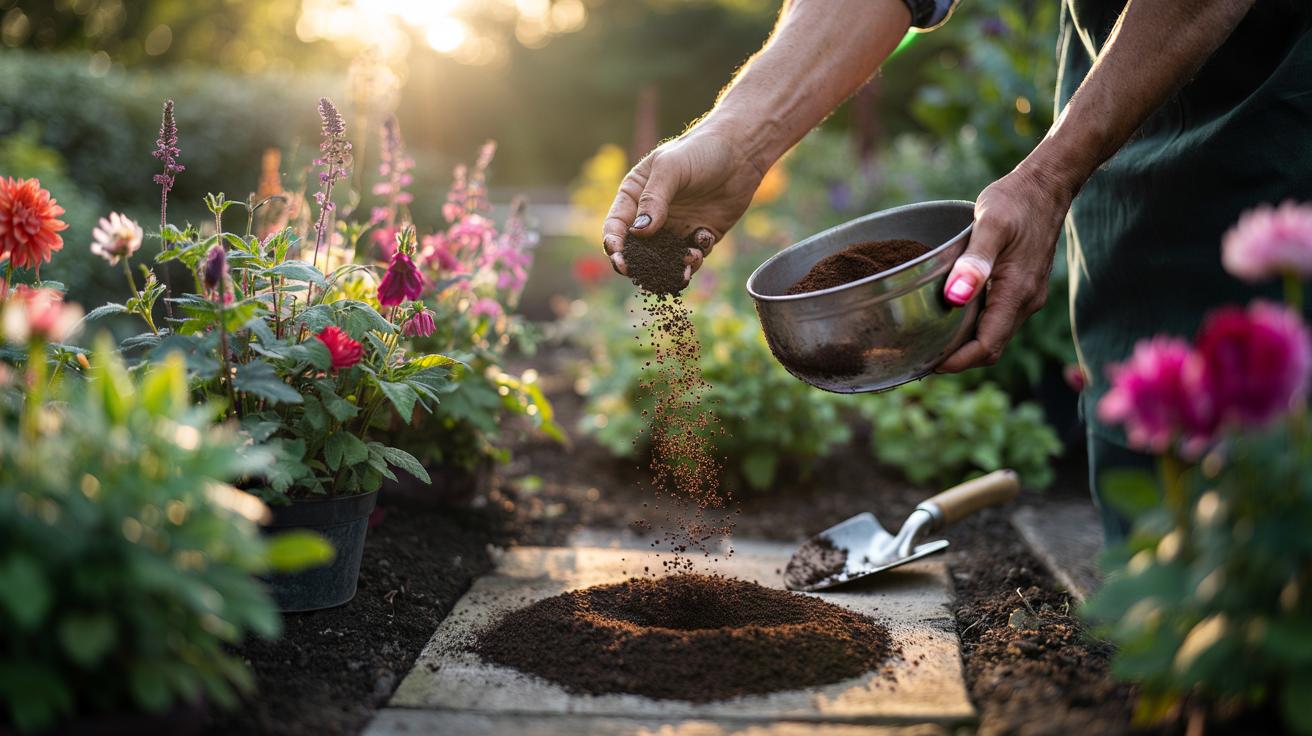
Blend, don’t blanket. For beds and borders, mix one part coffee grounds into three to five parts compost or leafmould, then top-dress at 0.5–1 litre per square metre in spring and early summer. Water in. This creates a microbe-friendly mulch that feeds steadily while reducing evaporation. For containers, incorporate a tablespoon of grounds per litre of potting mix, or scratch a thin sprinkle into the top 1–2 cm monthly during active growth. Never pile more than a 5 mm layer on the surface; thin is safe, thick is trouble.
Composting is excellent. Treat grounds as “greens” and balance them with “browns” such as shredded cardboard or autumn leaves. Up to 20% by volume in the heap works well. The heat and microbial churn neutralise any lingering compounds and build stable humus. That finished compost—dark, crumbly, sweet-smelling—is a powerful bloom tonic.
Target plants that respond best. Roses, salvias, dahlias, echinaceas, and many cottage perennials appreciate the moisture regulation and gentle nutrition. Acid-loving shrubs—azaleas, camellias, rhododendrons—also benefit, though they still need dedicated ericaceous feed in lean soils. If you’re growing hydrangeas for show-stopping colour, pair grounds with proper pH management and consistent watering to keep petals saturated and luminous.
Common Pitfalls and Evidence-Based Tips
The risks are manageable. Don’t smother seedlings or newly pricked-out annuals; their fine roots dislike dense layers. Avoid dumping large wet clumps that can repel water once dried. If a surface crust forms, fluff it and blend with mulch. Coffee grounds are not a miracle acidifier, nor a complete fertiliser; they are a soil conditioner that supports bloom performance. Use them as part of a plan, not the plan.
Watch the nitrogen balance. Too much fast N pushes leaves at the expense of flowers. Grounds don’t typically do that, but combining them with high-nitrogen feeds might. Keep your base feeding balanced and lean into slow, organic inputs. Where slugs are rampant, don’t rely on grounds as a deterrent—evidence is mixed—use barriers or wildlife-friendly traps instead.
Finally, measure results. Note petal intensity, bud count, and vase life before and after adopting grounds. In many UK soils, a season of careful application yields noticeable shifts: tighter plants, richer tones, and fewer midday flops. That feedback loop is gold. Adjust rates, blend materials, and aim for living, elastic soil that makes colour pop—even in fickle weather.
Used well, coffee grounds turn ordinary soil into a resilient medium that coaxes flowers into sharper, longer-lasting colour. They build structure, feed microbes, and release nutrients at a pace that suits petals as much as leaves. The technique is cheap, circular, and easy to scale from pots to borders. The secret is moderation, mixing, and observation. Start small, compare beds, and keep notes. Which plant in your garden will be the first to show off that deeper, more vivid bloom once you put your grounds to work?
Did you like it?4.4/5 (29)