In a nutshell
- 🌿 Wood ash adds fast-acting potassium, calcium, and trace minerals, gently nudging acidic soils toward a healthier pH for robust growth.
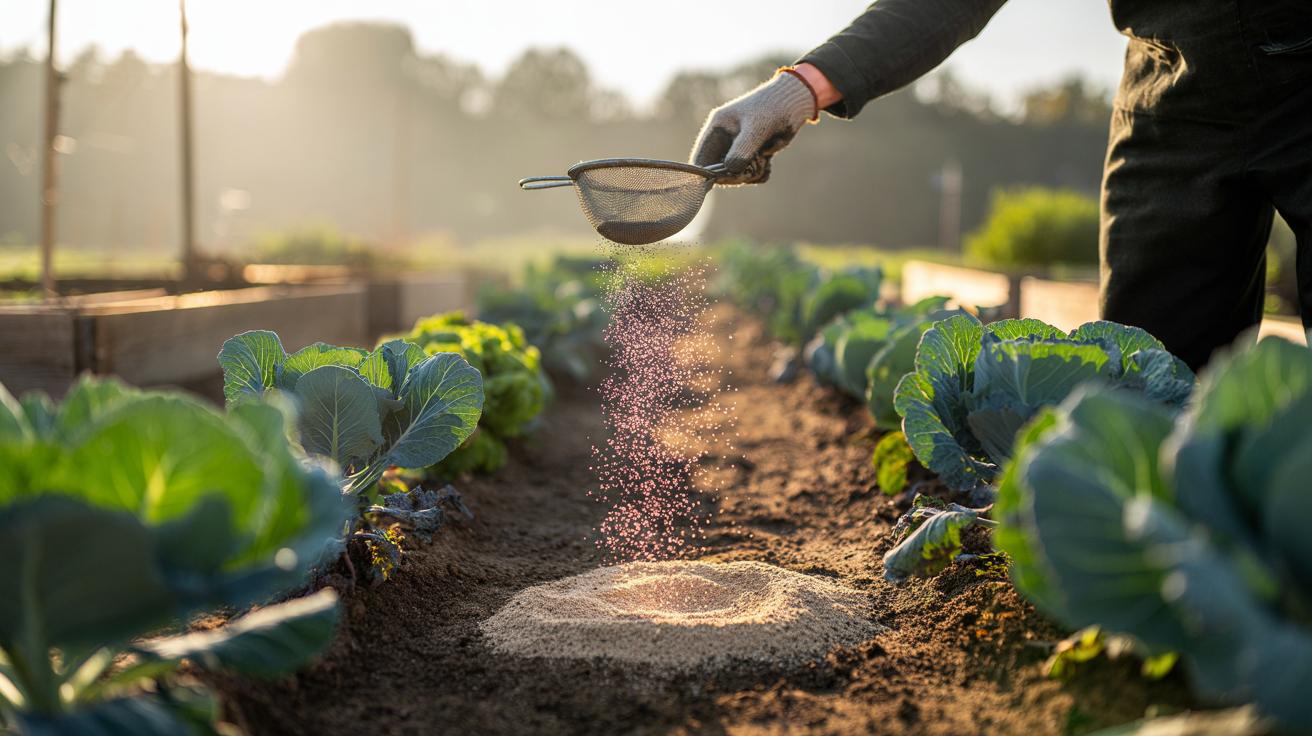
- 🌧️ Sprinkling beats dumping: apply a thin, even dusting (about 70–100 g/m²) and let rainfall move nutrients into the root zone without causing salt or pH spikes.
- 🥦 Favour brassicas, alliums, and neutral-leaning beds; avoid acid lovers (blueberries, rhododendrons) and potatoes to reduce scab risk.
- 🧪 Pair ash with compost, keep it dry and sifted, avoid mixing with ammonium fertilisers, and test soil periodically to maintain balance.
- 🛡️ Prioritise soil biology and safety: light, frequent applications protect microbes, while gloves, masks, and swift clean-ups keep gardeners and paving safe.
Across Britain, gardeners are rediscovering the quiet power of wood ash. A light sprinkle, not a heavy heap, can replenish soils with essential trace minerals that intensive cultivation often depletes. The science is straightforward: ash contains plant-ready potassium, calcium, and micro-elements, and it gently nudges acidity toward a friendlier pH for many crops. The practice is equally simple. Spread a fine dusting, let rain carry ions into the root zone, and watch structural vitality return. Go thin and even—precision beats quantity every time. Used wisely, ash becomes a circular, low-cost fertiliser that turns last winter’s fire into this summer’s harvest.
The Mineral Logic of Wood Ash
When wood burns, it leaves behind a matrix of carbonates and oxides—a readily soluble bundle of plant nutrients. Chief among them is potassium (K), a driver of flowering, fruiting, and disease resilience. There’s also abundant calcium, which strengthens cell walls and helps maintain soil structure, plus magnesium for chlorophyll and phosphorus for root vigour. Micronutrients arrive in whisper-small but meaningful quantities: boron, manganese, zinc, and others. Ash is alkaline, so it can lift acidic soils toward the crop-friendly middle ground. That shift unlocks nutrients that were previously tied up by low pH.
Unlike slow-release rock powders, ash dissolves quickly in moisture. This fast availability suits UK growing seasons that swing from cool and wet to brief warm bursts; nutrients need to mobilise on the crop’s clock. Yet speed is a double-edged sword. Over-application risks salt stress and spikes in soil pH. Think of ash as a seasoning, not a main course. Use it to balance, complement compost, and fortify the trace element profile rather than to replace broader soil care.
| Nutrient | Typical Share in Wood Ash | Plant Role |
|---|---|---|
| Potassium (K) | 4–9% | Regulates water use, flowering, fruit quality, disease tolerance |
| Calcium (CaCO3 eq.) | 25–45% | Cell wall strength, improved soil structure, pH moderation |
| Magnesium (Mg) | 1–3% | Chlorophyll core, photosynthesis efficiency |
| Phosphorus (P) | 0.5–2% | Root development, energy transfer |
| B, Mn, Zn (trace) | ppm to 0.1% | Enzyme activation, pollen viability, micronutrient balance |
Why Sprinkling Beats Dumping
Distribution is destiny. A thin, even sprinkle lets ions meet soil particles uniformly, avoiding hot spots that can scorch roots or lock nutrients. Picture a dusting so light you can still see the soil texturing beneath. That’s the sweet spot. It minimises localised alkalinity spikes, reduces runoff during showers, and maximises contact with the soil’s cation exchange sites where potassium and calcium can be held and traded to roots. Small, frequent dustings outperform one big dump by miles.
Timing matters. In the UK, late autumn to early spring applications ride the season’s natural rainfall to move potash into the root zone before growth surges. For general beds, aim for roughly 70–100 g per m² once or twice a year; on heavy, acidic soils you may stretch to 150 g per m² after a pH test. Use a sieve or gloved hand and sweep side to side for coverage. If you see grey patches, you’ve gone too thick—brush them in or dilute with compost.
Sprinkling also respects biology. Earthworms, fungi, and microbes prefer gradual changes. A light dust preserves their habitat while still correcting acidity and supplying trace minerals. It integrates neatly with mulch. Scatter ash, then top with organic matter; the mulch buffers pH and slows leaching, while rain ferries nutrients downward. The result is steady nutrition, better structure, and fewer shock events in the rhizosphere. Quiet, clean, effective.
Practical Do’s and Don’ts for UK Gardens
Use ash only from untreated, unpainted wood—never coal, briquettes, MDF, or glossy papers. Sieve out charcoal lumps and ensure it’s stone-cold. Store dry in a lidded bucket; moisture converts some goodness to sludge and accelerates leaching. Pair ash with compost to round out nitrogen and carbon—one fortifies minerals, the other feeds microbes. For crops, brassicas relish the liming effect and extra calcium; onions and garlic also appreciate a nudge toward neutral. Go carefully with carrots and parsnips; they like potassium but not sudden pH jumps.
Keep ash away from acid lovers: blueberries, rhododendrons, azaleas, camellias, and heathers. Avoid potatoes too; higher pH invites common scab. Don’t mix fresh ash with ammonium-based fertilisers or urea—ammonia can volatilise and disappear into thin air. Leave two to three weeks between applications. Near seedlings, use a lighter hand and water in; tender roots are sensitive. On lawns, a whisper-fine winter dusting can help, but test first; many UK turfs already sit close to neutral.
Safety is simple: wear gloves and a mask on breezy days. Protect paving; ash stains when wet. Test soil every couple of years using a basic kit or send to a UK lab for pH and nutrient status. If you overshoot and soils drift alkaline, bring them back with sulphur, piney mulches, or generous compost. Balance is the goal, not maximal alkalinity. Managed this way, ash becomes a precise tool rather than a blunt instrument.
Used with care, a light ash sprinkle is a fast, frugal way to restore potassium, calcium, and a suite of trace minerals that keep plants vigorous in capricious British weather. It smooths pH, bolsters cell structure, and supports resilient growth without buying a bag of chemicals. Less is more, especially when the rain is your delivery driver. As the stove cools and borders wake, will you trial a careful dusting and let your soil—and its microbes—tell you how much is just right?
Did you like it?4.7/5 (23)