In a nutshell
- 🌱 Crushed nut shells enrich soil with slow-release lignocellulose, calcium, and potassium, supporting firmer texture and steadier sweetness while nurturing beneficial microbial communities that elevate plant flavour.
- 🧪 Trace phenolic compounds from shells can prime plant defences, boosting terpenes and flavonoids for brighter aromas and cleaner taste; effects build gradually across a growing season.
- 🛠️ Choose shells wisely (almond, hazelnut, pistachio, peanut), rinse salt, crush to pea-size, and avoid black walnut near sensitive crops due to juglone; balance with “green” materials to prevent nitrogen drawdown.
- 📊 Apply a thin mulch (~1 cm) or mix up to 10% in potting blends, pair with active compost or worm castings, maintain even moisture, and lightly rake mid-season to prevent mats and improve breakdown.
- 🔍 Growers report steadier watering, fewer splits, and heightened aroma intensity; preconditioning shells in hot compost and allowing a second season often deliver the most convincing flavour gains.
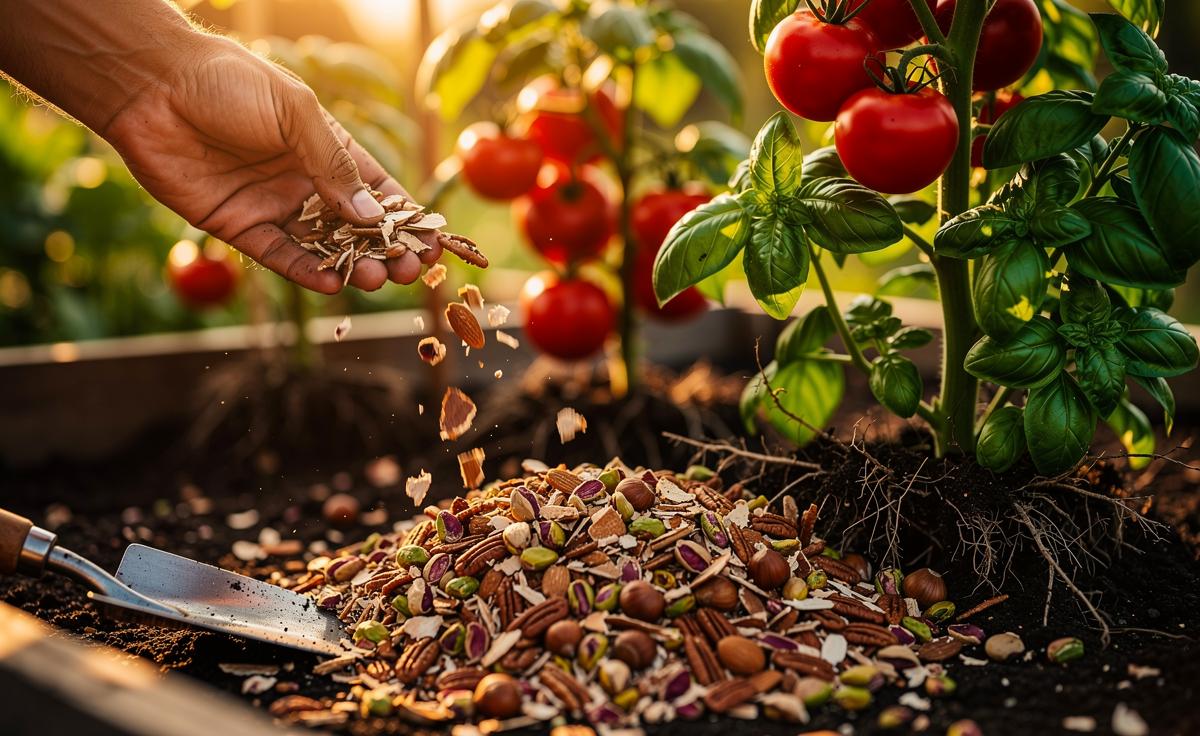
Gardeners are rediscovering an overlooked resource hiding in plain sight: the brittle armour of nuts. When crushed shells are folded into soil or used as a mulch, they don’t just tidy beds and suppress weeds. They can nudge crops toward richer, more distinctive flavour. Slow-release minerals, stubborn lignin, and traces of phenolic compounds quietly alter soil chemistry and the microbial chorus around a plant’s roots. Over weeks and months, that chemistry can shape sugar–acid balance, aroma, and texture. The result feels a little like terroir in a bag of kitchen leftovers. Handled correctly, nut shells are a subtle but potent lever for taste-focused growers.
The Soil Chemistry Behind Flavour Changes
Plants don’t taste good by accident. The sugars in a tomato, the peppery lift in a rocket leaf, the perfume of basil—all arise from nutrient flow, stress signals, and microbial partnerships underground. Crushed nut shells feed that underground system in ways that standard compost may not. Rich in recalcitrant lignocellulose and modest amounts of calcium and potassium, shells act as a slow, gentle buffer. Calcium supports cell-wall integrity and can tighten fruit texture; potassium is central to carbohydrate transport, subtly influencing sweetness. The shell matrix releases these contributions gradually, smoothing peaks and troughs in availability.
Then come the phenolics—trace tannins and other aromatic precursors that, once metabolised by soil microbes, can prime plant defence pathways. A lightly primed plant often makes more terpenes and flavonoids, the molecules we smell and taste as herbaceous punch or floral lift. Shell fragments also tweak pH microzones and increase habitat roughness for beneficial microbes, encouraging biofilms on root hairs. That microscopic redecoration can translate to macroscopic flavour, not by force-feeding nutrients, but by fine-tuning the plant’s own chemistry. Results are rarely instant, but over a season the difference can be striking.
Choosing and Preparing Shells for Culinary Crops
Not all shells are equal. Almond, hazelnut, pecan, and pistachio shells provide robust structure and slow-release carbon, making them excellent mulches for tomatoes, peppers, squash, and herbs. Peanut shells are softer and decompose faster, useful in compost blends. Cocoa hulls add aroma but demand care around pets. Whatever you choose, preparation matters more than the species. Rinse off any salt or flavouring from snack leftovers, then dry thoroughly. Crush to pea-sized pieces; powder compacts, and large shards break down too slowly. Heat-treating at low oven temperatures (about 90–100°C) helps reduce mould risk before blending into compost or topdressing.
Never use shells that have been heavily salted or seasoned—excess sodium impairs root function and flattens flavour. Avoid black walnut shells near sensitive crops because of juglone concerns. To prevent nitrogen drawdown, mix shells with “green” materials such as grass clippings, coffee grounds, or fresh prunings, or add a dash of nitrogen-rich organic fertiliser. Aim for a 4:1 ratio of shells to greens by volume in a compost, or 1–2 litres of crushed shells per square metre as mulch. Lightly incorporate into the top 5 cm for faster interaction with roots, or leave on the surface for moisture management and weed suppression.
| Shell Type | Notable Traits | Potential Flavour Influence | Cautions |
|---|---|---|---|
| Almond | Hard, lignin-rich; modest calcium | Firmer fruit texture; steadier sweetness | Rinse snack salt |
| Hazelnut | Phenolic traces; robust structure | Enhanced nutty-herbal aroma in herbs | Crush well to avoid mats |
| Pistachio | Durable; aerates mulches | Cleaner, brighter acids in tomatoes | Remove salt and dyes |
| Pecan/Walnut | High tannin; very slow decay | Richer aromatic complexity | Avoid black walnut near solanums |
| Peanut | Softer; compost-friendly | Quick microbial boost | Check for mould; heat-treat |
| Cocoa hull | Aromatic; nitrogen-fair | Lifted cocoa notes in soil scent | Toxic to dogs; use sparingly |
Practical Application: From Mulch to Microbial Feed
Think of shells as a flavour scaffold. In beds, scatter a thin layer—about 1 cm thick—and water it in. The layer curbs evaporation yet allows air to circulate. In pots, mix up to 10% shell volume into a high-quality peat-free compost to improve structure, then top with a light mulch. Shells decompose slowly, so pair with active compost or worm castings to “seed” microbes. A cup of coffee grounds or a handful of alfalfa pellets energises the system without overwhelming it. Small changes, big effects. Too much shell, too fast, can repel water and stall growth.
Timing counts. Apply in late winter or early spring so breakdown starts before flowering; aroma precursors often spike as plants enter reproductive stages. Keep moisture steady. Dry shells resist decay; soaked shells clump. Stir or rake the mulch mid-season to prevent matting, and top up lightly. Expect visible decay over 6–12 months, faster in warm, moist conditions. If you’re chasing peak tomato sweetness, combine shells with regular, balanced feeding high in potassium during truss set. For herbs, a thinner shell mulch and gentle stress—slightly lean watering—can coax brighter oils without bitterness.
Evidence and Anecdote: What Growers Report
Allotment holders and small-scale farmers across the UK report similar outcomes: steadier watering needs, fewer split fruits, and a modest but noticeable lift in aroma intensity. Basil grown over a shell-enriched bed often presents a livelier top note, while tomatoes show clearer delineation between sweetness and acidity. Controlled trials are limited, but studies on lignin-heavy amendments and phenolic-rich composts consistently show shifts in microbial communities and increases in plant secondary metabolites. The mechanism looks indirect, but persuasive. The shells don’t add flavour like seasoning; they enhance the conditions that let plants express it.
As with any soil tweak, results depend on context: base soil, irrigation, cultivar, climate. Growers who succeed tend to keep records—shell type, rate, crop response—then adjust. Doubling down rarely helps; refinement does. A notable pattern emerges when shells are preconditioned in hot compost for 2–4 weeks before use. That step inoculates the material, reduces nitrogen drag, and softens edges that can otherwise form stubborn mulch layers. Patience is rewarded. The second season, when fragments are partly humified, often brings the most convincing flavour gains.
In the end, crushed nut shells are not a silver bullet. They’re a quiet tool for gardeners who think in seasons, not weekend fixes. Used thoughtfully, they add resilience to beds, stability to watering, and a whisper of complexity to fruits and leaves. The science is building; the anecdotes already sing. If your goal is deeper, clearer flavour, shells deserve a trial row. Which crop in your patch would you be most excited to taste after a season on a shell-infused soil, and how will you design your test to prove the difference?
Did you like it?4.4/5 (29)