In a nutshell
- 🌙 Overnight lift comes from water retention and a burst of microbial activity, giving roses perkier foliage by morning without instant growth miracles.
- 🌱 Used grounds add modest nitrogen plus phosphorus, potassium, and organic matter; they’re typically near neutral pH, countering the acidity myth.
- 🛠️ Apply lightly: 50–100 g per plant every 3–4 weeks, scatter thinly, mix into the top 1–2 cm, water in, and pair with a balanced rose fertiliser or composted grounds.
- ❗ Avoid thick, felted layers that repel water and may temporarily tie up nitrogen; keep fresh grounds away from seedlings due to possible germination inhibition.
- 🐾 Safety and composting: use only spent grounds, keep from pets, and compost at roughly 1 part grounds to 3–4 parts “browns”; harmless white fungi signal healthy decomposition.
Many gardeners swear they see a difference in their roses the morning after scattering coffee grounds. Not magic. Good horticulture. Spent grounds add a subtle nutritional lift and a pulse of activity in the soil that roses translate into fresher foliage, tighter buds, and a livelier sheen. Think of it as a gentle wake‑up call. The effect is not a substitute for a balanced feed, but it is a useful booster when used wisely. Used coffee grounds do not transform a struggling shrub overnight, yet they can nudge a healthy plant into visible vitality by dawn. Here’s how, why, and when to use them.
What Coffee Grounds Actually Give Your Roses
Spent coffee grounds contain a modest but meaningful suite of nutrients. The headline is nitrogen, typically in the region of 1.5–2.5%, with smaller amounts of phosphorus and potassium. Their true power, however, lies in the organic matter they supply, which feeds soil life and improves structure. Despite an enduring myth, used coffee grounds are usually close to neutral pH and won’t acidify your beds. That makes them suitable for most garden soils, including the loams and light clays where many British roses thrive.
There is also a trace-mineral story. Grounds carry magnesium, calcium, and iron in small amounts, alongside polyphenols that soil microbes steadily break down. As this microbial workforce digests the material, it releases plant-available nitrogen at a moderate pace. Roses prefer that steadiness over sudden surges. Short roots, thick litter layers, and fungal networks around established shrubs respond quickly to a fine dusting of fresh organic input.
Used sparingly, grounds can complement a regular rose feed without disrupting the nutrient balance. Problems arise when gardeners heap thick, matting layers that repel water and lock out air. The rule: thin and mixed. Blend lightly into mulch or compost rather than leaving a solid cap on the soil surface.
| Component | Benefit to Roses | Notes |
|---|---|---|
| Nitrogen | Greener foliage; supports bud formation | Slow, microbe‑mediated release |
| Organic matter | Improves structure, water holding, and aeration | Encourages beneficial microbes |
| Micronutrients | Magnesium, calcium, iron for colour and resilience | Trace amounts; not a complete feed |
| Polyphenols | Slowly decomposed carbon source | Best balanced with “browns” in compost |
Why Some Benefits Seem to Happen Overnight
Roses can look noticeably perkier by morning for three reasons. First, moisture. Coffee grounds act like a sponge, briefly enhancing surface water retention after evening watering or rainfall. Leaves rehydrate, cells regain turgor, and the canopy appears crisper. The glow you see at dawn is typically restored hydration, not a sudden bloom explosion. Second, a flush of microbial activity kicks off as microbes feast on the fresh carbon and nitrogen. Their respiration generates a whisper of warmth, nudging root metabolism in cool nights.
Third, nitrogen dynamics. Some nitrate present in the soil solution becomes easier for roots to access after an overnight soak, and the thin dusting of grounds helps maintain a moist, aerated interface where feeder roots are most active. That micro‑zone effect is small but immediate. It won’t replace a balanced feed, yet it can polish the look of a well‑managed shrub before breakfast. The plant hasn’t grown inches; it has simply optimised what it already has.
Expect livelier leaves and tighter buds within hours, while structural gains—stronger canes, larger flowers—arrive over weeks as decomposition proceeds. Consistency matters. Occasional, light applications are much more effective than sporadic dumps.
How to Apply Grounds Safely and Effectively
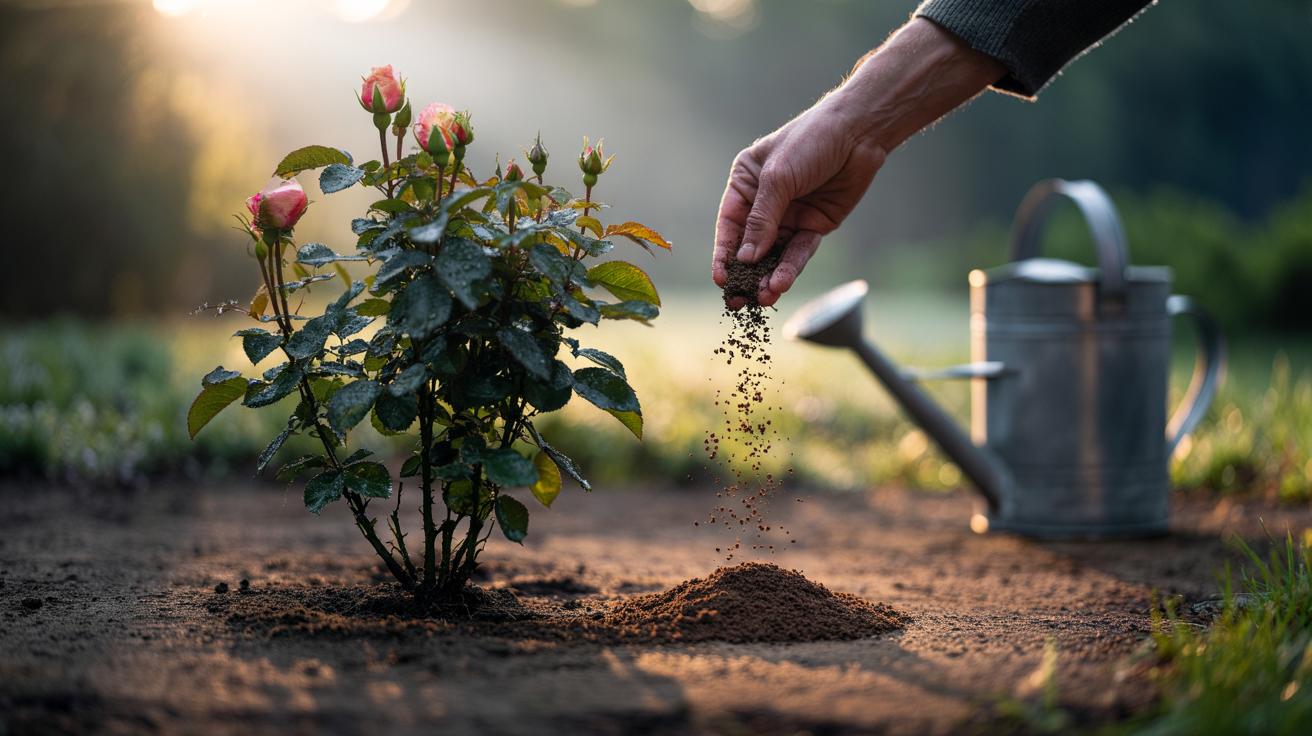
Keep it light. For an established rose, use 50–100 g (a small handful or two) of used grounds per plant, once every 3–4 weeks in spring and early summer. Scatter in a wafer‑thin layer around the drip line, then blend into the top 1–2 cm with a hand fork. Water well. Never leave a thick, felted mat of grounds on the surface—it can shed water and suffocate the soil. If your soil is heavy clay, mixing grounds into a bark‑based mulch further improves tilth and reduces capping.
Prefer belt‑and‑braces? Compost the grounds first. Combine roughly one part grounds to three or four parts “browns” such as shredded cardboard or dry leaves. This balances carbon to nitrogen and speeds decomposition, yielding a crumbly, smell‑free amendment that roses adore. A fortnight in a hot heap is often enough to tame any lingering caffeine and allow fungi and bacteria to get to work.
Liquid options are tidy for patio roses. Steep a mug’s worth of grounds in a watering can overnight, then strain and apply the tinted water to moist soil, not dry. It’s a gentle tonic rather than a feed. Always keep grounds off stems and away from seedling trays, and avoid use where pets might ingest them. Pair applications with a complete rose fertiliser according to label rates for balanced nutrition.
Common Mistakes and Evidence-Based Myths
The big myth is acidity. Used grounds are typically near neutral; they won’t turn beds sour. Another misconception is that more is better. It isn’t. Thick layers can repel water, harbour fungus gnats, and briefly tie up available nitrogen as microbes multiply. The fix is simple: thin, mixed, and moist. Fold grounds into existing mulch or compost rather than smothering the soil. If your roses look pale after heavy applications, give a light dose of balanced feed to offset any short‑term immobilisation.
What about pests? The abrasive texture and lingering bitterness may marginally deter slugs and cats, but results vary by garden. Don’t rely on grounds as your only defence. Mulch management, hand picking, and barriers still matter. There’s also allelopathy to consider: concentrated fresh grounds can inhibit seed germination. Keep them away from newly sown flower borders and plug trays. Established rose shrubs cope well; tiny seedlings do not.
Safety counts. Dogs are sensitive to caffeine, so store and apply grounds responsibly. Choose only spent grounds, not fresh coffee, and avoid adding café waste that’s been contaminated with syrups or dairy. If white fungal threads appear in your mulch, don’t panic—these saprophytes are part of healthy decomposition. The sight is a sign of life, not disease, and it will fade as the material breaks down.
Used carefully, coffee grounds are a tidy, economical way to support rose performance, adding organic matter and a modest nutrient lift while energising the living soil beneath your shrubs. The overnight “wow” is mostly hydration and microbe magic; the long‑term pay‑off is improved structure, steadier growth, and better bloom potential. Think of grounds as a booster, not a cure‑all, and integrate them into a balanced feeding and mulching routine. Will you test a light, mixed‑in approach around a single rose this week and track the difference you see by dawn and by season’s end?
Did you like it?4.4/5 (27)