In a nutshell
- 🌹 Eggshells supply slow-release calcium carbonate that strengthens cell walls, stabilises membranes, and delivers fuller, longer-lasting rose blooms.
- 🥚 Prep matters: rinse, oven-dry (100–120°C), and grind to a fine powder; apply 1–2 tbsp monthly or use a gentle “eggshell tea” drench for steady feeding.
- 🧪 Mind soil chemistry: shells act as mild lime—great for acidic beds, risky in alkaline; test pH and use gypsum (calcium sulphate) if you need calcium without raising pH.
- 🌿 Supercharge results with organic matter, even moisture, good airflow, pruning for light, mulching 5–7 cm, and tailored container routines.
- 📊 Follow best practice: avoid coarse shards, apply little and often, store powder sealed, deter wildlife by mulching, and keep records to verify stronger buds and petals.
Britain’s rose lovers swear by humble kitchen waste. Crunchy, chalky, and deceptively powerful, eggshells can turn ordinary blooms into show-stoppers. The science is simple yet compelling: shells are rich in calcium carbonate, a building block for robust plant tissues. Roses use calcium to strengthen cell walls, stabilise membranes, and regulate nutrient uptake, all of which underpin colour intensity and petal longevity. Handled correctly, eggshells improve bloom quality without costing a penny. Handled poorly, they do little. This guide explains why calcium matters, how to prepare shells for maximum bioavailability, and the soil caveats that keep your flowers safe, vibrant, and abundantly floriferous.
Why Eggshell Calcium Transforms Rose Blooms
Roses crave calcium. It’s not a minor luxury; it’s a structural necessity. Calcium stabilises the pectins that glue plant cells together, creating petals that hold their shape and stems that carry weighty trusses without collapsing. In practice, that means tighter buds, fewer malformed flowers, and a clearer expression of colour because petals remain hydrated and intact for longer. No calcium, no lasting beauty. While nitrogen drives growth spurts and potassium boosts overall vigour, calcium keeps those gains from falling apart under stress.
Eggshells supply this element in a slow, steady trickle. Ground to a fine powder, the shells dissolve gradually via soil acids and microbial action, releasing calcium carbonate over months. This slow-release profile fits roses, which perform best with consistent nutrition rather than feast-or-famine spikes. There’s a secondary perk: calcium moderates the uptake of sodium and aluminium, shielding roots under erratic watering or in slightly acidic beds. Think of it as quiet resilience baked into the soil.
Stronger cell walls can also make tissues less inviting to opportunistic pathogens that exploit weak, leaky plant surfaces. It’s not a cure for black spot, but it is a foundation for toughness. Pair calcium with good hygiene and airflow, and your roses respond with fuller, longer-lasting displays.
Preparing and Applying Eggshells for Maximum Benefit
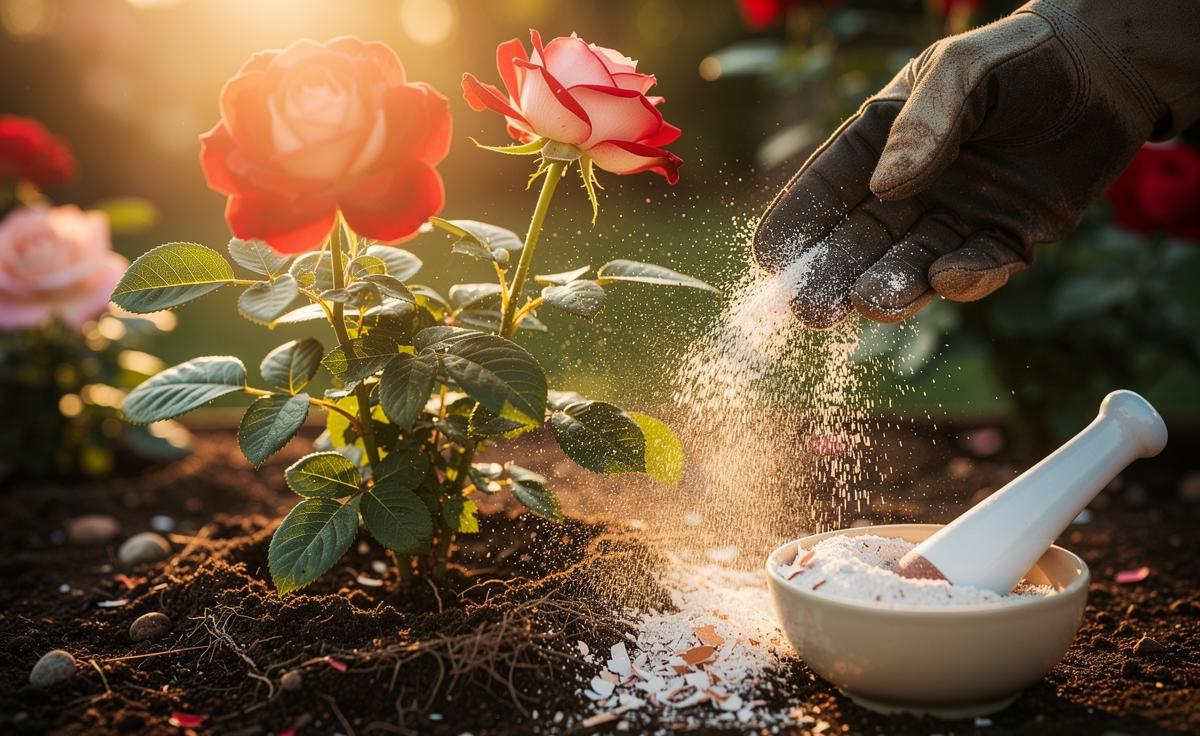
Preparation dictates performance. Rinse eggshells, then dry them in a low oven (about 100–120°C) for 10–15 minutes to kill pathogens and make them brittle. Pulverise to a near-flour texture using a spice grinder or mortar and pestle. Finer particles mean faster release and less scavenging by foxes or rodents. For established shrubs, scratch 1–2 tablespoons of powder around the drip line and water in; repeat monthly through the main growing season. For new plantings, mix a small handful into the backfill, avoiding direct root contact.
Prefer a liquid approach? Steep 8–10 crushed shells in just-boiled water overnight, then strain and drench the soil. It’s milder than powder but handy during dry spells. Blend with compost to improve distribution and microbial conversion, or brew into your usual watering routine. Avoid dumping coarse shards; they break down painfully slowly, delivering negligible calcium in the first year. Eggshells are a slow-release conditioner, not a quick fix.
| Method | Preparation | Rate | Timing | Pros | Watch-outs |
|---|---|---|---|---|---|
| Fine powder | Oven-dry, grind finely | 1–2 tbsp per plant | Monthly, spring–late summer | Fastest release, discreet | Overuse can nudge pH upward |
| Eggshell tea | Steep shells overnight | 1 litre per plant | Every 2–3 weeks | Simple, gentle feed | Lower calcium density |
| Planting mix | Blend powder into backfill | Small handful | At planting | Even distribution | Keep off direct roots |
Soil Chemistry, pH, and Common Pitfalls
Eggshells are chiefly calcium carbonate, a mild liming material. In acidic soils (common in parts of the UK), that’s welcome, nudging pH towards neutral and aiding nutrient balance. But in chalky or already alkaline beds, extra carbonate can tip roses into micronutrient lockout, especially iron and manganese, leading to tell-tale yellowing between the veins. Know your soil before you add anything. A simple pH kit or lab test prevents missteps and tells you whether shells will help or hinder.
Rate matters. Heavy-handed applications don’t speed results; they just raise pH. Calcium from shells releases slowly, so patience beats piling on. If a plant shows acute calcium deficiency—rare in roses but possible on very sandy plots—reach for gypsum (calcium sulphate) or a labelled calcium drench, which supplies calcium without raising pH. Another pitfall: whole or coarsely crushed shells persist for years, delivering negligible nutrition while inviting neighbourhood wildlife. Grind, then mulch over to hide scent and stabilise moisture.
Finally, hygiene counts. Rinse shells, dry thoroughly, and store the powder sealed. That prevents odours and contamination. Good preparation maximises calcium availability and minimises hassle. When in doubt, test a single shrub and watch for steadier buds, firmer petals, and less tip scorch before rolling out garden-wide.
Complementary Practices to Supercharge Bloom Quality
Calcium shines brightest alongside balanced care. Pair eggshell powder with generous organic matter—composted bark, leaf mould, or well-rotted manure—to fuel the microbes that free calcium from carbonate. Maintain even moisture; erratic watering disrupts calcium movement within the plant, causing bud stress. A monthly feed that includes magnesium (Epsom salts at modest rates, if a soil test supports it) can intensify colour by supporting chlorophyll while calcium safeguards structure. The combination delivers bloom quality you can see from the pavement.
Airflow and light are the quiet co-authors of beauty. Prune to an open shape, remove congested stems, and site roses for morning sun that dries dew quickly. This reduces disease pressure so your new calcium-fortified tissues are not constantly under siege. Mulch 5–7 cm deep to hold moisture and moderate temperature swings; shells work better in stable, living soils. If you grow in containers, refresh a third of the compost yearly and fold a teaspoon of eggshell powder into the top 5 cm every month from April to August.
Keep records. Note application dates, weather swings, and bloom performance. Over one season you’ll see patterns: tighter buds, increased stem sturdiness, fewer split petals after rain. Small, consistent doses plus good culture beat any single silver bullet. That’s the quiet lesson eggshells teach.
Handled with a light touch and an eye on pH, eggshells are an elegant, sustainable way to channel calcium into roses that reward you with richer colour and longer-lasting flowers. The approach suits thrifty gardeners and those seeking to cut waste without cutting performance. Grind fine, apply little and often, blend with compost, and watch the shrubs respond with poise. It’s simple, affordable, and surprisingly effective. What will your first trial look like—powder at planting, a fortnightly tea, or a careful top-dress across a favourite border to compare results?
Did you like it?4.7/5 (26)