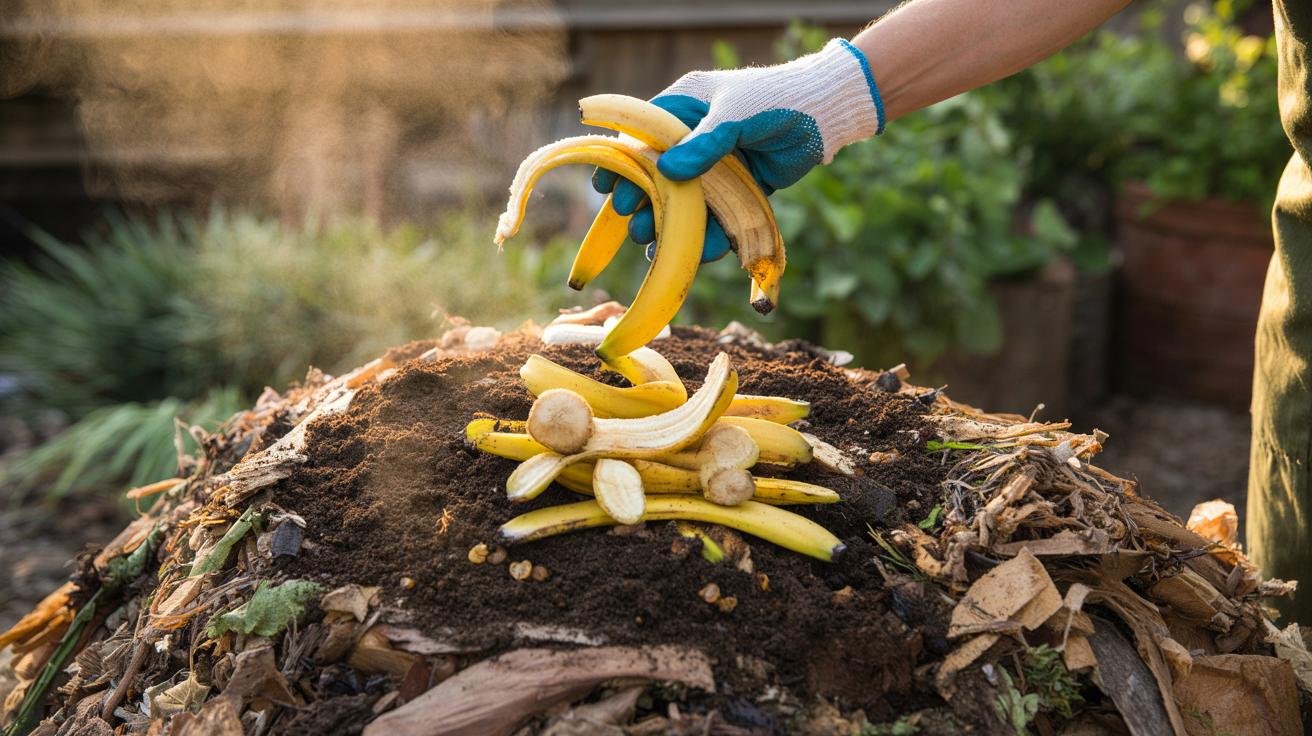
In a nutshell
- 🍌 Banana peels act as “greens” with low lignin, quick-digesting sugars and pectins that fuel microbes, raise heat, and accelerate whole-heap decomposition.
- 🔬 Strong nutrient profile: high in potassium (K), with calcium (Ca) and phosphorus (P) that buffer pH, aid enzyme activity, and sustain the thermophilic phase.
- 💧 High moisture content (70–80%) helps re-wet dry piles; chopping boosts surface area, enabling rapid microbial colonisation and smoother, faster breakdown.
- ⚖️ Practical tips: mix peels with 2–3x carbon-rich browns, chop or freeze first, bury ~20 cm to deter pests, remove stickers, and pair with coffee grounds for balance.
- 🌱 Results: quicker, hotter composting, improved crumb structure, and a gentle K lift that produces richer humus in less time.
Banana peels are an overlooked turbo‑booster for home composters. Thin, moist, and packed with plant-friendly minerals, they act like a starter snack for microbes that do the heavy lifting in your heap. Add them and you’ll often notice a subtle temperature rise, a quicker slump in volume, and a sweeter, earthy aroma as bacterial communities kick into gear. Potassium-rich tissue breaks down fast; the peel’s soft structure invites fungi and bacteria to colonise. Feed the microbes first, and the compost speeds itself. With a few simple handling tricks, you can turn every peel into accelerated humus, cutting weeks off the wait and enriching the final mix for hungrier beds.
Why Banana Peels Accelerate Composting
Banana peels count as “greens” in a compost recipe because they deliver modest nitrogen alongside abundant, easily digestible carbohydrates. Their typical C:N ratio sits around 25–35:1, far lower than straw or dry leaves, so they help correct piles that are heavy on woody “browns.” The physics matters too. Peels have low lignin and thin cell walls, meaning microbes and detritivores can penetrate quickly. Sugars, pectins, and organic acids provide instant energy, which raises microbial respiration and, in turn, heat. Warm, well-fed microbes shred complex matter faster, so your whole heap benefits.
Moisture is another gain. Fresh peels are roughly 70–80% water, helping counter dry ingredients that slow metabolism. Tear or chop them and the surface area spikes, letting colonisation happen in hours, not days. Worms love them, but so do thermophilic bacteria once the pile tops 55°C, where pathogens are neutralised and fibres collapse. Balance still rules: layer peels with carbon-rich materials to avoid a slimy mat. Think of peels as the spark—quick to ignite, quick to spread—turning a sluggish stack into a lively, steaming compost core.
Nutrient Profile: Potassium, Phosphorus, and Calcium at Work
Beyond quick energy, peels bring a mineral cocktail that supports both microbes and future plants. On a dry-weight basis, banana skins are notably high in potassium (K), with meaningful amounts of calcium (Ca) and modest phosphorus (P), plus traces of magnesium and manganese. These ions don’t just feed crops later; they influence compost chemistry as it forms. K helps maintain osmotic balance for microbes; Ca buffers acidity and encourages flocculation, improving airflow through crumbs; P underpins energy transfer (ATP) in living cells. A mineral-friendly habitat means faster microbial turnover and a more stable, friable compost at the end. Values vary by cultivar and ripeness, but the pattern holds: peels are a gentle, sustained release of essentials.
| Component | How It Speeds Decomposition | Practical Tip |
|---|---|---|
| Potassium (K) | Supports microbial water balance and enzyme activity, aiding rapid colonisation. | Mix peels throughout the heap for even K distribution. |
| Calcium (Ca) | Buffers acidity, improving aggregate stability and airflow in the pile. | Layer with acidic materials (coffee grounds) to temper pH dips. |
| Phosphorus (P) | Feeds microbial energy systems, sustaining the thermophilic phase. | Don’t rely on peels alone; keep a varied diet of inputs. |
| Sugars & Pectins | Immediate carbon source that triggers heat and growth. | Chop or shred to maximise contact points. |
| Moisture | Prevents desiccation that stalls microbial action. | Use peels to re-wet overly dry layers. |
Practical Tips to Use Banana Peels Without Problems
Start small, think balanced. For every handful of banana peels, add two to three handfuls of a dry carbon source such as shredded cardboard, straw, or autumn leaves. This stops mats forming and maintains airflow. Chop, tear, or snip peels into postage-stamp pieces to double their speed of breakdown. Freezing before adding is an easy hack; ice crystals rupture cells, making tissue easier for microbes to digest. Bury peels at least 20 cm deep in the heap to discourage rodents and reduce fruit-fly interest.
Watch moisture. If the pile feels soggy or smells sour, fold in extra browns. If it’s dusty-dry, peels are a tidy way to restore the “wrung-out sponge” feel. Remove stickers and elastic bands. If you’re concerned about pesticide residues, choose organic fruit or hot-compost above 55°C for several days. Coffee grounds pair well with peels, supplying nitrogen that complements their carbohydrate load. In wormeries, add small amounts more often and cover with bedding. The goal is rhythm: little and often, well mixed, with regular turning to keep oxygen flowing and heat consistent.
The science is simple yet satisfying: banana peels give microbes what they crave—fast fuel, friendly moisture, and supportive minerals—so the whole compost ecosystem runs faster and cleaner. Done right, they shorten the waiting game and enrich the end product with a subtle lift in potassium and crumb structure. Turn waste into momentum. As the days shorten and bins cool, a handful of chopped peels can be the nudge that keeps decomposition ticking along. How will you fold peels into your routine this week—layered in a hot heap, tucked into a wormery, or pre-frozen and blitzed for an instant microbial feast?
Did you like it?4.6/5 (29)