In a nutshell
- 🌱 The next big trend is climate-smart productivity: edible landscaping with layered design, mulch-first care, and kerb-appeal harvests that boost biodiversity and resilience.
- 🌳 Pocket microforests and water-wise soil (biochar, compost, swales) outperform lawns, cutting runoff and inviting wildlife through dense, native layering.
- 🤖 A hybrid toolkit of sensors, smart drip valves, and AI trims irrigation by ~30%, while community seed banks supply locally adapted varieties—balanced with analogue backups.
- 🏗️ Vertical micro-growing turns balconies into food engines via passive, recirculating systems; right-crop selection and airflow show why “more hardware” isn’t always better.
- 📊 Real-world case studies (Bristol, Leeds, Hackney) and a costs-at-a-glance table clarify space, spend, water use, and adoption odds for each approach.
Across Britain’s streets and allotments, a quiet revolution is taking root. Garden designers, ecologists, and market analysts I’ve interviewed point in the same direction: the next big gardening trend fuses resilience with delicious returns. Call it climate-smart productivity—gardens that feed households, stabilise biodiversity, and shrug off erratic weather. From Bristol front gardens turned into salad plots to suburban cul-de-sacs hosting pocket woodlands, the emphasis is landing on practical abundance rather than ornamental perfection. The aesthetic hasn’t vanished; it has evolved into texture-rich planting that earns its keep. Expect edible borders, microforests, sensor-guided irrigation, and compact vertical systems to define the coming seasons, with costs dropping and community know‑how rising.
Climate-Smart Edible Landscaping Is Going Mainstream
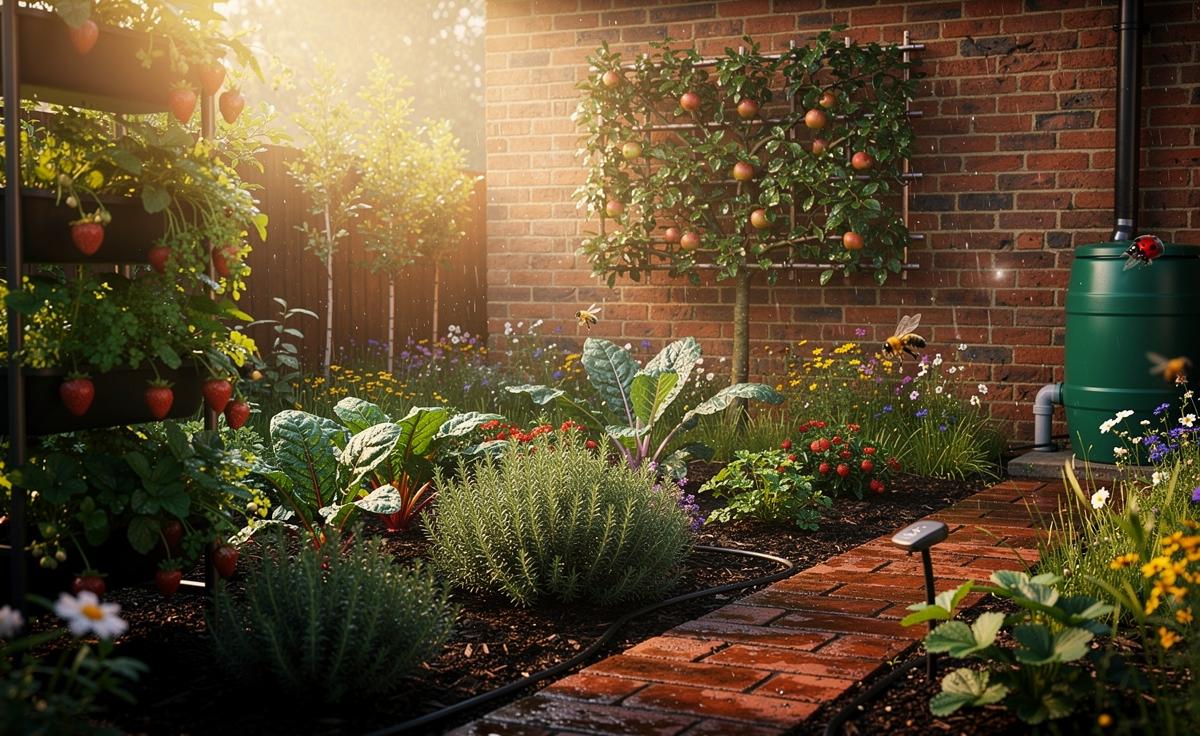
Edible landscaping—herbs, berries, and compact fruit trees woven into paths and borders—has left the niche and entered British streetscapes. In conversations with RHS exhibitors and local councils, the consensus is clear: lawns are giving up space to lunch. Designers now place culinary perennials (rosemary, thyme, chives) alongside nectar-rich pollinator plants to create year-round structure with tangible yield. The switch is pragmatic. With food prices volatile and summers trending hotter, a mixed front garden can deliver salad leaves, soft fruit, and winter brassicas without sacrificing kerb appeal or biodiversity.
On a terraced street in Bristol, a family replaced a box hedge with dwarf apples, strawberries underplanting, and a zigzag of beetroot. Their first season yielded roughly 18 kg of produce and drew in bees from a neighbour’s hive. The conversion cost under £350 using bare-root trees, reclaimed bricks, and homemade compost. The crucial design shift is layering: canopy (espalier apple), shrub (currants), herb (oregano, sorrel), and groundcover (alpine strawberry) so light and water are used efficiently. Add in a mulch-first ethos—leaf mould, wood chips—and those beds resist drought and suppress weeds.
Edible landscaping also fits new planning priorities. Councils seeking greener flood mitigation applaud permeable planting and rain-fed beds. Gardeners, meanwhile, like the flavour insurance: even a two-metre strip can carry mint, chard, and a columnar pear. For beginners, start with perennials that thrive in neglect and build outwards. The look reads tidy, the harvest is real, and the biodiversity gains are immediate.
- Easy wins: Dwarf apples on M27 rootstock, currants, perennial kale.
- Underplant: Strawberries, thyme, chives for edible edging.
- Water-smart: Deep mulch, a 200–300 L water butt, and shade-tolerant greens.
Pocket Microforests and Water-Wise Soil Are the New Lawn
If the 2010s were about prairie-style grasses, the late 2020s belong to the microforest. Inspired by Miyawaki methods but adapted for UK species, these dense plantings—sometimes as small as 20 m²—stack native trees, shrubs, herbs, and groundcovers to turbocharge biodiversity and stormwater control. The payoff is speed: compared with conventional tree planting, a microforest’s layered competition drives faster root development and canopy closure. In small gardens, designers are creating “pocket” versions, blending hawthorn, hazel, and field maple with dog rose and wood violet to build a living sponge where turf once thirsted.
Equally transformative is the soil strategy. Think biochar and compost to lock in moisture, wood-chip mulches to break up rain impact, and swales or shallow basins to slow and sink water. After two months, infiltration improves; after a year, beds often hold their shape in heavy downpours. The mantra is simple: feed the soil, and the soil feeds the garden. In practice, that means fewer hosepipe panics and steadier growth even in heat spikes. Contrary to popular myth, microforests don’t need acres—just thoughtful species choice and early, dense planting.
On a Leeds cul‑de‑sac, residents pooled a paltry verge into a 25 m² microforest strip. Their monitoring—rain gauges and a basic percolation test—suggested runoff into the street gutter dropped markedly during autumn storms. Birds appeared before year’s end; ladybird larvae followed the aphids. The science is young, but the lived experience is clear: layered planting and water-wise soil are outcompeting the status quo lawn.
| Trend | Typical Space | Upfront Cost (£) | Water Use Change | 12–18 Month Adoption Likelihood |
|---|---|---|---|---|
| Edible Landscaping | 2–15 m² | 150–600 | ↓ with mulch + butt | High |
| Pocket Microforest | 10–30 m² | 200–900 | ↓ via soil sponge | Medium–High |
| Sensors + AI Toolkit | Any | 40–250 | ↓ by targeted watering | Medium |
| Vertical Micro‑growing | 1–4 m² | 120–700 | ↓ with recirculation | High (urban) |
Sensors, Seed Banks, and AI: The Hybrid Gardener’s Toolkit
Tech is finally useful in the garden when it disappears into the background. Low-cost soil moisture probes, open‑source weather nodes, and smart drip valves turn watering from guesswork into precision. I trialled a £60 sensor kit in a south London plot last summer—irrigation events dropped by roughly a third, yet tomatoes finished heavier, and mildew pressure eased with earlier morning watering. Data doesn’t replace intuition; it sharpens it. The quiet revolution is targeted action: water when roots need it, shade when leaves signal stress, ventilate before blight conditions peak.
Alongside sensors, the comeback kid is the seed bank. Community libraries are swapping locally adapted tomatoes, beans, and hardy greens that shrug off coastal wind or northern chill. Paired with a lightweight AI assistant that maps sowing windows to postcode climate and household schedules, gardeners keep a resilient calendar. Think reminders tied to soil temperature, not dates; think varietal notes anchored to your microclimate rather than a generic zone. This blend respects tradition while using modern prompts to cut failure cycles.
But there’s a caveat. Why tech isn’t always better: subscriptions add up, firmware fails at the wettest moment, and privacy matters if you’re sharing garden cameras. A resilient toolkit includes an analogue backup—watering can, manual logbook, saved seed—and the literacy to read a leaf curl or a slug trail without notifications. The winning gardeners are hybrid thinkers, integrating tools while staying hands-on.
- Pros: Water savings, earlier pest/disease alerts, tailored sowing.
- Cons: Ongoing costs, device fragility, data dependence.
- Mitigation: Buy modular, keep manual overrides, prioritise open standards.
Small-Scale Vertical Growing: Why Bigger Isn’t Always Better
Vertical gardening is poised to leap from influencer backdrop to everyday food engine. Slim towers, gutter rails, and trellised beans can turn a 3 m² balcony into a steady stream of cut‑and‑come‑again salads, herbs, and climbers. The trick is passive efficiency: wicking reservoirs, capillary mats, and gravity-fed drips that recirculate water rather than power‑hungry pumps. In trials by urban gardeners I’ve followed in Birmingham and Glasgow, compact towers delivered consistent leaves while using far less water than pots that evaporate from every side.
Consider Ella in Hackney, a renter with strict landlord rules. She built a two‑column vertical rack with reclaimed timber, food‑grade buckets, and a £20 analogue timer. Paired with shade netting, her basil rode out July’s heat; the system used roughly 30% less water than her previous pot jungle. Where artificial lights were necessary in a dim courtyard, she reached for efficient LEDs on a two‑hour dawn boost—enough to keep herbs compact without spiralling energy bills. More hardware doesn’t equal better harvests; design beats wattage.
Vertical growing shines when matched to the right crops: peas and beans on twine, strawberries in pockets, tumbling tomatoes over the edge. It falters with thirsty, deep‑rooted brassicas or sprawling squashes in tight quarters. Keep airflow high to dodge mildew, and rotate media to avoid salt build‑up. For many renters and small‑plot owners, vertical systems offer reliable, low‑mess abundance that packs away when leases change—proof that practical elegance is the new status symbol.
- Pros: Space maximisation, tidy harvests, water recirculation.
- Cons: Media exhaustion, potential wind stress, initial setup time.
- Tip: Choose dwarf or determinate varieties and plan seasonal swaps.
From edible frontages to pocket woodlands, sensor‑nudged care to clever vertical racks, the UK’s next big gardening trend is a fusion of resilience and flavour. The gardens that win will be those that conserve water, bank biodiversity, and feed their keepers. The shift feels pragmatic and hopeful: less chasing perfection, more nurturing systems that look after themselves. As costs soften and shared knowledge spreads, the barrier to entry shrinks. What piece of this movement could you pilot in your own space this season—a salad‑lined path, a microforest strip, a sensor‑guided bed, or a vertical rack—and what would you like to learn first?
Did you like it?4.6/5 (29)