In a nutshell
- 🪙 Copper foil deters slugs via a mild galvanic reaction with slug slime, creating an unpleasant tingle that stops overnight raids without poisons.
- 🛠️ Build a reliable barrier: apply a continuous 360-degree band (40–50 mm wide), keep it clean and gap-free, and elevate collars 5–8 cm to prevent soil bridges.
- 🪴 Best use cases: shines on containers, greenhouse staging, and raised-bed rims; less effective across sprawling borders unless foliage and soil splash are tightly managed.
- 💷 Cost and alternatives: reusable and targeted; compare with ferric phosphate pellets, beer traps, and wool pellets—copper offers immediate, visible, wildlife-safe protection.
- 🧽 Maintenance matters: wipe oxidation with vinegar-water, trim overhanging leaves, and repair damage promptly to keep the barrier active through wet UK nights.
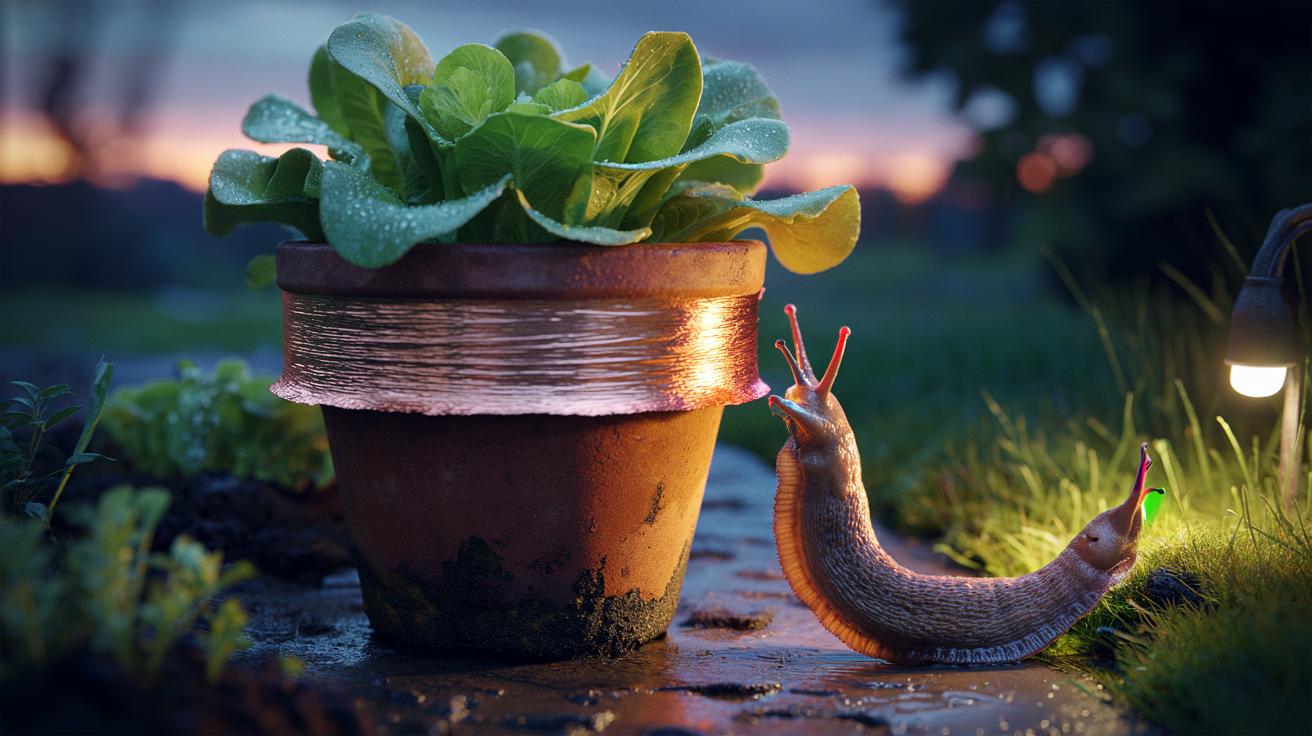
After a wet spring, UK gardeners know the dread of dawn: lettuce stubs, shredded hostas, tell-tale slime. Slugs do their damage under cover of darkness, which is why a simple ring of copper foil can feel miraculous by morning. It’s not magic. It’s chemistry and good horticultural sense rolled into a quick, tidy fix. Wrap a pot, edge a raised bed, collar a young courgette. The result is immediate deterrence without spreading toxins or sprinkling grit everywhere. Used correctly, copper creates a night-time barrier that stops raids before they begin, buying your plants time to establish and you time to sleep.
Why Copper Foil Shocks Slugs Into Retreat
Slug slime is a conductive gel. When it touches bare copper, a tiny galvanic reaction occurs—think of it as a faint, unpleasant tingle rather than a dramatic zap. That micro-current doesn’t harm the animal; it simply makes crossing the metal feel wrong. Slugs turn away. This is why gardeners report visible results overnight, especially on pots freshly wrapped with clean copper tape. The barrier also adds a physical edge: thin, crisp, and awkward to traverse. Combine sensation with awkward footing and you get a potent deterrent that works the same whether you garden in Kent or Cumbria.
There are caveats. If soil, moss, or fallen leaves form a bridge over the metal, the effect weakens and slugs can glide across. Oxidation also dulls performance over time. The principle remains robust: keep the copper exposed and continuous, and it will keep night-feeding marauders off your prize leaves. Crucially, no pellets, no poisons. Beneficial wildlife stays safe. Your dog stays safe. And you avoid introducing yet another input to already stressed soils.
How To Build A Reliable Copper Ring
Start with quality material. Choose copper tape at least 30 mm wide (40–50 mm is better) or a thin copper foil strip. Clean the pot’s exterior with soapy water, then rinse and dry. Apply the tape in a continuous 360-degree band, overlapping the end by 2–3 cm. Press firmly. Burnish with a spoon to remove air bubbles and ensure good contact. For rough terracotta, lay a strip of exterior-grade tape beneath the copper as a smoother base. No gaps, no breaks, and no soil touching the band—these rules make or break the barrier.
For beds, fashion collars: cut the bottom from a plastic bottle or a ring of stiff plastic, then wrap with copper foil to create a portable guard around seedlings. Keep the copper band 5–8 cm above the soil line to prevent splash-back bridges in rain. Maintenance is simple. Wipe oxidation monthly with a vinegar-and-water cloth, rinse, and dry. Replace damaged sections promptly. In windy spots, double-layer the tape and fold the top edge over by a few millimetres to stop peeling. These tiny build details turn a nice idea into a season-long solution.
Where Copper Tape Works Best in the UK Garden
Copper shines on containers, greenhouse staging, and raised-bed rims. Pots of salad leaves. Seed trays. Alpine troughs. Small hostas in decorative planters. The narrower the access point, the better the deterrent performs. In these contexts, one clean ring interrupts the slug’s usual route and forces a retreat. It’s also discreet—no glaring pellets, no whiff of beer traps—so patios remain guest-ready even after a stormy night. For urban balconies where predators are scarce, copper can be the difference between harvest and heartbreak.
It’s less effective across sprawling borders, groundcover, or where dense foliage regularly overhangs the band. On heavy clay that splashes in rain, small bridges form easily; trim leaves, mulch neatly, and brush soil off the copper after downpours. Combine with habitat for allies—frogs, ground beetles, hedgehogs—to suppress populations more broadly. Night checks help you learn the pressure points: note slime trails, lift saucers, adjust the rings. Think of copper as part of integrated control: tidy edges, vigilant maintenance, and strategic planting that reduces slug hideaways.
Costs, Alternatives, and Quick Comparisons
Copper tape isn’t the cheapest barrier, but it’s reusable and targeted. Expect to pay modestly for a roll that outfits several pots; foil strips and pre-made bands cost more up-front, less in labour. Alternatives exist, each with trade-offs. Ferric phosphate pellets are considered wildlife-friendly but still introduce inputs. Beer traps catch slugs but attract more if overused. Wool pellets deter by texture yet break down quickly in heavy rain. Crushed eggshells? Largely a myth in wet British conditions. When you want a clean, visible line of defence that works the first night, copper wins on immediacy and clarity.
| Method | Typical Cost per Pot | Wildlife Impact | Labour | Best Use |
|---|---|---|---|---|
| Copper tape | Low–medium | Minimal | One-off fit, light upkeep | Pots, raised rims |
| Ferric phosphate pellets | Low per application | Low if used correctly | Repeat applications | Beds with high pressure |
| Beer traps | Low | Non-selective | Frequent emptying | Localised hotspots |
| Wool pellets | Medium | Minimal | Reapply after rain | Young transplants |
For value, combine copper on containers with cultural tweaks in beds: evening water at soil level, sharp edge maintenance, and habitat for predators. That blend trims costs and amplifies results.
Copper foil rings won’t turn your patch into a fortress, but they will buy you crucial protection during the peak feeding hours, night after night. Plants get established. Harvests recover. And you avoid scattergun tactics that impact creatures you actually want in the garden. Keep it clean, keep it continuous, and it keeps working. If the forecast screams rain and slugs are marching, a half-hour with a roll of tape can save a week’s growth. Where could a simple copper band make the biggest difference in your garden this week?
Did you like it?4.5/5 (27)