In a nutshell
- 🌱 Eggshells are ~95% calcium carbonate, delivering slow-release calcium that gently buffers pH and supports balanced soil chemistry; finer grinding accelerates availability.
- 🧰 Prep matters: rinse, dry/bake, then grind to a fine powder; apply ~100–200 g/m² to beds, 1–2 tbsp in planting holes, and a teaspoon per 10 L in pots; avoid weak “eggshell tea” and consider gypsum for quick calcium without raising pH.
- 🧪 Plant health boost: stronger cell walls and reduced risk of blossom end rot, though consistent moisture remains the primary fix; fine shells aid microbial life and soil structure, not slug control.
- ⚠️ Use with care in alkaline soils (pH ≥ 7.5) to prevent micronutrient lock-up; always start with a soil test, and remember shells are too slow for emergencies—opt for soluble feeds or gypsum when speed is essential.
- ♻️ A nature-friendly strategy: turn kitchen waste into long-term fertility by integrating eggshells with good watering, diverse organic matter, and targeted minerals for resilient, productive beds.
Gardeners love a thrifty fix. Eggshells deliver exactly that: a free, calcium-rich amendment that can strengthen soil structure and support plant health without resorting to synthetic inputs. Crushed or powdered, they go from breakfast waste to bed booster. The science is simple but nuanced. Eggshells are chiefly calcium carbonate, a slow-release source of an essential nutrient that plants need for robust cell walls and steady growth. Yet patience is required; this is no overnight cure. The finer you grind, the faster the benefits arrive. Used with a light hand and a little knowledge, eggshells can help gardens become more resilient, abundant, and sustainable.
What Eggshells Contribute to Soil Chemistry
Eggshells are roughly 95% calcium carbonate (CaCO3), the same mineral that makes agricultural lime effective. That matters because calcium underpins cell division, root development, and disease resistance in many crops. The remaining fraction includes a protein matrix and traces of magnesium, phosphorus, and other micronutrients. As shells weather, they release calcium slowly, buffering acidity and supporting microbial communities that thrive in balanced conditions. This is a gentle nudge to soil health, not a sledgehammer. In acidic beds, that nudge can be welcome; in alkaline ground, less so. Surface area is crucial: coarse shards persist for years, while fine powders dissolve far more readily.
| Component | Typical Content | Effect in Soil | Notes |
|---|---|---|---|
| Calcium carbonate | ~95% | Raises pH slightly; supplies calcium | Slow-release; faster as powder |
| Protein matrix | ~3–4% | Minor nitrogen source | Fuel for microbes |
| Trace minerals | <1% | Micronutrient top-up | Small but useful |
Expect a modest liming effect and a slow-release calcium input that aligns with long-term soil care. That makes eggshells a good fit for perennial beds, veg patches with tomatoes or brassicas, and compost heaps where they help buffer acidity. They will not correct acute calcium disorders overnight, but they support the background conditions that keep plants sturdy and less prone to physiological issues.
Preparing and Applying Eggshells the Right Way
Preparation decides performance. Rinse shells to remove residues, then dry thoroughly; a short bake at 120–150°C for 10–15 minutes speeds drying and reduces pathogens. Now grind. A mortar and pestle works; a dedicated coffee grinder is better. Aim for a flour-like powder to maximise surface area and dissolution. Powdered shells can become plant-available in a single season, whereas large shards may linger for years. The goal is consistent availability, not decorative mulch.
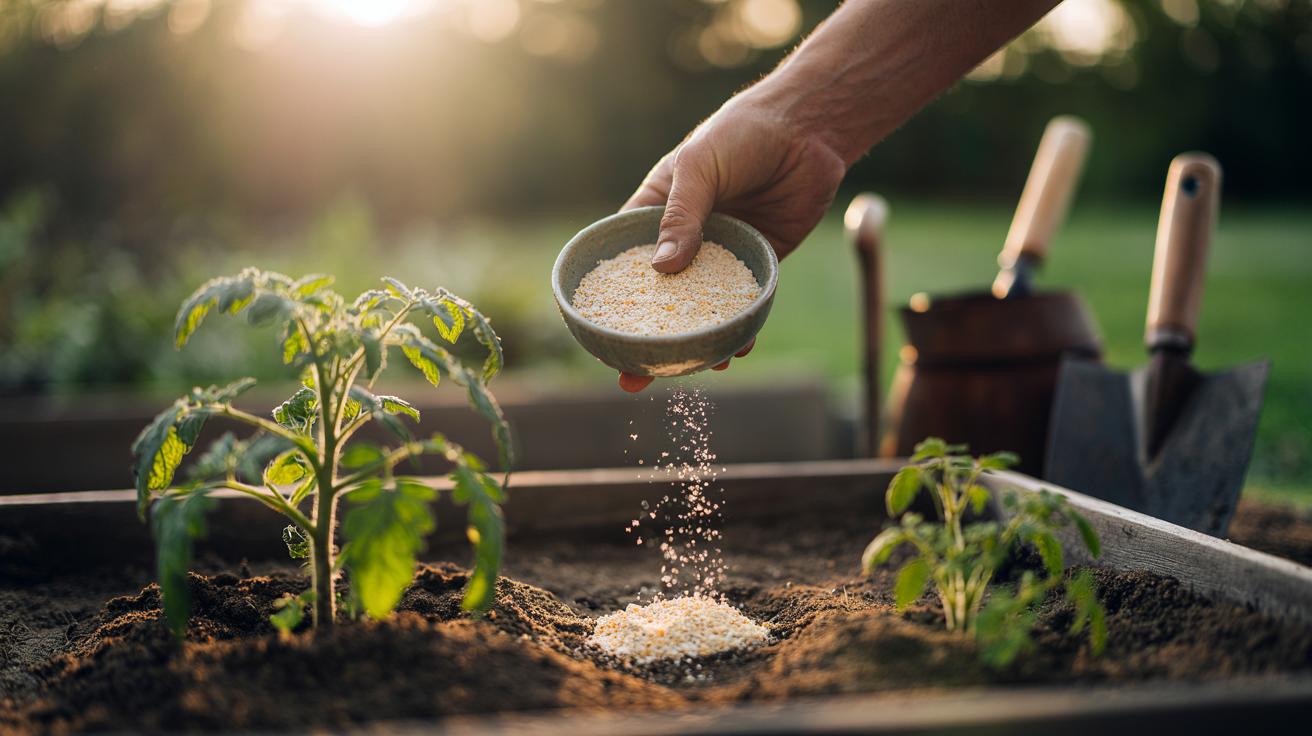
For garden beds, scatter 100–200 g of powdered eggshell per square metre and lightly fork into the top 5 cm. Around individual plants, mix 1–2 tablespoons into the planting hole or scratch into the root zone of tomatoes, peppers, and cabbages. Autumn or early spring applications integrate neatly with routine bed prep. In containers, use sparingly—about a teaspoon per 10 litres of mix—because changes to pH are magnified in pots.
Avoid the common shortcuts. “Eggshell tea” (soaking shards in water) releases very little calcium. Vinegar extractions create fast-acting calcium acetate but may disrupt pH and microbial balance if misused. If you need quick calcium without raising pH, consider gypsum (calcium sulfate) instead. Whatever the method, keep shells clean to deter pests and always wash hands or tools after handling kitchen waste.
Plant Health Benefits and Limits You Should Expect
Calcium strengthens plant cell walls. That translates to firmer tissues, steadier growth, and improved tolerance to stress. In fruiting crops, adequate calcium helps reduce physiological disorders like blossom end rot. Here’s the catch: the problem often stems from irregular watering that disrupts calcium transport, not necessarily a lack of calcium in the soil. Eggshells support background calcium, but consistent moisture is the frontline fix. Think irrigation first, then nutrition. Over time, shells can also buffer acidity, making nutrients like phosphorus more available in sour soils.
The microbial angle matters too. As shells weather, they create high-calcium micro-sites where certain bacteria and fungi prosper, subtly diversifying the soil food web. Earthworms sometimes incorporate fine shell powder into their casts, improving structure. Claims that sharp shells deter slugs are overstated; damp grit rarely stops a determined slug. Focus on barriers, traps, or wildlife allies instead. Finally, there is a modest environmental dividend: recycling shells reduces kitchen waste, lowering the embodied carbon of your gardening inputs while building soil fertility at a slow, steady pace that suits organic systems.
When Eggshells Are a Bad Idea—and Smarter Alternatives
Context is everything. If your soil is already alkaline (pH 7.5+), adding more calcium carbonate risks pushing it higher, which can lock up iron and manganese and induce chlorosis. In such beds, avoid eggshells and use gypsum when calcium is needed without altering pH. Container gardeners should be cautious, since small volumes amplify chemical shifts. Always start with a soil test; it’s cheaper than fixing mistakes later. Heavy, calcareous soils on chalk or limestone seldom need extra calcium from shells.
Shells are also too slow for emergencies. If a crop shows an acute deficiency, use soluble calcium feeds or foliar sprays while you correct watering and root health. In compost, shells are welcome, but powder them first; intact halves can survive for years. Keep hygiene in mind: rinse, dry, and store shells to avoid smells and rodents. If you want both calcium and magnesium, choose dolomitic lime, but only when a test indicates low Mg, or you may imbalance the soil. The smarter plan is simple: deploy eggshells as a steady, long-term amendment, not a quick cure-all.
Eggshells turn a household leftover into a durable, nature-friendly soil amendment. Ground finely and applied with intent, they bolster calcium reserves, gently temper acidity, and feed the microbial life that underwrites healthy plants. They are not a silver bullet. Yet as part of a layered approach—good watering, diverse organic matter, targeted minerals—they help beds grow stronger each season. Small inputs, big dividends, given time. Will you start saving shells for your garden, and if so, where will you test their slow, steady magic first: the tomato row, the brassica patch, or the compost heap?
Did you like it?4.5/5 (28)