In a nutshell
- 🌧️ Overwatering and poor drainage are the hidden killers of UK gardens, suffocating roots, flushing nutrients, and encouraging disease—especially in heavy clay soils.
- 🕵️ Spot warning signs fast: wilting in wet compost, yellowing leaves, fungus gnats, sour-smelling pots, and spongy lawns with moss indicate stress and potential root rot.
- 🧪 Use simple checks before watering: the two-knuckle finger test, the lawn footprint linger test, and watching for water that pools or leaves a glossy surface after rain.
- 🛠️ Fix the cause, not the symptom: add organic matter, create raised beds, choose free-draining mixes with grit, raise pots on feet, empty saucers, and improve lawns with hollow-tine aeration and top-dressing.
- 💧 Water smarter: prioritise deep, infrequent watering (around 10–15L per m²), irrigate early morning, keep mulch away from stems, show the root flare, and match thirsty plants to wetter spots like downpipes.
Britain loves a green garden, yet many lawns and beds are quietly declining under a well-meant routine. A leading garden expert warns that a common plant mistake—treating every border, pot, and patch of turf to the same generous drink—may be suffocating roots and inviting disease. It feels kind. It looks diligent. But it can be lethal. In a climate where rain can arrive in sheets, then vanish for weeks, the instinct to add “just a bit more” is strong. Too much water can be as damaging as a drought. The result? Yellowing leaves, spongy lawns, and plants that never quite thrive, no matter how much you care.
The Hidden Threat: Overwatering and Poor Drainage
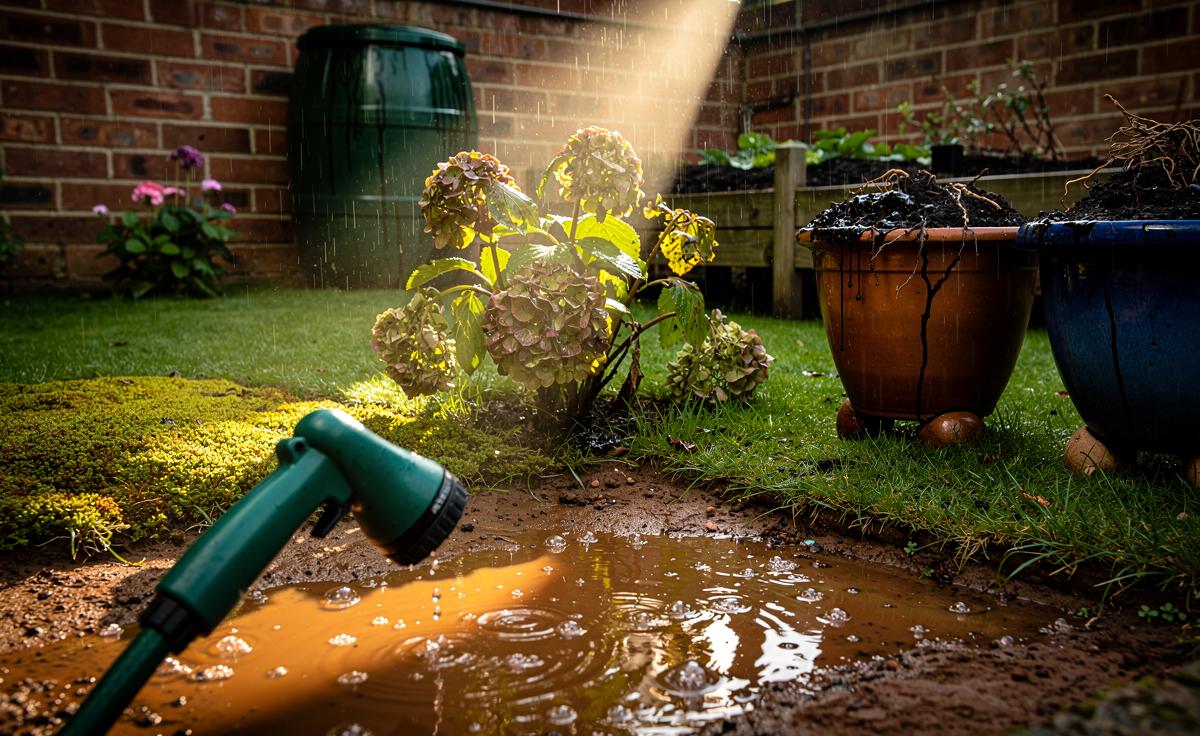
When soil is saturated, it loses critical oxygen pockets. Roots need air as much as water. Without it, they suffocate, leading to root rot, stunted growth, and sudden collapse. In UK gardens, heavy clay amplifies the problem: water lingers, microbes shift, and pathogens like Phytophthora seize the moment. You might see moss edging across the lawn. Containers stay wet for days. Leaves turn limp, not crisp, then yellow from the inside out. It’s counterintuitive. Plants look thirsty. So we water again.
The real culprit is often poor drainage and a one-size-fits-all routine. Raised beds, soil with added organic matter, and pots with adequate holes change the equation, allowing surplus water to escape. If your finger test finds damp soil two knuckles down, do not water. Overwatering also flushes nutrients, leaving leaves pale and hungry. Treat water like medicine: the right dose at the right time. Less, but deeper, is usually best for beds and borders.
Telltale Symptoms You Can Spot in Days
Plants under water stress wilt. That’s well known. But overwatered plants wilt too, often while the compost still feels wet. Look for yellowing leaves that drop prematurely, brown leaf edges on evergreens, fungus gnats hovering over pots, and a sour, stagnant smell from containers. Lawns tell on us as well. Footprints linger. The surface feels bouncy. Moss, algae, and toadstools appear like tiny flags saying “too wet.” When the soil stays glossy after rain for more than a day, you have a drainage problem.
| Sign | What It Suggests | Quick Test | First Aid |
|---|---|---|---|
| Wilting in wet soil | Overwatering / root rot | Finger test: soil is damp 5 cm down | Pause watering; improve aeration; trim dead roots |
| Yellowing leaves, leaf drop | Nutrient washout from excess water | Check leaf veins; look for pale new growth | Let soil dry; light feed once stable |
| Spongy lawn, moss | Poor drainage/compaction | Footprint linger test | Hollow-tine aerate; top-dress with sand/compost |
| Sour smell in pots | Waterlogged compost, anoxic microbes | Lift pot: heavy, cold base | Repot with free-draining mix; raise on feet |
Container plants suffer fastest. Small volumes saturate, then suffocate. Terracotta breathes; glazed pots don’t. Ensure drainage holes are clear, add crocks sparingly, and raise containers on pot feet. For beds, observe after rain: pooling, sheen, and slow absorption are red flags. Remember: consistent damp is not consistent health. Water only when the soil says so, not the calendar.
Fixing the Problem: Smarter Watering and Soil Health
Start with your soil. On clay, incorporate well-rotted organic matter to create larger pores; on sandy soil, add compost to hold moisture without waterlogging. Beds benefit from deep, infrequent watering that trains roots downwards. Aim for 10–15 litres per square metre once the top 5–7 cm are dry, then leave it. In containers, choose a free-draining mix with pine bark or grit, and always empty saucers after rain. Water early morning; it reduces evaporation and disease pressure.
Improve drainage physically. Hollow-tine aerate lawns and brush in a sand/compost top-dress. Lift plants sitting too deep; the root flare should be visible. Keep mulch a hand’s breadth from stems to prevent rot. Consider raised beds where water lingers, and position thirsty species—hydrangeas, gunnera—where downpipes discharge, saving effort and water bills. Collect rainwater in a butt; it’s softer and plant-friendly. Finally, adopt the habit: test, then water. If in doubt, wait a day and test again. Most plants prefer a short spell of dryness to a week of soggy roots.
It’s tempting to equate care with constant watering, but the healthiest gardens are balanced, not saturated. Listen to your soil, watch your plants, and adjust by touch rather than timetable. A few structural tweaks—air in the lawn, compost in the bed, a hole cleared in the pot—transform struggling greenery into steady growth. Smart watering is less work, less waste, and far more life. What will you change first: your watering routine, your soil structure, or the way you match plants to places in your garden?
Did you like it?4.5/5 (27)