In a nutshell
- 🌱 Myth busted: Gravel in pots does not improve drainage; it creates a perched water table and risks root rot—use a uniform soilless mix, multiple drainage holes, and pot feet instead.
- 💧 Water by need, not by calendar: prioritise deep watering and checking soil moisture; early morning irrigation plus 5–8 cm of mulch reduces evaporation and stress.
- 🧪 No miracle amendments: Epsom salt and coffee grounds aren’t cure-alls—apply only after a soil test and compost grounds first; evidence for compost tea remains inconsistent.
- 🌿 Build living soil: Focus on organic matter, balanced nutrition, and microbial health; targeted, evidence-led practices outperform quick fixes and save water, money, and time.
- 🇬🇧 2026 UK context: Climate swings demand smarter routines—harvest rainwater, prioritise thirsty plantings, and adapt container care as they dry faster than beds.
Gardening folklore sticks like wet soil to boots. In 2026, with climate swings and tighter budgets, believing old chestnuts can waste water, money, and precious time. So we asked horticulturists, soil scientists, and pro growers to scrutinise the most persistent myths, the ones that fill forums and garden centre queues. Their verdict is crisp: better evidence beats bigger anecdotes. From pots on balconies to veg beds in clay, smart care now means understanding the biology beneath our feet and the physics inside containers. Here’s what experts say to stop doing, what to do instead, and how to grow healthier plants without the guesswork.
Gravel Improves Drainage in Pots
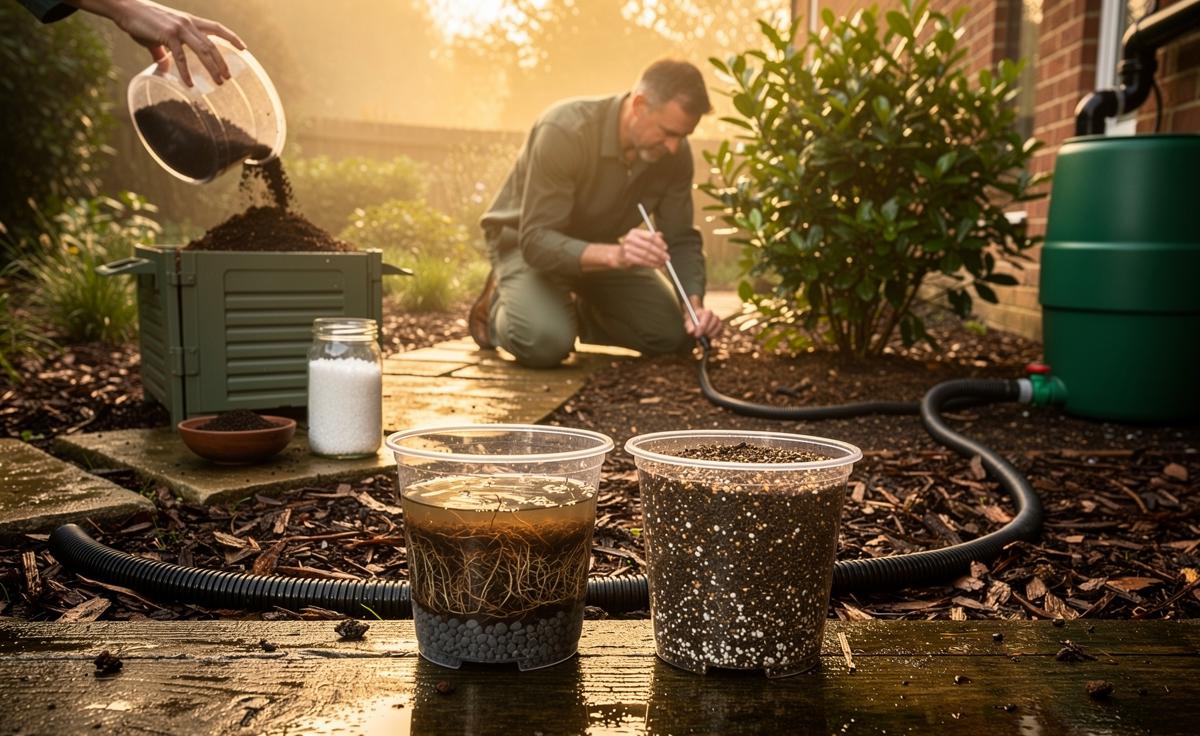
It sounds logical. A layer of stones at the bottom must help water escape. Experts say the opposite. Water moves from fine particles to coarse ones only after the finer layer is saturated, creating a perched water table right above the gravel. Roots then sit in a boggy zone, starving for oxygen. The result is more root rot, not less. In 2026, container trials from university extension services reaffirm a simple fix: use a uniform, well-aerated mix and the right-sized drainage holes. Skip the pebbles; save the weight and the mess.
What works? A high-quality soilless mix with chunkier components—pine bark fines, perlite, or pumice—keeps air pockets open. Choose pots with multiple holes, elevate them on pot feet, and water thoroughly until you see a strong run-off. Then let the top several centimetres dry before watering again. Short daily sips only keep roots shallow. Deep soaks build resilience.
Exceptions exist, but they’re narrow. If you need ballast for top-heavy plants, place a mesh layer over the holes and add a small amount of heavy material at the base, then fill with your standard mix. This preserves drainage continuity. Remember: structure of the mix, not gravel layers, governs drainage.
Water Every Day in Hot Weather
Heatwave panic leads to hoses on full blast, daily. It feels caring. It isn’t always helpful. Plants don’t tell time; they respond to soil moisture. The rule that endures in 2026 is simple: water deeply and less frequently for established plants, targeting the root zone. This encourages roots to chase water downward, defending against drought. Shallow, frequent watering keeps roots near the surface where heat and wind dry them fastest. Use your finger, a moisture meter, or a spade to check below the surface; the top crust can mislead.
Timing matters. Early morning reduces evaporation and disease pressure. Add 5–8 cm of mulch—shredded bark, straw, composted leaves—to stabilise temperature and slow evaporation. In containers, expect faster drying, but still aim for thorough cycles rather than spritzes. For lawns, weekly totals matter more than daily sprinkles; one or two deep sessions usually beat seven fleeting ones.
There are exceptions. Newly planted trees, seedlings, and shallow-rooted edibles like lettuce genuinely need frequent checks, sometimes daily in hot, windy spells. Use a slow trickle or a soaker hose to deliver water where it counts. In drought-restricted UK regions, harvest roof runoff in barrels and prioritise your most valuable or thirsty plantings. Measure, don’t guess, and your watering will improve overnight.
Epsom Salt and Coffee Grounds Are Miracle Amendments
Social feeds promise quick fixes in a scoop. Reality is fussier. Epsom salt is magnesium sulfate; it doesn’t feed nitrogen, phosphorus, or potassium. Indiscriminate use can imbalance soils already sufficient in magnesium, locking out calcium and worsening blossom-end rot in tomatoes. Apply only after a soil test shows a deficiency. Coffee grounds? They’re not a magic acidifier, and fresh heaps can repel water and tie up nitrogen as they break down. Compost them first and blend lightly into beds or use as a thin mulch.
| Amendment | Myth | Reality | Safer Use |
|---|---|---|---|
| Epsom salt | “Boosts all growth” | Supplies only magnesium and sulfur | Use after a soil test confirms deficiency |
| Coffee grounds | “Instant acidifier; pest repellent” | Slightly acidic to neutral; can mat | Compost first; apply thinly mixed with carbon-rich mulch |
| Compost tea | “Cures diseases” | Evidence inconsistent; hygiene risks | Prioritise finished compost and soil health practices |
In 2026, the strongest gains come from organic matter and balance. Feed the soil, not the myth. Use home-made compost, well-rotted manure, and diverse mulches to build structure and microbial life. If plants show chlorosis or poor fruiting, test first; correct precisely. Targeted nutrition beats kitchen-fad fixes every time.
Gardening thrives on curiosity, not superstition. When you skip gravel layers, water by measured need, and retire miracle amendments, you save resources while growing sturdier plants. The shift is practical, not purist: observe, test, adjust. As the UK faces erratic summers and soggy winters, these evidence-led tweaks deliver calm control in unruly weather. Start small, track results, iterate through the season. Your garden is a laboratory, and you’re the head gardener-scientist. Which myth will you test first this year, and what simple experiment will you run to prove your hunch?
Did you like it?4.4/5 (27)