In a nutshell
- 🌱 Build soil intelligence via pH/texture tests, organic matter, and timed feeds; aim for crumbly structure and track inputs.
- 💧 Practice precision irrigation: deep, infrequent morning watering, mulch to cut evaporation, and drip/soaker systems grouped by plant thirst.
- 📍 Match right plant, right place using microclimate mapping and succession planting; go vertical and rotate to keep yields steady.
- 🐞 Recruit biological allies: companion flowers, beneficial insects, hygiene, nets, and targeted nematodes before chemicals.
- 📈 Prioritise repeatable wins: observe, log, and iterate small changes to compound resilience and harvests season by season.
Gardens don’t thrive by accident; they thrive because curious growers notice patterns, adapt faster than the weather, and turn small wins into reliable routines. Reporting from allotments, balconies, and back-garden trials across the UK, I’ve collected field-tested tactics that pair science with simplicity. The secret is less about perfect conditions and more about consistently nudging the odds in your favour. Below, you’ll find pragmatic methods for soil health, water efficiency, smarter plant placement, and nature-friendly pest control. Each section includes concise checklists and original insights from real plots—because evidence beats folklore, and what works in a windy Yorkshire terrace may differ from a sheltered Surrey courtyard. Let’s get your beds buzzing and your harvests humming.
Soil Intelligence: Testing, Feeding, and Timing
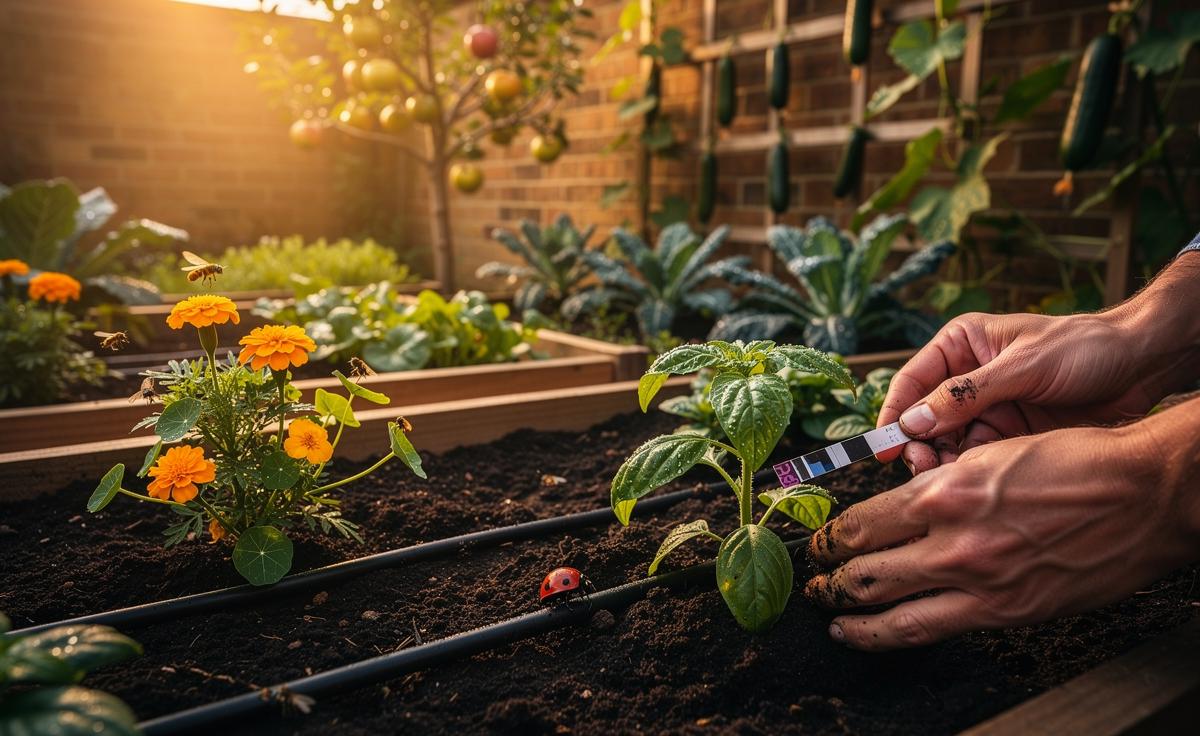
If there’s a single lever that multiplies every other effort, it’s soil health. On my compact London clay plot, one season of neglect gave me chlorotic leaves and slug banquets; one season of targeted feeding lifted yields by a third. Healthy soil is the quiet engine of a thriving garden. Start with a basic soil pH and texture test—cheap kits and a jam jar are enough to guide your next move. Clay holds nutrients but needs air; sandy loam drains well but starves plants without organic matter. Aim for structure, not just nutrition: roots breathe better in crumbly soil.
Feed the soil, then the plant. Compost, leaf mould, and well-rotted manure add organic matter that releases nutrients slowly, stabilises moisture, and buffers pH. Add materials in autumn to let biology work over winter, then top up lightly in spring. I time high-nitrogen feeds (like nettle tea) to burst before peak growth, and I reserve balanced slow-release feeds for containers where nutrients leach quickly. A simple weekly note—what you added, when, and why—will sharpen decisions next season.
| Indicator | Target Range | What It Means | Quick Fix |
|---|---|---|---|
| pH | 6.0–7.0 (most veg) | Nutrient availability peaks near neutral | Too acidic: add lime; Too alkaline: add compost/leaf mould |
| Organic Matter | 5–10% by volume | Holds water and nutrients; feeds microbes | Incorporate compost; use green manures |
| Drainage | Percolates in 30–60 mins | Prevents root rot, improves aeration | Raise beds; add grit and organic matter |
Pros vs. Cons snapshot: Mulch reduces water loss and weeds (pro) but can harbour slugs if too thick (con). Compost teas may boost microbial diversity (pro) yet demand hygiene and consistency (con). The winning habit? Test, record, adjust.
Water Like a Pro: Precision Irrigation in a Thirsty World
Watering is not about frequency; it’s about depth and timing. Deep, infrequent watering trains roots to go down, not out. In practice, that means one thorough soak to reach 15–20 cm, then waiting until the top 3–5 cm is dry before the next session. Early morning beats evening to reduce evaporation and disease spread. Pair watering with mulch—a 5 cm layer of shredded bark or compost cuts loss dramatically and buffers heat spikes during hosepipe bans.
I tested three methods across identical beds in July: a standard rose head, a budget soaker hose, and DIY drip irrigation on a timer. Drip won for evenness and yield per litre; the watering can offered precision for seedlings; sprinklers lost too much to air and leaves. Place watering lines under mulch, and group plants by thirst—tomatoes and cucumbers together; herbs like thyme and rosemary separate.
- Do: Water at the base, not the leaves; use a finger test before watering.
- Don’t: Mist tomatoes—invites blight; overwater pots—flushes nutrients.
- Upgrade: Add a simple timer to standardise routines during heatwaves.
Why more isn’t better: Overwatering suffocates roots and leaches minerals; underwatering stresses plants into bolting or bitterness. The sweet spot is a rhythm your soil and plants can “expect,” aligned to weather rather than the calendar.
Right Plant, Right Place: Microclimates and Succession
Your garden is not one climate; it’s a mosaic. Fences reflect heat, patios trap warmth, and wind corridors desiccate leaves. Mapping these microclimates is the fastest route to fewer failures. I use a cheap thermometer probe and a notepad: south wall = early tomatoes; windy corner = kale and chard; shadier beds = salads that resist bolting in June. In containers, choose light-coloured pots to prevent root bake, and lift them on feet to improve drainage.
Think in successions, not snapshots. After early peas, drop in French beans; when garlic comes out, slot in late lettuces or dwarf brassicas. This keeps soil biology fed and yields steady. In small spaces, vertical tricks—espalier apples, string-grown cucumbers, trellised squash—unlock light without stealing ground. For ornamentals, drought-tolerant perennials (e.g., Salvia, Echinacea) thrive on leaner care while pulling in pollinators for your veg.
- Hot spots: tomatoes, chillies, basil.
- Cool shade: spinach, coriander, mint.
- Wind-tolerant: kale, chard, rosemary.
Why X isn’t always better: Big raised beds heat faster (pro) but dry faster (con). Small beds are easier to manage intensively, particularly for crop rotation. Match the bed to your bandwidth, not your ambition.
Biological Allies: From Compost Teas to Beneficial Insects
Chemical quick-fixes look tempting until you notice collateral damage. The most resilient gardens recruit nature rather than fight it. I run two no-spray beds as a control: with mixed flowering edges and a small log pile, aphid spikes now crash within a week as ladybirds and hoverflies arrive. Interplanting—nasturtiums near brassicas, marigolds among tomatoes—serves as both decoy and nectar bar. For slugs, beer traps are theatrical; better are night patrols, copper bands on containers, and encouraging ground beetles with mulch and undisturbed corners.
Compost teas and vermicompost extracts can nudge microbial diversity, but cleanliness is key: aerate adequately and apply fresh. On fruit, a winter wash and rigorous hygiene (removing mummified fruit, sanitising secateurs) prevents spring disease cascades. For vine weevil in pots, consider biological nematodes on label timing—cool, moist conditions help them work.
- Attractors: fennel, dill, cosmos, and alyssum for predators and pollinators.
- Barriers: fine mesh over carrots and brassicas; netting raised off foliage.
- Sanitation: clear plant debris; rotate families to break pest cycles.
Pros vs. Cons snapshot: Beneficial insects build durable balance (pro) but need continuous habitat (con). Nematodes are targeted (pro) but require exact timing and moisture (con). Choose living solutions first; keep synthetics as last resort.
In the end, thriving gardens come from a stack of small, repeatable wins—healthier soil, smarter watering, shrewder placement, and allies with wings. Log what you try, give changes a fortnight to show, and iterate. Consistency beats intensity in every growing season. Whether you garden on a windy balcony or a sheltered suburban plot, the principles scale: observe, test, adjust. What single change—soil test, drip line, succession plan, or a strip of pollinator flowers—will you trial first this month, and how will you measure the difference it makes?
Did you like it?4.6/5 (30)