In a nutshell
- 🌿 Calcium accelerates basil by strengthening cell walls, stabilising membranes, and improving nutrient and water transport; keep soil pH 6.2–7.0 for availability and steady, faster growth.
- 🥚 Proper prep: rinse, dry/bake, then grind shells into a fine powder; greater surface area drives release, turning kitchen waste into an effective slow‑release amendment.
- 🧪 Application: mix 1–2 tbsp per 4–5 L potting mix or top‑dress containers; in beds, a light handful per m²; skip “eggshell tea” and expect visible improvements in about 3–6 weeks.
- ⚖️ Pair shells with balanced nutrition—nitrogen, phosphorus, potassium, plus magnesium—to fuel chlorophyll and growth while calcium provides structure; water consistently to aid calcium transport.
- 🚫 Avoid mistakes: don’t use chunky shells or overapply (risking micronutrient lockout), adjust for hard water, and prioritise modest, regular doses; watch newest leaves as your field test for success.
Looking to turbocharge your basil without buying specialist feeds? The answer might be sitting in your kitchen caddy. Finely ground eggshells deliver slow, steady calcium, a nutrient that underpins sturdy stems, vivid foliage, and resilient new growth. As shells dissolve, they buffer acidity and strengthen plant tissues, which can translate into faster, more reliable growth under everyday garden conditions. It’s simple, frugal, and friendly to the soil food web. Done correctly, this is a low-risk, long-benefit amendment that suits both pots and beds. The trick is particle size, timing, and balance with other nutrients. Here’s how to make the most of it for unstoppable basil.
Why Calcium Accelerates Basil Growth
Calcium sits at the heart of basil’s vigor. It fortifies cell walls, stabilizes membranes, and supports root tip development. That combination gives leaves their spring and prevents tender new growth from collapsing under stress. Calcium also moderates the flow of water and nutrients inside the plant. When basil can transport resources cleanly, it grows faster, shrugs off mild heat swings, and builds lush, aromatic foliage. In short, calcium doesn’t merely add mass; it enables systems that let the plant turn sunlight, water, and nitrogen into speed.
Eggshells are primarily calcium carbonate. In soil, they dissolve gradually as carbonic acids, root exudates, and microbial action nibble away at each particle. That makes them a classic slow-release amendment: ideal for season-long feeding rather than emergency triage. Basil prefers a pH between roughly 6.2 and 7.0, where calcium is available without locking out iron or manganese. Finely ground shells subtly buffer acidity, supporting that sweet spot. Pairing calcium with adequate nitrogen and magnesium is vital; calcium strengthens tissues, but those other nutrients create the chlorophyll and proteins that drive visible growth.
What about deficiencies? In basil, low calcium shows up as distorted new leaves, tip burn, or sudden collapse of tender tissue during hot, dry spells. Here’s the catch: eggshells won’t fix an acute deficiency overnight. They prevent tomorrow’s problems while your compost or balanced feed addresses today’s hunger. For containers, that’s gold—consistent, background support that keeps momentum once you’ve set the pace.
Preparing Eggshells for the Garden
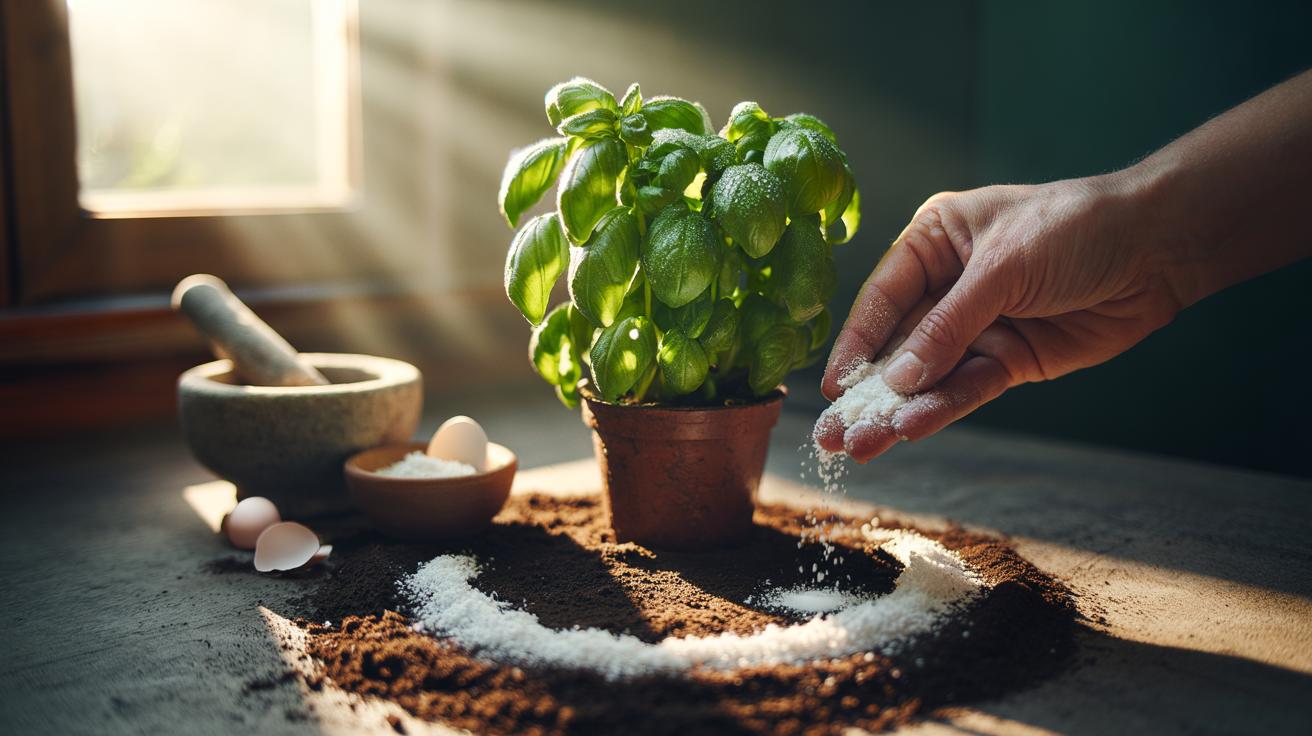
Clean, dry, grind. That’s the method. Rinse shells to remove residues that can attract pests, then dry thoroughly—air-dry on a tray or bake at low heat (about 90–120°C) until crisp. Baking not only sanitizes but makes shells brittle, which helps you grind them finer. Use a mortar and pestle, rolling pin, or a dedicated coffee grinder. The finer the powder, the faster the calcium becomes available. Coarse flakes look satisfying but do very little in the short term.
Think like a soil chemist for a moment. Calcium carbonate dissolves where there’s mild acidity and moisture. Large fragments offer little surface area; powders present thousands of edges to microbes and root exudates. Aim for sand-like grit at minimum, talc-like powder if possible. Store the result in a dry jar. Label it—future-you will thank you. A tablespoon weighs less than you think, so measure by volume for consistency across pots and batches.
| Grind Size | Expected Release Speed | Best Use |
|---|---|---|
| Coarse (2–5 mm) | Very slow (many months+) | Long-term soil building in beds |
| Medium (1–2 mm) | Slow (season-long) | Pre-plant incorporation in raised beds |
| Fine powder (<0.5 mm) | Faster (weeks to months) | Containers, top-dressing, quick integration |
If you only do one thing, grind finer. This single step transforms shells from decorative mulch into a genuinely useful soil amendment for rapid basil growth.
How to Apply and When to Expect Results
For container basil, mix 1–2 tablespoons of finely ground shells per 4–5 liters of potting mix before planting. For established plants, top-dress: sprinkle a thin ring (about 1 tablespoon around a 15–20 cm pot), then scratch lightly into the top centimeter and water. In beds, aim for a light dusting—roughly a small handful per square meter—worked into the topsoil. Combine with compost for a steady matrix of nutrients and beneficial microbes. Eggshells are a slow-release amendment, not a quick fix. Keep regular watering consistent; fluctuations can worsen calcium transport even when soil calcium is adequate.
What about “eggshell tea”? Skip it. Calcium carbonate isn’t very soluble in plain water, so the brew extracts little. The real gains come as powder contacts moist, mildly acidic soil. Expect structural benefits—firmer stems, smoother new leaves—within 3–6 weeks in warm, active soils. Growth often looks more organized than explosive, but the net effect is speed: fewer setbacks, steady leaf expansion, and better stress tolerance. If you suspect acute deficiency, use a balanced organic feed alongside the shells, or a gentle foliar calcium to bridge the gap while the soil amendment activates.
Consistency beats quantity. A small, well-ground dose at planting plus a light top-up midseason typically outperforms heavy, irregular applications that risk nudging pH too high.
Common Mistakes and Soil Science Insights
Biggest error? Using whole or chunky shells and expecting quick results. Surface area rules availability. Second error: piling on so much that you push the pH upward and lock out micronutrients like iron. For basil, keep soil pH roughly 6.2–7.0. If your tap water is hard, your baseline calcium may already be strong; go lighter with shells in that case. When in doubt, prioritize fine grinding and modest rates over heroic quantities.
Don’t rely on eggshells alone. Basil’s pace hinges on balanced nutrition: nitrogen for leaves, phosphorus for roots, potassium for resilience, with calcium as the structural backbone. Pair shells with mature compost or a balanced organic feed. In containers, where media is limited and leaching is quick, this synergy prevents stalls. Hygiene matters too—bake or thoroughly dry shells to avoid unwanted microbes and odours. And remember the weather: rapid swings in heat and moisture can interrupt calcium movement inside the plant even when soil levels are fine, leading to tip issues not solved by more shells.
As a rule of thumb, in beds keep total annual additions to a light handful per square meter; in pots, tablespoons, not scoops. Watch the newest leaves. Healthy, evenly formed tips are your best field test that the calcium pipeline is flowing.
Used with intent, eggshells quietly stack the odds in basil’s favor—stronger tissues, cleaner growth, and fewer hiccups during summer surges. Grind fine, apply modestly, and team calcium with balanced nutrition and steady watering. That’s how you convert kitchen scraps into leafy dividends. Over a season, the gains feel cumulative: sturdy plants that keep giving, week after week. Ready to experiment on a windowsill pot and a garden bed, compare results, and see how far a jar of powdered shells can take your basil—what tweaks will you try first?
Did you like it?4.6/5 (23)