In a nutshell
- 🌱 Coffee grounds add slow-release nitrogen, modest phosphorus and potassium, rich organic matter, and boost soil microbes, improving structure, aeration, and moisture for bigger peppers.
- 📅 Follow a week-by-week timeline: Weeks 0–2 soil conditioning, Weeks 3–4 canopy surge and flowering, Weeks 5–8 fruit fill where potassium drives size and flavour.
- 🥄 Smart application rates: 2–4 tbsp per in-ground plant every 2–3 weeks (half for containers), always covered with compost or mulch and kept 15 cm from stems; or compost first at 10–20% of the heap.
- ⚠️ Avoid pitfalls: don’t use fresh grounds, don’t form thick mats, watch temporary nitrogen tie-up and soil pH, and keep watering steady to move calcium and reduce blossom-end rot.
- ✅ The formula: small, regular doses, covered and watered in, paired with balanced nutrition—track results against an untreated row to dial in timing and rate for your microclimate.
Gardeners whisper about it, allotment groups debate it, and pepper lovers quietly swear by it: coffee grounds. As a soil amendment, those spent espresso pucks and filter leftovers can help bell peppers and hot chillies bulk up across a matter of weeks, not months. The secret is not magic. It’s a blend of slow-release nitrogen, trace minerals, organic matter, and a boost to soil life that peppers relish when heat rises and growth accelerates. Used wisely, grounds fit into a measured routine that feeds, conditions, and steadies moisture. Small, regular doses beat dramatic dumps every time. Here’s how nutrients in coffee grounds fuel massive growth you can actually track.
Why Coffee Grounds Supercharge Pepper Growth
Used coffee grounds contain a surprisingly rich nutrient profile for a waste product. They deliver modest but steady nitrogen for leafy vigor, a pinch of phosphorus for root development, and potassium that supports flowering and fruit fill. They also add organic matter, improving crumbly structure so roots breathe and water moves evenly through the bed or container. Critically, the fibrous particles host thriving soil microbes, which unlock nutrients already present in your compost or soil. Spent grounds tend to sit near neutral pH, so they won’t acidify established beds, and their dark texture helps the surface warm quickly in spring, jump-starting growth.
| Nutrient/Property | Typical Amount in Used Grounds | Role for Peppers |
|---|---|---|
| Nitrogen (N) | ~2% | Leaf area expansion, stem strength |
| Phosphorus (P) | ~0.3% | Rooting, early flowering |
| Potassium (K) | ~0.3–0.6% | Fruit set, flavour, resilience |
| Magnesium and Calcium | Trace | Chlorophyll, cell walls; helps reduce blossom-end issues |
| Organic Matter | High | Water retention, microbial activity |
Beyond raw numbers, the timing matters. Grounds release nitrogen steadily, matching a pepper’s appetite as days lengthen. That slow trickle translates into thicker canopies without pushing sappy, pest-prone growth. Pair grounds with mature compost and you create a buffet that peppers convert into bulkier, juicier fruit.
A Week-by-Week Growth Timeline You Can Track
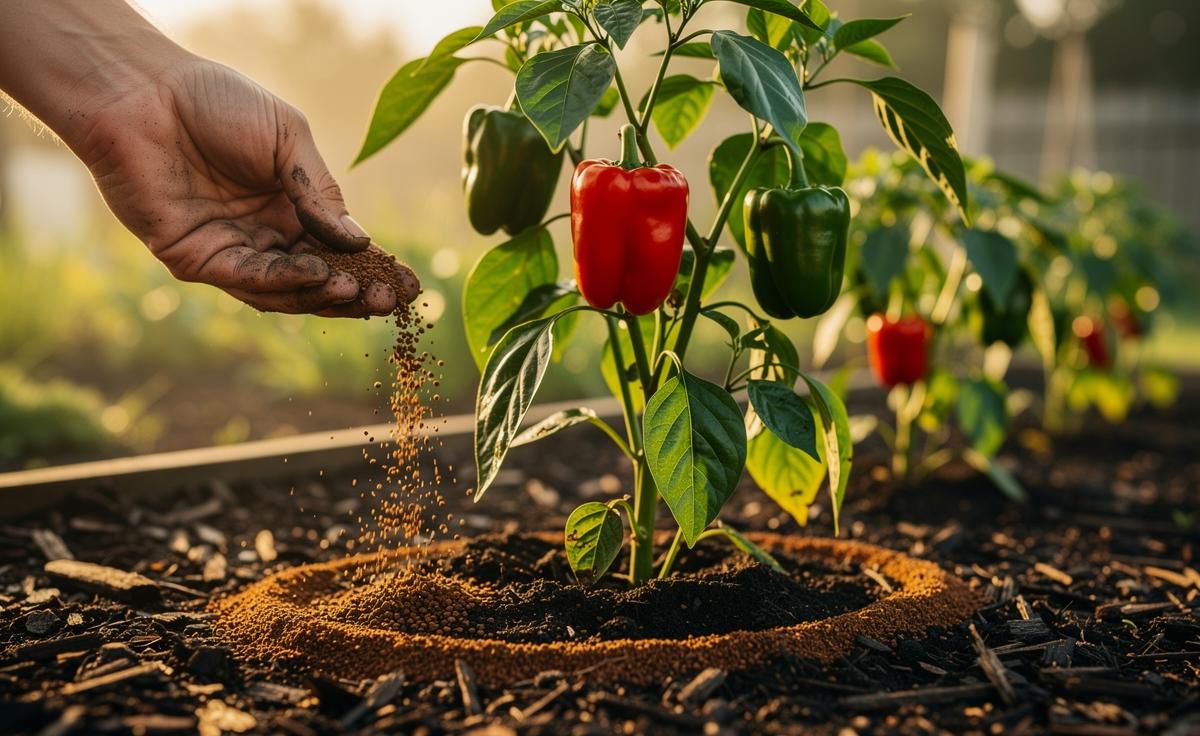
Week 0–2: Fold a small ring of used coffee grounds into the top 2–3 cm of soil, 15 cm from the stem, then blanket with compost or leaf mulch. Water deeply. Expect subtle changes: a richer leaf green, tighter internodes, and faster recovery after hot afternoons as soil moisture stabilises. Microbial activity ramps up first; roots follow. Patience here pays later in fruit size.
Week 3–4: Canopy takes off. You’ll see broader leaves and sturdier stems as slow-release nitrogen and magnesium boost chlorophyll production. Side-dress with another thin sprinkle, no more than a tablespoon or two per mature plant, then cover again. Flowers initiate; potassium availability becomes decisive. Keep watering consistent to keep calcium moving and reduce blossom-end rot risk in large-fruited peppers.
Week 5–8: Fruit set and cell expansion. This is where “bigger” happens. The earlier nitrogen investment supports photosynthesis, while potassium drives sugars and water into swelling pods. Add a final light top-up if plants are vigorous, then stop. Heavy applications now can dilute flavour and skew plants leafy. Maintain mulch to buffer heat and moisture. By week eight, pods should feel denser, with thicker walls and a deeper sheen.
How to Apply Coffee Grounds Safely and Effectively
Start small. For in-ground peppers, aim for 30–60 ml (2–4 tbsp) of used coffee grounds per plant every two to three weeks during active growth, always covered by compost or mulch. In containers, halve that rate. The covering layer prevents a dry crust and keeps the surface from turning hydrophobic in summer sun. Stirring a fraction into a compost heap first is even better: a 10–20% volume share of grounds to other browns and greens balances carbon and nitrogen, tones down any phytotoxic compounds, and speeds humus formation.
Never heap grounds thickly against stems. Do not create mats thicker than 5 mm at the surface. Work in a shallow ring outside the drip line, or mix gently into the top layer to avoid disturbing roots. Combine with a balanced, pepper-friendly feed if your soil is lean, because grounds are not a complete fertiliser. Keep irrigation steady. Grounds help hold moisture, but peppers resent extremes; consistent watering keeps calcium available during rapid fruit fill, the precise window when bigger pods can otherwise collapse at the tip.
Common Mistakes, Risks, and What the Evidence Says
Used coffee grounds are powerful, but not perfect. Fresh, unbrewed grounds can be too acidic and caffeine-rich, so stick to spent material. Even then, lab tests and garden trials show occasional seedling inhibition when grounds dominate mixes. That’s why composting or blending with mature compost is routinely recommended. When in doubt, compost first. Thick surface layers can repel water once dry, starving roots below; avoid mats and always cap with organic mulch. Over-application can tie up nitrogen briefly as microbes feed, so use light, repeat doses rather than a single dump.
Evidence from soil studies points to benefits in aggregation, microbial biomass, and moderate nutrient release, particularly for nitrogen. But grounds are not a silver bullet. You still need sun, warmth, and a balanced diet that includes potassium and calcium. Monitor pH if your soil already trends acidic, and observe plants: leaves too dark and lush? Ease off nitrogen; prioritise potassium-rich inputs like wood ash (sparingly) or a balanced organic fertiliser. The winning formula is simple: small, regular additions, covered, watered in, and teamed with compost. That’s how you turn kitchen waste into heavyweight peppers.
Used wisely, coffee grounds are a quiet accelerator for peppers, feeding leaves early and fruit later while improving soil feel and function. The gains add up week by week: steadier moisture, richer green, firmer stems, then heftier pods with better texture. It’s low-cost, circular, and easy to monitor in any UK garden, from patio pots to productive plots. Try a measured schedule, keep notes, and compare a treated row with an untreated control. What tweaks—rate, timing, mulch pairing—will turn your next flush of peppers from good to unforgettable in your microclimate?
Did you like it?4.4/5 (25)