In a nutshell
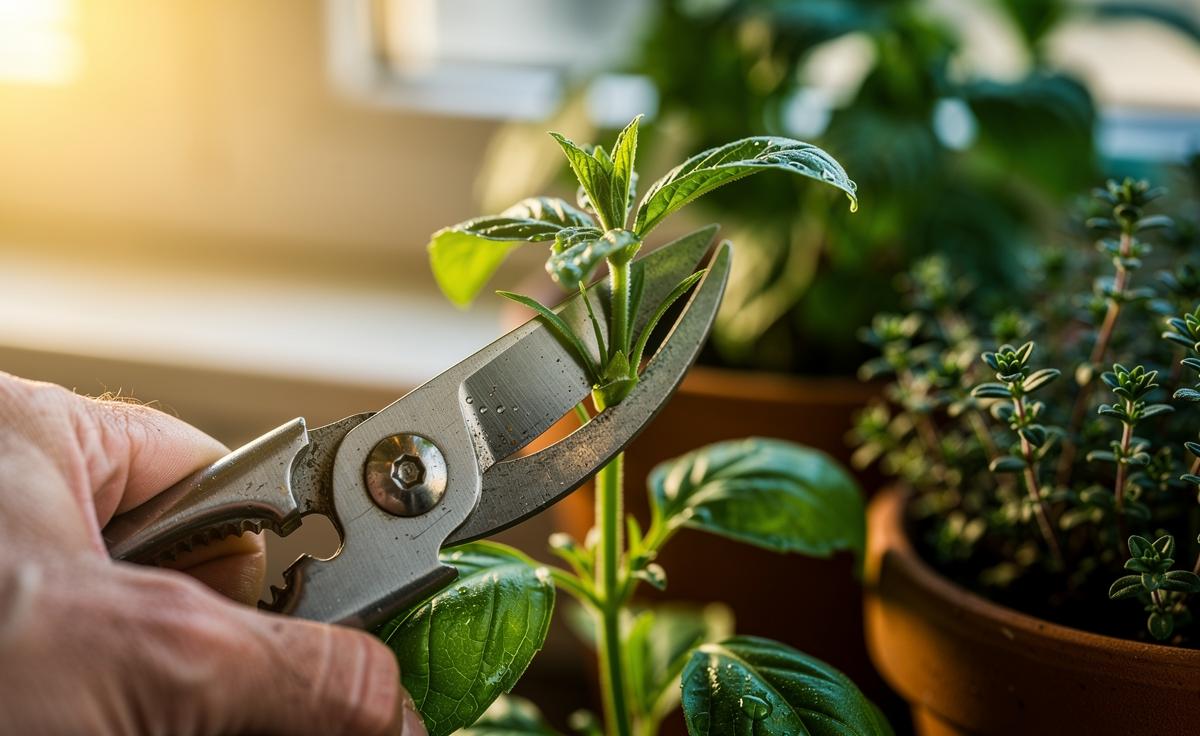
- 🌿 Pruning disrupts apical dominance, lowering auxins and letting cytokinins drive lateral buds; cut above a node to trigger bushier growth within a week.
- 📅 Follow a tight rhythm: Day 0 prune and de-bud flowers, Day 2 check moisture, Day 4 feed half-strength, Day 7 light pinch; make 45° cuts in the morning with sterilised blades.
- ✂️ Herb tactics: Basil tip-prune above 2nd–3rd pair; Mint shear by one-third and tame runners; Thyme/Oregano clip soft green tips; Parsley harvest outer stems at base; Rosemary/Sage only tip-prune green wood.
- 🪴 Tools and conditions matter: sharp pruning shears, clean cuts, remove flower spikes, rotate pots, and give 6+ hours of light to thicken canopies and boost essential oils.
- ❗ Avoid shocks: don’t cut too low or more than 20–30% at once; fix issues with steady moisture, balanced feeding, repotting root-bound herbs, and aim for 1–3 cm shoots by day seven.
Kitchen herbs don’t grow bushy by accident; they respond to precise signals and tidy intervention. A few smart snips with pruning shears can switch a plant from “reach for the sky” to “fill out from the sides” in days. Done right, you’ll see plump new shoots by the end of the week, tighter flavour, and sturdier plants that shrug off wind and weather. The trick is understanding where growth hormones gather and how light and airflow nudge leaves into action. Cut with intent, not impatience. With a clean blade, the correct angle, and timing aligned to the plant’s rhythm, your mint, basil, and thyme will answer swiftly.
Why Pruning Sparks Fast Leaf Growth
Herbs are ruled by apical dominance: the top shoot churns out auxins that suppress side buds. Snip off that bossy tip and the hormone balance tilts, letting cytokinins fuel lateral growth. Remove the tip and you release the plant’s hidden capacity to branch. Energy and sugars, once funnelled upwards, redistribute to leaf nodes below the cut. The result? Dormant buds wake, then push out plump new leaves within a week if warmth and light cooperate.
Pruning also improves light penetration and airflow across the canopy. Leaves not shaded grow broader and richer in oils, enhancing flavour. With basil and mint, this means denser tufts rather than a leggy wand. For thyme and oregano, a tight trim keeps stems young and flexible. Cutting isn’t damage; it’s direction. The plant responds to a clean wound by sealing, rerouting resources, and, crucially, branching. Keep cuts just above a leaf node so the nearest buds have a head start. Use sharp, sanitised shears to prevent crushed tissue and disease.
The One-Week Plan: Where, When, and How to Snip
Cut in the morning on a dry day. Water lightly the evening before so tissues are turgid. Sterilise blades with isopropyl alcohol. For soft-stem herbs (basil, mint, parsley), make a 45-degree cut 5–8 mm above a pair of leaves. For semi-woody herbs (thyme, oregano, sage, rosemary), trim only the green, pliable growth. Never cut into brown, leafless wood on rosemary.
Follow this pace. Day 0: prune. Remove flower buds to halt seed set and redirect energy. Day 2: check for turgid leaves and no wilting; water if topsoil is dry to the first knuckle. Day 4: feed a half-strength, balanced liquid fertiliser or seaweed tonic. Day 7: pinch again, lightly, above fresh nodes to double down on branching. Keep plants in bright light—at least six hours—and rotate pots for even growth.
| Step | Tool/Target | Technique | Expected Result |
|---|---|---|---|
| Initial Snip | Pruning shears, top stem | 45° cut above node | Auxin drop, buds activate |
| Bud Control | Flower buds | Remove entirely | Leaf growth prioritised |
| Aftercare | Water/feed | Light watering, half-strength feed | Steady, bushy growth |
| Follow-up | New shoots | Pinch above fresh nodes | Branching doubles |
Herb-by-Herb Tactics for Bushiness
Basil: Cut above the second or third leaf pair. Two shoots will replace the one you removed. Always take the tip, not just big bottom leaves, or you’ll leave a lanky, unproductive stem. Keep flower spikes off to prevent flavour fade. Water evenly; basil sulks if it dries out then floods.
Mint: Vigorous and forgiving. Shear stems back by one third above nodes to keep it compact and leafy. Container growers should trim runners to stop a takeover. Feed lightly; too much nitrogen equals floppy stems and diluted aroma.
Thyme and Oregano: Clip soft green ends, a few centimetres across the plant, to form a dome. Don’t scalp one side. Sun is flavour; give full light and lean soil. Short, frequent trims beat rare, hard chops.
Parsley: Harvest outer stems at the base; let the centre keep producing. To thicken, pinch central shoots before they elongate. Flat-leaf bounces back fastest. Keep moisture steady.
Rosemary and Sage: Only tip-prune green growth. Avoid dead wood. After flowering, a light reshape helps. Plenty of sun, modest water. If in doubt, cut less but cut clean.
Common Mistakes and Quick Fixes
Cutting too low harms recovery. Aim above a node so the nearest buds can take over. Removing too much at once shocks herbs; stick to 20–30% of the plant. If you went hard, pause feeding for a few days, shade lightly in midday sun, and keep soil just moist. Recovery is quicker with consistent care than with heavy-handed fertiliser.
Dull or dirty blades crush stems and spread disease. Sharpen and wipe with alcohol before each session. Low light yields leggy, slow responses; move plants to a brighter sill or add a small grow lamp. Poor nutrition stalls bud break; deliver a balanced liquid feed weekly during active growth, but avoid high-nitrogen blasts that bloat leaves.
Pot-bound roots limit branching; up-pot mint and basil when roots circle the edge. Watch temperature: coriander and parsley resent heat; basil needs warmth to sprint. Pest pressure matters—check for aphids on tender tips and wash off with a mild soap solution. Measure success at day seven: look for 1–3 cm shoots from nodes below each cut. If growth lags, revisit light, water cadence, and the precision of your cut placement.
Done with care, a few snips transform herbs from spindly to sumptuous, and the payoff is quick: fuller canopies, better airflow, and leaves that taste louder. The method is simple—clean tools, smart angles, and cuts placed just above active nodes—yet the results feel alchemical. Keep flowers at bay, feed lightly, and let light do its work. In a week you’ll see the difference, and in a month you’ll taste it in every dish. Which herb on your windowsill will you sharpen your shears for first, and what will you cook with the extra bounty?
Did you like it?4.4/5 (30)