In a nutshell
- 🌱 Tea compost = slow-release nutrition delivering nitrogen, potassium, and phosphorus steadily, boosting chlorophyll and leaf density while improving CEC and soil humus without harsh growth surges.
- 🧫 Feeds the soil microbiome: brewed leaves supply carbon and polyphenols that build aggregates, enhance water infiltration, and chelate micronutrients like iron and zinc for greener foliage.
- ⚖️ Balanced practice: keep tea leaves to about 10% of compost volume, pair with dry “browns,” top-dress lightly (5–8 mm), and avoid plastic tea bags, flavoured blends, and milky brews.
- ⏱️ Smart timing: apply in spring and mid-season; for containers, add a monthly pinch—especially for leafy greens—since regular, light applications outperform heavy, occasional feeds.
- ♻️ Sustainable habit that cuts waste and costs while cultivating resilient foliage—leaves emerge glossier, truer in colour, and better able to withstand stress.
Tea drinkers rarely waste a brew, yet the quiet hero may be what’s left in the pot. Used tea leaves, folded into compost or spread as a light mulch, deliver a steady flow of plant nutrition that strengthens foliage from root to tip. Unlike quick-hit fertilisers that spike growth then fade, tea compost works with soil life to release nutrients in rhythm with a plant’s needs. The result is vivid colour, sturdier stems, and leaves that shrug off stress. Turn yesterday’s cuppa into tomorrow’s canopy: a modest, sustainable habit that trims waste, trims costs, and keeps the garden’s engine humming.
How Tea Compost Feeds Leaves over Time
What sets tea compost apart is its slow-release character. Tea leaves contain modest amounts of nitrogen, potassium, and phosphorus, but these nutrients don’t rush into the soil solution all at once. They’re bound within organic fibres that must be digested by microbes, turning into stable humus and plant-available ions over weeks and months. This steady dribble prevents the tender, sappy growth associated with high-salt feeds and instead builds dense, resilient foliage. Think of tea compost as a metronome of nutrition, not a drum roll. Leaves grow greener, not gaudier, because chlorophyll has what it needs when it needs it, supported by improved cation exchange capacity and moisture-holding structure.
Key contributions from tea compost at a glance:
| Nutrient/Compound | Primary Benefit | Release from Tea Compost | Notes |
|---|---|---|---|
| Nitrogen (N) | Leaf growth, chlorophyll | Slow, sustained | Locked in organic matter |
| Potassium (K) | Stomatal control, resilience | Moderate | Supports water-use efficiency |
| Phosphorus (P) | Root energy, bud initiation | Slow | Mobilised by mycorrhizae |
| Polyphenols | Microbial food, chelation | Gradual | Acts as soil conditioner |
| Calcium, magnesium, traces | Cell walls, enzymes | Trickle | Complements regular feeds |
Crucially, brewed leaves soften the initial acidity of fresh tea, making them kinder to most beds and pots when blended with browns like dried leaves or shredded cardboard. That balanced carbon-to-nitrogen ratio is why tea compost keeps giving long after the kettle’s cooled.
The Soil Microbiome Powered by Brewed Residues
Healthy leaves start in living soil. Used tea brings readily digestible carbon and plant compounds such as polyphenols that feed bacteria and fungi responsible for nutrient transfer. As these microbes multiply, they build crumbly structure, glueing particles into aggregates that breathe. Water infiltration improves. Roots roam. With roots exploring deeper, leaves above can draw steadier supplies of nitrogen and potassium, particularly during dry spells. Healthy soil makes healthy leaves. And tea-fed microbe communities don’t just feed; they also compete with pathogens at the root zone, cutting the odds of opportunistic disease getting a foothold.
Another quiet effect: tea-derived humus can chelate micronutrients, keeping iron, manganese, and zinc more available in fluctuating pH. Gardeners often report richer greens in lime-prone areas once organic matter rises. Worried about tannins or caffeine? After brewing, concentrations are modest and quickly moderated inside a mixed compost. The bigger risk is not chemistry but materials: some tea bags contain heat-sealed plastics that don’t break down. Open the bag, add the leaves, bin the mesh. Feed the soil web, not the landfill. In wormeries, tea leaves invite lively cast production; in beds, they anchor a microbial pantry that keeps nutrients moving to leaf tips without harsh surges.
Practical Blends, Brewing Leftovers, and Application Timing
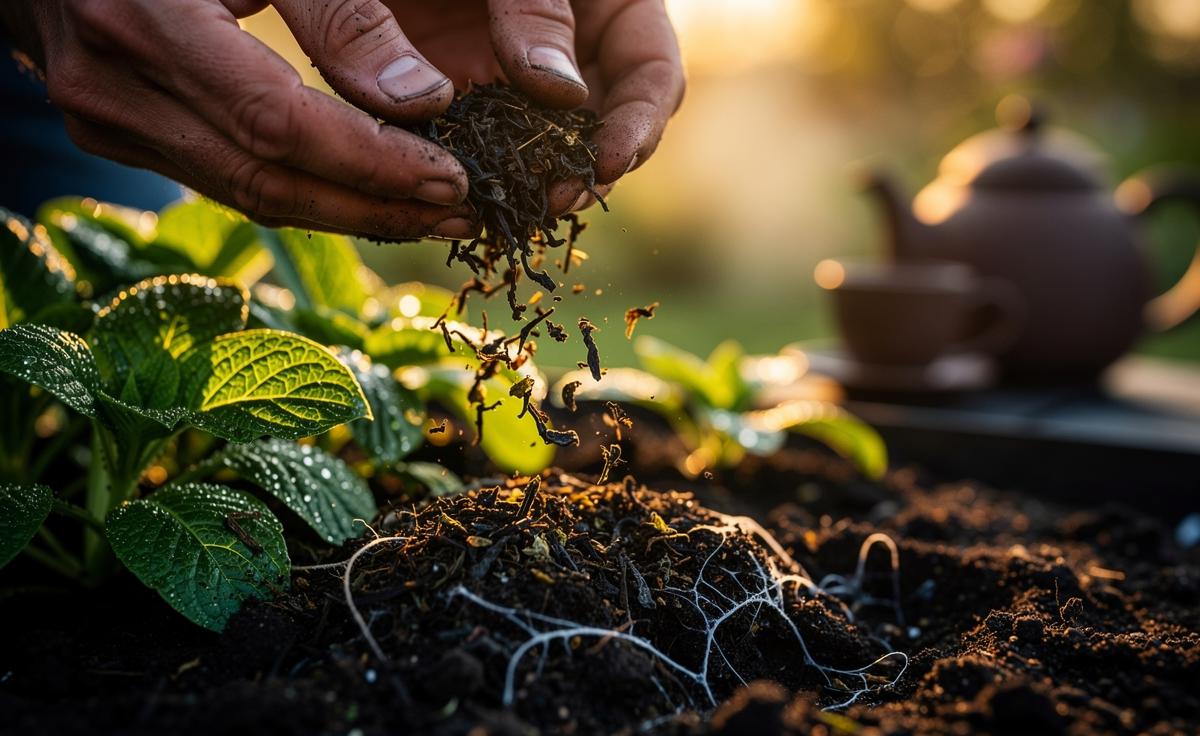
Success hinges on balance. Scatter used tea leaves thinly into your compost caddy, balancing each handful with a larger portion of dry “browns” such as straw, autumn leaves, or torn paper to prevent clumping and odour. Aim for a mix where tea leaves make up roughly a tenth of the total by volume. Keep the heap moist but airy. If you prefer direct use, spread a delicate top-dressing—no more than 5–8 mm—then cap with a light mulch to deter fungus gnats and keep moisture steady. Light layers feed; heavy piles ferment, and that’s not what leaves need.
Timing matters for leaf health. Apply in spring when plants are building canopy and again mid-season for perennials. Containers benefit from a monthly pinch worked into the top centimetre, especially for salad greens and herbs that respond to gentle nitrogen trickles. Skip mixing in flavoured teas that may include oils or sugars, and never pour milky brews onto soil. For acid-lovers—camellias, blueberries, azaleas—the soft acidity of tea compost is a welcome nudge; for lime-lovers, simply buffer with extra leaf mould or a dusting of garden lime elsewhere in the year. The point is rhythm. Regular, light applications out-perform occasional heavy handouts, delivering continuous nourishment to push healthier, shinier leaves.
In the end, tea compost is less a hack than a habit: a small, repeatable action that builds fertility and resilience season by season. It converts a daily ritual into a garden dividend, cutting waste and cutting input costs without cutting corners. The payoff shows where it counts—on the leaf. Veins crisp, surfaces glossy, colours true. So, will you let those used leaves go to the bin, or will you turn them into a slow, living feed that keeps your plants greener for longer—and if so, where will you spread the first handful?
Did you like it?4.3/5 (22)