In a nutshell
- 🌱 Rice water acts as a mild biostimulant: its starch feeds beneficial microbes, improving nitrogen availability and delivering trace potassium, phosphorus, and silica for thicker, greener chives.
- 🧪 Preparation and use: keep it unsalted; use cold-soak or cooled boil water; apply as a morning soil drench at dilution 1:1–1:3 every 7–10 days, alternating with plain water; refrigerate leftovers up to 48 hours.
- ⚠️ Safety first: avoid anaerobic conditions by spacing applications and ensuring strong drainage; reduce frequency in cool months; if leaves yellow, pause and flush, then restart lighter.
- 🧑🌾 Smart pairings: treat rice water as a supplement, not a full feed—combine with mature compost or a light organic fertiliser; consider seaweed extract; grow chives in sun, pH 6–7, with regular cutting and light mulch.
- ♻️ Results and sustainability: a frugal, circular practice that boosts colour, density, and regrowth speed from balcony pots to allotments—observe and fine-tune for your microclimate.
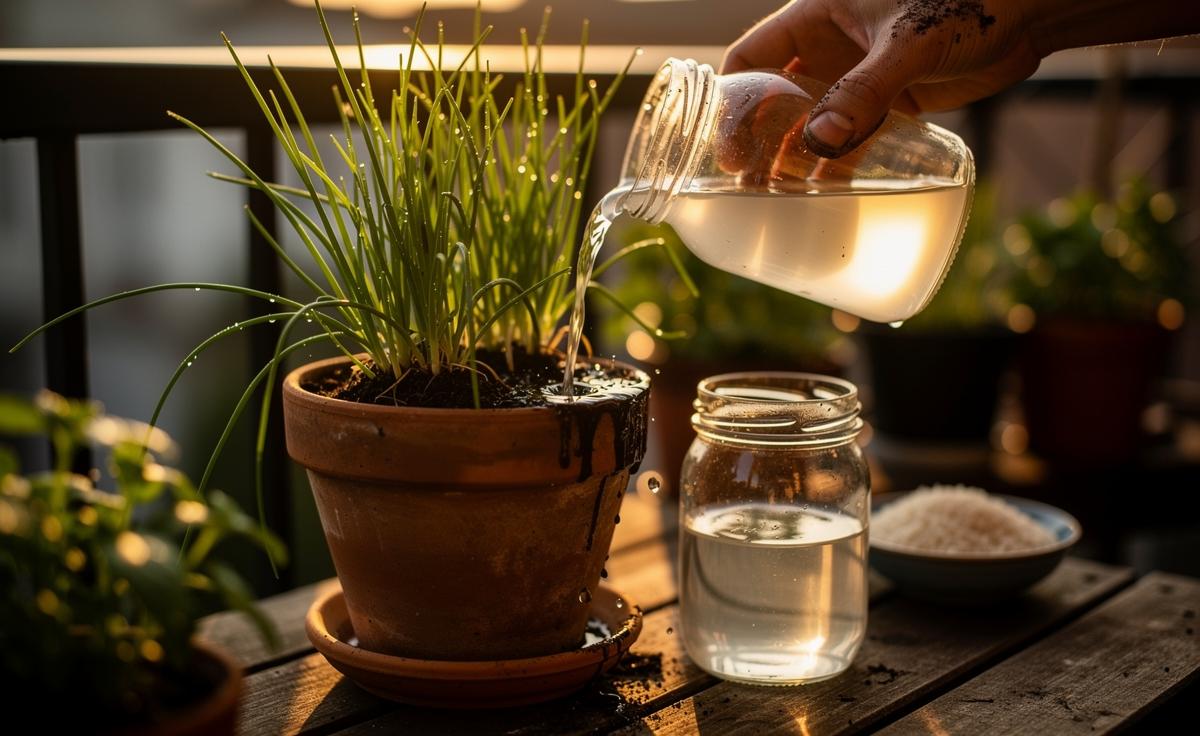
Gardeners love a thrifty trick. Few are thriftier than turning yesterday’s rice pot into today’s plant tonic. Pour the cloudy, starchy liquid around your chive clumps and watch them respond with thicker blades, brighter colour, and a gentle burst of new shoots. It’s simple, cheap, and delightfully circular. Rice water doesn’t behave like a harsh chemical feed; it’s a soft nudge that works with your soil life rather than against it. For balcony pots and allotment rows alike, the benefits arrive quickly. Use only unsalted, unseasoned water and apply modestly. Done right, this kitchen cast-off becomes a reliable ally for vigorous, healthy chives.
Why Rice Water Accelerates Chive Growth
Chives thrive when the soil’s tiny workforce is busy. The faint starch in rice water feeds beneficial microbes, which in turn free up nutrients already locked in your compost or potting mix. That microbial bustle improves nitrogen availability, exactly what chives use to push lush, green foliage. You’re not dousing plants with force; you’re priming the system. Result: faster recovery after cutting, thicker leaves, and resilient clumps that cope better with wind and intermittent drought.
Rice contains trace minerals—phosphorus, potassium, and a whisper of silica—that arrive in the cooking liquid. While the amounts are small, repeated light applications build a subtle, cumulative effect. Think of it as a mild biostimulant, not a full fertiliser. Because chives are leafy and shallow-rooted, a gentle, frequent boost fosters steady growth without the burn or salt build-up that synthetic feeds can cause. Better still, rice water tends to sit in a sensible pH band, so it won’t shock the soil. It’s a straightforward way to reduce waste and gain growth—sustainability with measurable, green-on-green results.
How to Prepare and Apply Rice Water for Chives
Two easy methods work. For a cold extract, rinse 1 cup of rice, cover with 2–3 cups of water, swirl, then soak 20–30 minutes. Strain off the cloudy liquid. For a hot version, save the cooled water left after boiling rice. Never add salt, oil, or stock—seasonings harm roots. Before use, dilute: a 1:1 mix (one part rice water to one part fresh water) suits most chive pots; go 1:2 in warm weather to discourage souring. Apply to moist soil in the morning, every 7–10 days, and alternate with plain rainwater to keep the root zone airy.
Store any surplus in the fridge up to 48 hours in a clean jar; discard if it smells off. Foliar misting? It can work at a 1:5 dilution, but direct soil application is more reliable. Good drainage is non-negotiable. Let excess run out of saucers, and avoid leaving pots standing in liquid. Cut chives frequently to encourage new blades; rice water helps them rebound with speed.
| Rice Water Type | Key Traits | Suggested Dilution | Best Use/Frequency |
|---|---|---|---|
| Soak (Cold) | Gentle, cleaner aroma | 1:1 to 1:2 | Soil drench, every 7–10 days |
| Boil (Cooled) | Richer starch, stronger scent | 1:2 to 1:3 | Soil drench, fortnightly if warm |
| Foliar Mist | Quick pick-me-up | 1:5+ | Light spray, morning only |
Safety, Limits, and Smart Pairings in the Herb Patch
There’s a line between lively soil and a swamp. Overdo rice water and you can tip containers into anaerobic conditions: a sour smell, fungus gnats, drooping leaves. Prevent this by spacing applications, maintaining porous compost, and lifting trays so pots can drain freely. In cool, dim months, reduce frequency; growth is slower and leftovers linger in the root zone. Rice water is a supplement, not a substitute for balanced nutrition. Pair it with a light, balanced organic feed or a top-up of mature compost every six to eight weeks.
Chives like sun, regular cutting, and slightly moist, well-drained soil around pH 6–7. Mulch lightly with fine bark or leaf mould to stabilise moisture. Team rice water with seaweed extract during peak cutting season for micronutrient breadth, but halve dosages to keep things gentle. On the pest front, strong clumps of chives deter aphids and boost companion plantings near carrots and tomatoes. Keep the routine simple: dilute, apply, observe. If leaves yellow or growth stalls, pause the rice water for a fortnight and flush with rainwater. Then resume at a lighter mix, and let the plants tell you.
Turning leftover cooking liquid into plant care is the sort of small domestic alchemy that makes gardening addictive. A splash of rice water won’t replace compost, sun, or sensible watering, yet it can trigger noticeable gains in colour, density, and regrowth speed for chives. It’s frugal, fast, and kinder to the soil community that underwrites every harvest. Will you trial a diluted weekly drench, or keep it for fortnightly boosts when cutting is heaviest—and what differences do you see in flavour, leaf thickness, and resilience across the season?
Did you like it?4.4/5 (29)