In a nutshell
- 🍺 Beer boosts soil microbiome via yeast and sugars; it’s not a fertiliser but enhances nutrient cycling, structure, and root uptake through soil absorption.
- 🧪 Microbial bloom metabolises sugars, releases organic acids that chelate Fe/Mn/Zn, and small hormones (auxins, gibberellins), yielding a steady trickle of plant-available N and P.
- ⚖️ Safe use: Flat beer, dilute 1:10–1:20, evening applications, light watering-in; combine with aeration, proper mowing, and balanced N-P-K.
- 🚫 Limits and risks: Overuse can attract pests, odours, surface moulds; alcohol/hops may stress microbes; avoid waterlogged soils and runoff; won’t fix compaction, deep shade, or thick thatch.
- 🌱 Strategy and alternatives: Consider molasses or humic acids; aim to feed soil life for greener colour, tighter sward, and improved drought tolerance.
It sounds like a pub myth, yet gardeners across Britain swear by it: a splash of beer can help a lawn thicken and green up. The logic is not the alcohol. It’s the yeast residues, simple sugars, and trace nutrients that ride along in every bottle or can. Microbes in the soil wake up, feed, and get to work, and grass roots benefit. Handled carefully, beer is a gentle catalyst for soil life rather than a brute-force fertiliser. Understanding why it works, when it doesn’t, and how to apply it safely will spare you waste and deliver a lawn that looks genuinely, sustainably lush.
The Science: Yeast, Sugars, and the Soil Microbiome
Beer—especially unfiltered or less processed varieties—contains yeast cells (alive or dead), malt-derived sugars, and fragments of proteins and B vitamins. Soil microorganisms metabolise these compounds rapidly. In effect, the lawn becomes a small bioreactor, turning carbohydrates into microbial biomass and by-products that plants can use. This is not direct feeding of grass leaves but a stimulation of the underground food web that nourishes roots. Beneficial bacteria and fungi respond first, multiplying as they digest the sugars, then releasing enzymes that unlock bound nutrients in the rhizosphere.
That bustling microbiome improves soil structure, boosting aggregation and porosity. Water infiltration improves. Oxygen penetrates deeper. Roots push further, then exude their own sugars, reinforcing the cycle. Yeast residues add amino acids and growth factors; some microbes synthesise small amounts of auxins and gibberellins that can subtly influence root development. There’s also a priming effect: as microbes grow and die, they create a steady trickle of plant-available nitrogen and phosphorus. The outcome isn’t instant, like a high-nitrogen feed, but it’s often steadier and kinder to the soil’s long-term health.
How Beer Feeds Microbes and Grass
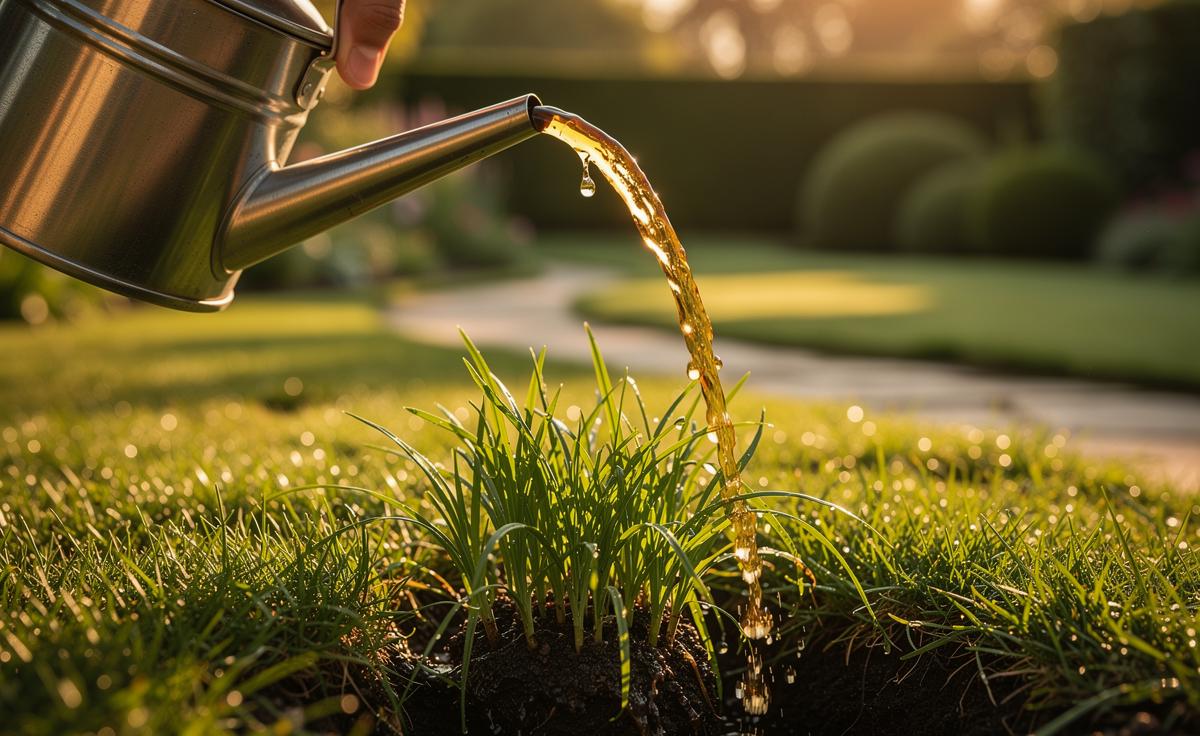
Picture the sequence. You water in a diluted beer solution. Sugars seep into the top soil. Microbes swarm to the buffet. Their population spikes, then stabilises at a higher level as food wanes. During this bloom, microbes release organic acids that chelate minerals, improving uptake of iron, manganese, and zinc—key to richer green colour. The grass benefits because the soil becomes more biologically active, not because beer is a fertiliser in the conventional sense. Thatch can soften as fungi and actinomycetes digest complex carbon, helping air and water move more freely.
There are caveats. Straight beer is not ideal. Alcohol can stress microbes, and residual hops are potent bioactives. That’s why dilution and de-gassing are essential. The nutrient content of beer is modest—typically a whisper of N-P-K at best—so it won’t replace a balanced seasonal feeding. But as a microbial stimulant, it’s notable. Used judiciously, the treatment can nudge a tired, compacted soil toward resilience, complementing aeration and compost topdressing. Short term, you may see a greener cast and tighter sward. Long term, better root density and improved drought tolerance become the headline gains.
Practical Application: Dilution, Timing, and Safety
Use flat beer. Let it sit open until fizz fades. Opt for ordinary, low-to-moderate alcohol lagers or ales; avoid high-alcohol or heavily hopped beers. Dilution is non-negotiable for safety and effectiveness. A common working ratio is 1 part beer to 10–20 parts water. Apply evenly with a watering can fitted with a rose or a hose-end sprayer. Water in lightly afterwards, especially in warm weather, to move sugars off the leaf and into the soil profile. Evening applications reduce scorch risk and discourage daytime insect activity.
| Beer Component | Action in Soil | Risk If Overapplied |
|---|---|---|
| Sugars | Feed beneficial microbes; boost nutrient cycling | Surface stickiness, ants, or moulds |
| Yeast residues | Provide amino acids and B vitamins | Odour, biofilm build-up |
| Alcohol | Minimal benefit; potential microbial stress | Leaf burn, microbial imbalance |
| Minerals | Trace micronutrients to support greening | Negligible, given low levels |
Timing matters. Spring and early summer are prime, when soil temperatures rise and microbes are naturally active. Monthly treatments are ample for most lawns. Combine with aeration, regular mowing at the right height, and a balanced fertiliser regime. Keep pets off the lawn until the area has dried; store leftover beer away from animals. Avoid waterlogged ground—anaerobic pockets can turn sweet feed into sour conditions fast.
Myths, Limits, and Environmental Considerations
Beer is not a miracle fertiliser. It’s a nudge, not a meal. Expect incremental gains, not overnight transformations. If your lawn is yellow from nitrogen deficiency, use an appropriate feed. If compaction is severe, mechanical aeration beats any liquid tonic. Likewise, beer won’t fix deep shade, poor drainage, or thatch thicker than your thumb. It shines as a complement—a biological kick that helps good maintenance work better.
There are environmental angles to consider. Overuse can attract pests such as slugs and ants, fermenting odours, or patchy fungal growth. Runoff rich in sugars can feed algae; keep applications light and targeted, well away from drains and waterways. Filtered, low-residue beers are less risky, but they also offer fewer microbe-friendly compounds. Moderate-strength, inexpensive lagers—allowed to go flat—strike a useful balance. For those wary of alcohol altogether, a purpose-made molasses or humic acid soil tonic offers similar stimulation without hops or ethanol. The principle stands: feed the soil life, and the soil life feeds the grass.
Used wisely, beer can deliver a subtle yet tangible boost to lawn vitality, chiefly by energising the soil microbiome and improving nutrient availability through gentle soil absorption dynamics. It’s cost-effective, easy to trial on a small area, and flexible enough to fold into any maintenance plan. The secret is restraint: dilute, apply sparingly, and watch the soil respond. If you gave your turf a light beer tonic this season—paired with sound mowing and aeration—what changes would you look for first, and how would you measure whether the soil is truly healthier?
Did you like it?4.6/5 (23)