In a nutshell
- 🍌 Banana peels deliver potassium, phosphorus, calcium, and trace elements that fortify roses, energise the soil microbiome, and can brighten blooms and stiffen stems within days.
- 🌿 Use fast, tidy methods: the chop‑and‑bury technique at the drip line, a 24–48 hour peel soak for a gentle tonic, dried peel powder for slow release, or add peels to compost for broader nutrition.
- 🛡️ Safety over hype: peels are a supporting feed, not a miracle; keep pieces small, bury and mulch to deter pests, avoid crown contact, and practise moderation—one peel per mature bush every 10–14 days.
- 🧪 When peels aren’t enough: supply a balanced spring NPK feed, run a soil test, manage pH (6.0–6.5), and prioritise sun, moisture, and airflow; pair with seaweed extract and compost for trace elements and resilience.
- 🌹 Expect practical gains: quicker bud set, richer colour, and sturdier growth when you chop, bury, water, repeat, especially after deadheading and during peak bloom cycles.
British gardeners love a thrifty tip, and few are thriftier than turning a kitchen cast‑off into a flower‑bed boost. Slip a humble banana peel beneath your mulch and your roses can look fresher, brighter, and more resilient within days. The science is simple: peels are rich in potassium and helpful minerals that drive bud formation and disease resistance, while feeding the life of the soil. It’s cheap, quick, and surprisingly effective. Used properly, this natural fertiliser doesn’t replace a balanced feed, but it can sharpen colour, stiffen stems, and add stamina during peak bloom. Ready to try it? Here’s how to make peels work hard and safely in a UK garden.
How Banana Peels Nourish Roses
Roses are greedy. They crave balanced nutrition, and potassium is the quiet engine behind strong stems, tight buds, and vivid petals. Banana peels supply ample potassium, as well as phosphorus, calcium, magnesium, and a sprinkle of trace elements. While peels are naturally low in nitrogen, they shine during budding and flowering, when potassium is king. Just as crucial, decomposing peels feed the soil microbiome, encouraging fungal and bacterial allies that unlock nutrients your roses already sit upon. Healthy soil life equals healthier roses. The result? Better water regulation, improved nutrient flow, and a steadier plant under stress from wind, heat, or a surprise cold snap.
There’s a timing advantage too. Finely chopped peel breaks down rapidly in warm, moist beds, giving a gentle, near‑immediate lift. Whole peels deliver a slower release over weeks. For gardeners chasing both quick wins and lasting resilience, a mix of sizes works a treat. Think of peels as a targeted tonic: strategic, local, and effective at the root zone. They’re especially helpful after deadheading, when plants hunger for resources to set the next flush. Used with compost and mulch, peels become a nimble, low‑waste tool in your feeding calendar.
| Component | What It Does for Roses | How Fast You’ll Notice |
|---|---|---|
| Potassium (K) | Boosts bud set, colour, stem strength, and disease tolerance | Several days to 2 weeks |
| Phosphorus (P) | Supports root growth and flower formation | 1–3 weeks |
| Calcium & Magnesium | Improves cell walls and chlorophyll production | 2–4 weeks |
| Carbohydrates | Feeds microbes that cycle nutrients | Within days as soil life wakes |
Quick Methods to Use Banana Peels
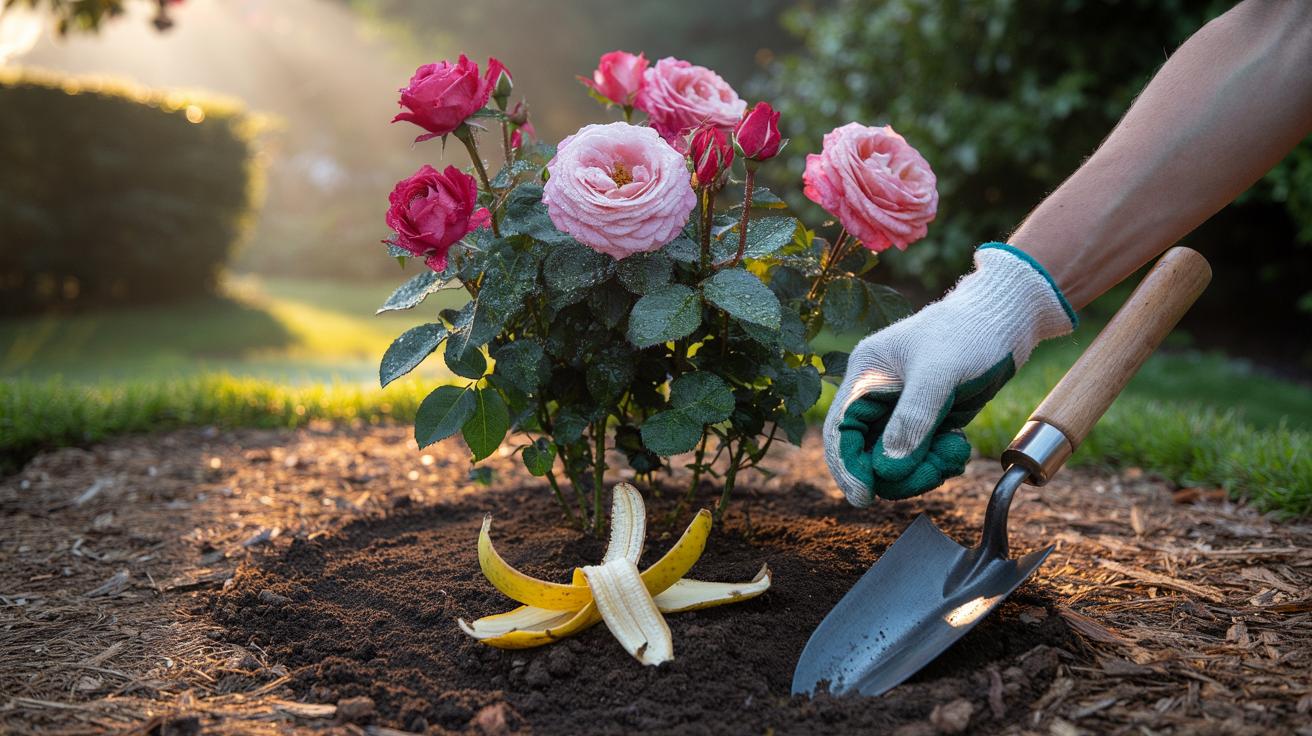
For fast results, try the chop‑and‑bury method. Finely dice fresh peels and bury them 10–15 cm deep along the drip line—the circle under the outer leaves—then water in. Keep pieces small to speed microbial action and deter pests. One peel per mature bush every 10–14 days in the growing season is plenty. Do not pack peels against the stem; you want nutrients at active feeder roots, not rotting material at the crown. Cover with mulch to mask odour and smooth moisture swings. Simple. Quick. Effective.
Prefer liquid? Make a banana‑peel soak. Submerge chopped peels in a bucket of rainwater (1 litre water per peel) for 24–48 hours, then strain. Use the amber liquid as a root drench, half a watering can per rose. It’s a gentle tonic for plants under heat stress or just after pruning. For containers, dilute further to avoid souring tight potting mixes. Strain well to keep fruit flies at bay.
For a longer‑lasting option, dry peels in a low oven or in the sun, then blitz into powder. Scratch a tablespoon into the topsoil per plant monthly during bloom. Or simply fold fresh peels into your compost; you’ll gain broader nutrition and stable humus with zero pest fuss. Blenders work too—blend peels with water, pour into holes, and cap with soil. Keep your approach tidy and your neighbours will be none the wiser.
Common Myths and Safe Practices
Let’s puncture the hype. No, banana peels won’t make roses explode with flowers overnight, and they won’t cure every disease. They’re a supporting feed, not a miracle. Because peels are low in nitrogen, you still need a balanced NPK fertiliser or rich compost in spring to drive leafy growth. Another myth: peels always attract pests. Used correctly—chopped, buried, and mulched—odour is minimal and interest from foxes or rodents is rare. Surface‑dumped peels are the problem, not the ingredient.
Be sensible with hygiene. Don’t lay peels against stems, where rot can brew. Rotate placement around the plant to avoid creating a soggy pocket. If your soil is waterlogged, hold off; decomposition slows and smell increases. Avoid long, anaerobic “teas” brewing for a week on the patio—48 hours is plenty. Boiling peels? Not necessary and it can drive off volatiles; a cool soak preserves more goodness. Finally, moderation matters: one or two peels per fortnight per mature bush is a practical ceiling during peak flush. Small, regular doses beat heaps.
When Banana Peels Are Not Enough
Think of peels as an accent, not the orchestra. Roses are heavy feeders. In early spring, apply a balanced organic feed (for example 5‑5‑5) or well‑rotted manure to power leafy growth. Top up potassium as buds form with your peel routine. If you see pale leaves and weak shoots, that’s often a nitrogen issue—not something a peel alone can fix. A simple soil test guides you faster than guesswork. Match inputs to need and you’ll spend less while growing more.
Environment matters. Full sun, consistent moisture at the root, and mulch will out‑perform any additive sprinkled on a struggling plant in dry shade. Aim for a pH near 6.0–6.5 to keep nutrients available. In pots, feed little and often, as mixes leach fast; bury tiny peel pieces or use the strained liquid to avoid fungus gnats. Team peels with compost, seaweed extract for trace elements, and a sharp deadheading routine. That trio builds stamina, colour, and repeat bloom. When blackspot threatens, maintain airflow with pruning; nutrition supports resilience, but good hygiene wins the fight.
Turn kitchen waste into bloom power and you’ll feel like a magician. The trick is no trick at all: chop, bury, water, repeat. A handful of peels, a ring of mulch, and a balanced spring feed can move the needle in days, then sustain it for weeks. Your roses will tell you you’re on track—stouter stems, glossier leaves, tighter buds. Low cost, low fuss, high impact. Will you test banana peels under one rose this week, track the difference, and report back on what you see by the next flush?
Did you like it?4.5/5 (29)