In a nutshell
- 🌵 Use coarse, sharp sand to boost drainage and aeration, disrupting capillary water films and preventing root rot in succulents.
- 🪨 Choose washed, lime-free horticultural sharp sand (1–4 mm) and pair with pumice, perlite, or alpine grit; avoid play or beach sand that compacts or adds salts.
- ⚗️ Mix a drainage-first blend: roughly 1 part cactus/loam compost, 1 part sharp sand, 1 part pumice/perlite; sieve out fines and add a gritty top-dressing—never a “drainage layer.”
- 🚿 Water with the soak-and-dry method, reduce in winter, favour terracotta for breathability, ensure wide drainage holes, and avoid peat-heavy mixes that create a perched water table.
- ✅ Expect tighter form, richer colours, and resilient roots as a well-structured gritty mix stabilises the substrate, speeds drying, and supports healthy microbial life.
Succulents thrive on bright light, lean nutrition, and fast-draining roots. Sand, when used wisely, supercharges all three by transforming a heavy potting mix into a breathable, free-draining home. In habitat, many succulents cling to rocky slopes and gritty fans where rain runs off in minutes. Replicate that, and you prevent the number-one killer of house succulents: root rot. Not all sand works, though. Grain size matters. Shape matters. Sharp, coarse particles create pores that water can’t clog. Used with pumice or perlite, sand helps you water deeply yet dry quickly, a balance that keeps roots active, resilient, and ready to grow.
Why Sand Supercharges Drainage and Root Health
Good drainage is more than water escaping the pot. It’s about aeration. Roots respire; they need oxygen between waterings to convert sugars into energy. Coarse sand introduces macropores—larger gaps between particles—so water exits swiftly and fresh air enters. The result is a living, oxygen-rich rhizosphere where beneficial microbes thrive and pathogens struggle. Wet, airless compost invites anaerobic bacteria and suffocates roots. That’s the spiral to rot. Sharp sand breaks it.
There’s physics here. Fine peat soils retain water via capillary action. Add coarse, angular grains and you disrupt those tiny water films. Gravity wins. The mix drains, then holds only what adheres to particle surfaces. That means shorter “wet periods,” faster temperature recovery after watering, and fewer salt accumulations. The bonus? Structural stability. Round grains slide and compact; angular sand interlocks and resists collapse, so your potting mix doesn’t turn to sludge after a season of watering. Quick drainage, steady structure, healthier roots.
Sand also moderates extremes. A gritty matrix warms faster in weak winter sun, kick-starting metabolism. After a summer soak, the same matrix prevents waterlogging during cool nights. The plant experiences pulses—wet then dry—that cue tighter growth, richer pigmentation, and sturdy leaf cuticles. In short: drainage drives form.
Choosing the Right Sand and Grit
Not all sands are equal. Builders’ “sharp sand” or horticultural grit works well because grains are irregular and coarse (typically 1–4 mm). Children’s play sand is too fine; it compacts and reduces airflow. Beach sand is risky—salts and organic contamination. Reach for washed, lime-free, coarse material with angular edges. Pair it with pumice or perlite to diversify pore sizes and avoid a one-note texture. For UK gardeners, look for “horticultural sharp sand” and “4–6 mm alpine grit” at garden centres; aquarium gravel (inert) can also play a part.
| Material | Typical Grain Size | Pros | Cons | Suggested % in Mix |
|---|---|---|---|---|
| Sharp Sand | 1–4 mm | Improves drainage; adds weight; stable | Can be calcareous; check labels | 20–40% |
| Pumice | 3–6 mm | High aeration; lightweight; long-lasting | Cost and availability | 20–40% |
| Perlite | 3–5 mm | Very airy; affordable | Floats; dusty if unmoistened | 10–30% |
| Alpine Grit | 4–6 mm | Excellent top-dressing; prevents rot at collar | Adds weight; cost | 10–20% + surface |
Scan product labels for “washed,” “lime-free,” and “horticultural grade.” For calcifuge succulents (e.g., certain Haworthia), avoid calcareous sand; for cacti, slight alkalinity is usually fine. The guiding principle remains simple: coarse, clean, angular.
How to Mix a Drainage-First Potting Blend
Start with a lean base. A practical UK recipe: 1 part cactus compost or sieved loam-based compost (e.g., John Innes No. 2), 1 part sharp sand, 1 part pumice/perlite. For thirsty Aloes or Gasteria, tilt towards 40% organic fraction. For desert cacti and Echeveria, push aggregates to 70–80%. The aim is a mix that drenches easily yet clears in seconds. Test it: water should pour through and stop dripping within 10–20 seconds from a small pot.
Sieve out fines. Dust fills pores and defeats the purpose. Moisten perlite before mixing to prevent inhalable dust. Blend gently but thoroughly so aggregates distribute evenly; clumps create wet pockets that rot roots. Consider a gritty top-dressing (alpine grit, 5–10 mm) around the stem. It dries quickly, deters fungus gnats, and protects the neck from splashback. For large containers, layer a band of coarse grit through the lower third to keep the core open—never just a “drainage layer” at the bottom, which can cause perched water tables.
Repot at the right moment: spring for most succulents, just as growth resumes. Trim dead roots, let cuts callus 24 hours, then plant into your gritty mix and withhold water for a week. Roots seek moisture; they’ll explore fast.
Watering, Pots, and Common Mistakes
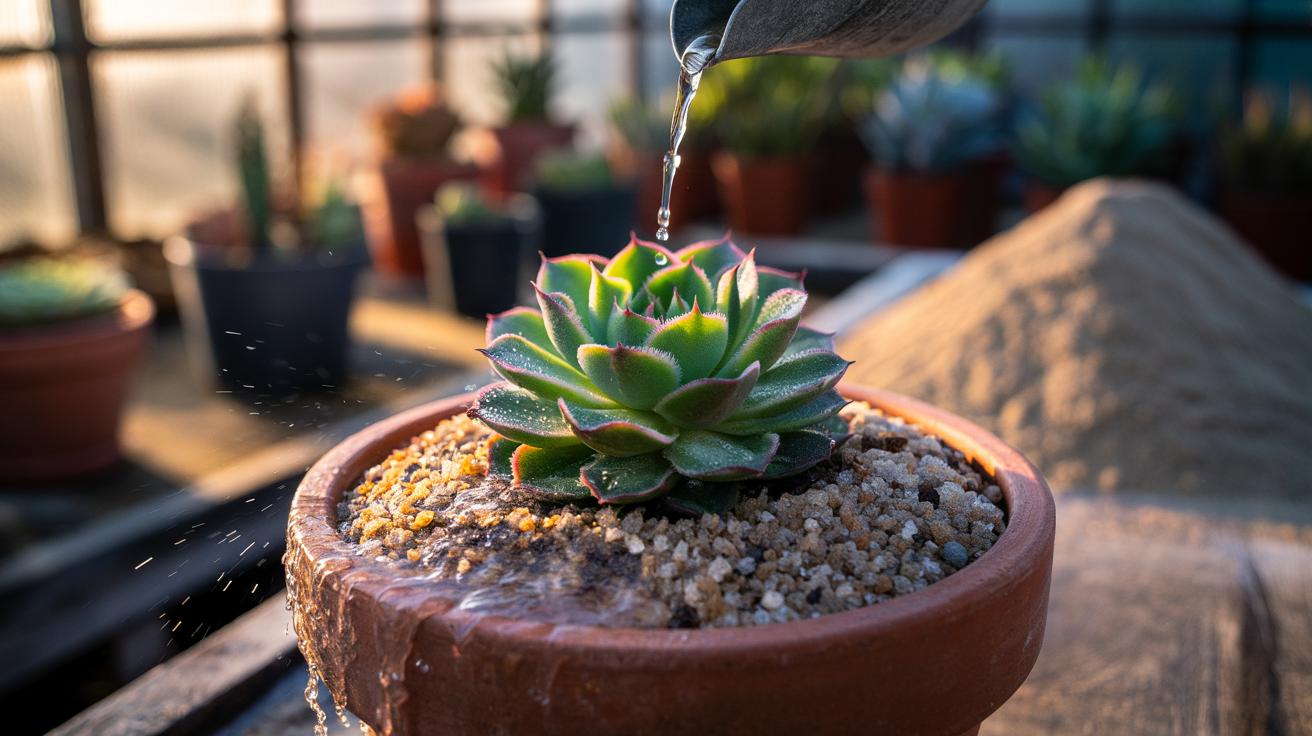
Sand won’t save a plant from poor watering. Use the soak-and-dry rhythm. Drench until water rushes from the hole, then wait until the top 2–3 cm are bone dry. In winter, cut back sharply. Many species enter dormancy and sip, not gulp. Cold plus wet equals rot. Terracotta helps by wicking moisture; plastic retains it, so adjust intervals accordingly. Ensure every pot has a generous drainage hole—double up with mesh if you lose substrate.
Avoid fine sands and peat-heavy composts. They cling to water and collapse around roots. Don’t rely on a bottom “crocks layer”; it raises the perched water table. Instead, engineer drainage throughout the profile using coarse aggregates. Watch the plant. Tight rosettes, firm leaves, and quick post-watering rebound signal success. Mushy leaves or a sour smell mean oxygen is missing. If in doubt, unpot, inspect, and remix with more grit. A top-dress of grit keeps collars dry and leaves clean after watering, reducing fungal spotting and gnat breeding.
Finally, feed lightly. A balanced, dilute fertiliser in active months supports growth without bloating tissues. Overfed plants inflate, then collapse. A gritty, sandy mix keeps them honest—compact, colourful, and tough.
Sand, used intelligently, is not a magic bullet; it’s a structural choice that turns compacted compost into a breathable habitat where succulents actually behave like succulents. The pay-off is visible: tighter form, vivid stress colours, fewer losses to rot, and a sturdier root system that’s always on the move. Armed with sharp sand, pumice, and a light hand with water, you can engineer that habitat on a windowsill in January or a patio in July. Which part of your current mix will you tweak first to make drainage work for you—and your plants?
Did you like it?4.5/5 (26)