In a nutshell
- 🌱 Hydrogen peroxide (H2O2) speeds germination by releasing extra oxygen for aerobic respiration during imbibition, mimicking natural ROS signals and gently softening the seed coat—an accelerator, not a fertiliser.
- 🧼 Low concentrations act as a disinfectant, reducing pathogens and damping‑off, giving seedlings a cleaner start and improving early emergence in humid, microbe‑heavy conditions.
- 🧪 Safe practice: dilute 3% H2O2 to 0.2%–1.0%; soak 15–30 min (lettuce/basil), 1–2 h (tomato/pepper), 4–8 h (hard‑coated chilli); rinse, sow promptly, avoid metals, and never mix with bleach.
- ⚖️ Works best for older seed, hard coats, or microbial pressure; less effective for dead seed or deep dormancy needing stratification or light; excessive concentration can damage embryos.
- 📓 Pair peroxide with fundamentals—warmth, moisture, and aeration—for earlier sprouts, tighter trays, and fewer losses; record results by variety to refine dilution and soak times.
Gardeners swear they can watch seeds wake faster when bathed in a trace of hydrogen peroxide. It looks like a trick. It isn’t. The mild oxidiser delivers extra oxygen, cleans the seed surface, and nudges natural signals that tell embryos to get moving. Practical, cheap, and accessible, hydrogen peroxide (H2O2) is becoming a go-to pre‑soak, especially when time is tight and germination windows are narrow. Used correctly, it boosts speed without harming tender seed tissues. Below, we unpack the science, the safe ratios, and the cases where it works brilliantly—and where it simply can’t replace sound horticultural basics like temperature, moisture, and fresh, viable seed.
How Hydrogen Peroxide Accelerates Germination
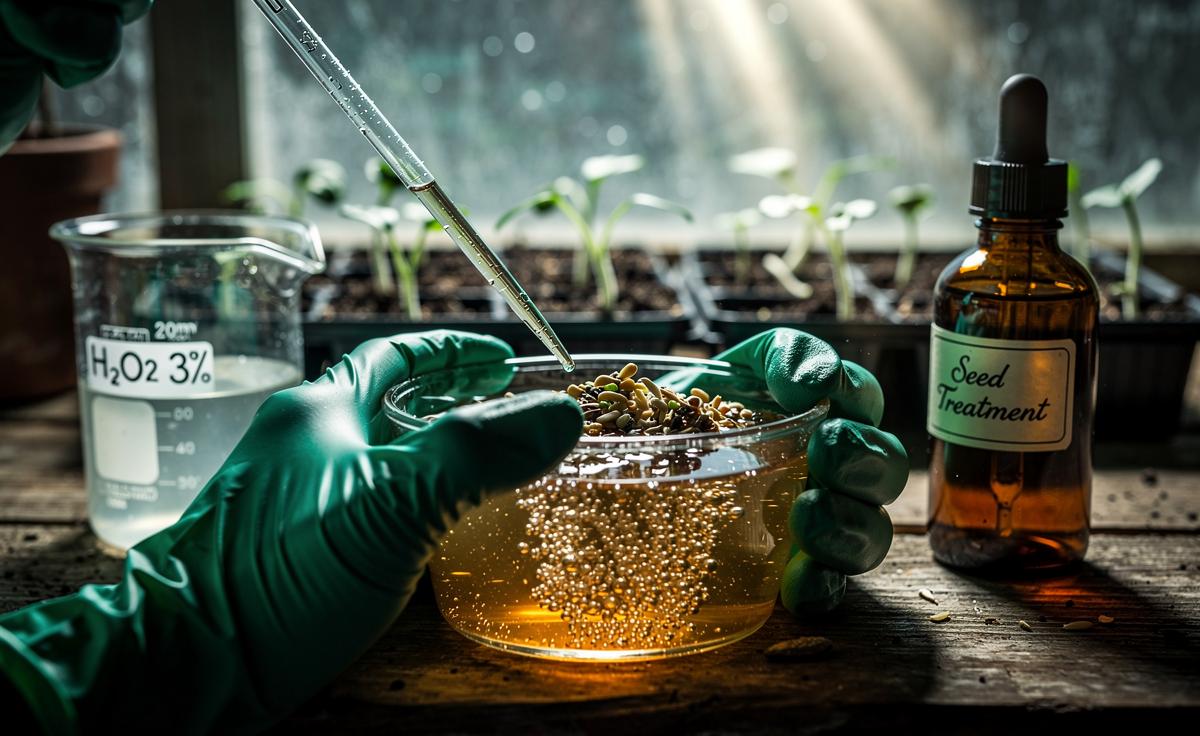
At its core, hydrogen peroxide breaks down into water and oxygen. That small burst of oxygen matters. Early germination relies on aerobic respiration to power cell division and root emergence, yet waterlogged trays and dense media can limit oxygen around the seed. A brief peroxide soak raises local oxygen availability just as the seed begins imbibition, the critical uptake of water that rehydrates cells and kickstarts metabolism. Those tiny fizzing bubbles you see are oxygen being liberated where it’s needed most.
Peroxide also treads the line between disinfectant and signal. Low concentrations suppress pathogens that cause damping‑off and rot, letting seeds proceed without microbial competition. At the same time, seeds naturally generate small amounts of reactive oxygen species (ROS) that act as biochemical cues to end dormancy. A controlled peroxide pre‑soak appears to mimic or amplify these cues, softening the seed coat, loosening pectin-rich layers, and improving permeability. The result is quicker water flow into the embryo, faster enzyme activation, and speedier radicle “pop”. It’s not a fertiliser; it’s a catalyst for the seed’s own programme.
Practical Ratios, Soak Times, and Safety
Most household hydrogen peroxide is 3%. For seeds, dilute it. A common working range is 0.2%–1.0%: mix one part 3% peroxide with 3–10 parts clean water. That spans a practical spectrum: gentler for delicate seeds, stronger for hard coats and older stock. Soak timing varies with seed size and toughness. Thin‑coated species (lettuce, basil) need 15–30 minutes. Medium seeds (tomato, pepper) take 1–2 hours. Very hard seeds (chilli, many ornamentals) may benefit from 4–12 hours. Always rinse thoroughly after soaking and sow promptly into moist, well‑aerated media. Avoid metal containers, keep solutions fresh, and never mix peroxide with bleach or acids. If in doubt, test a small batch first and observe.
For quick planning, use this simple guide as a starting point, then fine‑tune for your cultivar and room temperature.
| Seed Type | Dilution (from 3%) | Soak Time | Expected Benefit |
|---|---|---|---|
| Lettuce/Basil | 1:10 (≈0.3%) | 15–30 min | Faster start, cleaner surface |
| Tomato/Pepper | 1:5 (≈0.6%) | 60–120 min | Quicker radicle, reduced damping‑off |
| Hard‑Coated Chilli | 1:3 (≈1.0%) | 4–8 hr | Improved coat softening, stronger emergence |
If seeds swell or split prematurely, shorten the soak or reduce concentration. The goal is a head start, not stress.
When Peroxide Helps—and When It Doesn’t
Peroxide shines when seeds face microbial pressure, old stock has lost vigour, or the coat is impermeable. Gardeners in damp homes often see fewer losses to damping‑off after a peroxide pre‑treatment, because surface spores are knocked back before sowing. Species that respond to scarification—chillies, some brassicas, ornamentals—also tend to benefit, as mild oxidation softens outer layers and boosts permeability. Good temperature and steady moisture still rule the process. Use a heat mat, keep media airy, and water from below to preserve oxygen around the seed.
There are limits. If seeds are dead—heat‑killed, old beyond recovery—no amount of oxygen will resurrect them. Some species rely on deep physiological dormancy mechanisms that require stratification (cold, moist periods) or light cues rather than oxidation. Others are thin‑coated and already quick; they may gain little beyond a cleaner surface. And concentration matters: do not exceed low, seed‑safe levels, because strong oxidisers can damage embryos. Treated seeds also dry out faster at sowing if media is neglected, so monitor closely. Think of peroxide as a helper, not a substitute for viability, warmth, and clean hygiene from bench to tray.
Used judiciously, hydrogen peroxide is a subtle accelerator that respects the seed’s biology while nudging it forward. A measured dilution, an appropriate soak time, and a proper rinse can deliver the visible gains growers love: earlier sprouts, tighter trays, fewer losses. Keep notes by variety so you can tune the recipe and repeat success. As you refine your method—balancing oxygen, cleanliness, and soak duration—what species in your seed box are you most eager to trial with a gentle peroxide boost, and how will you measure the difference?
Did you like it?4.6/5 (29)