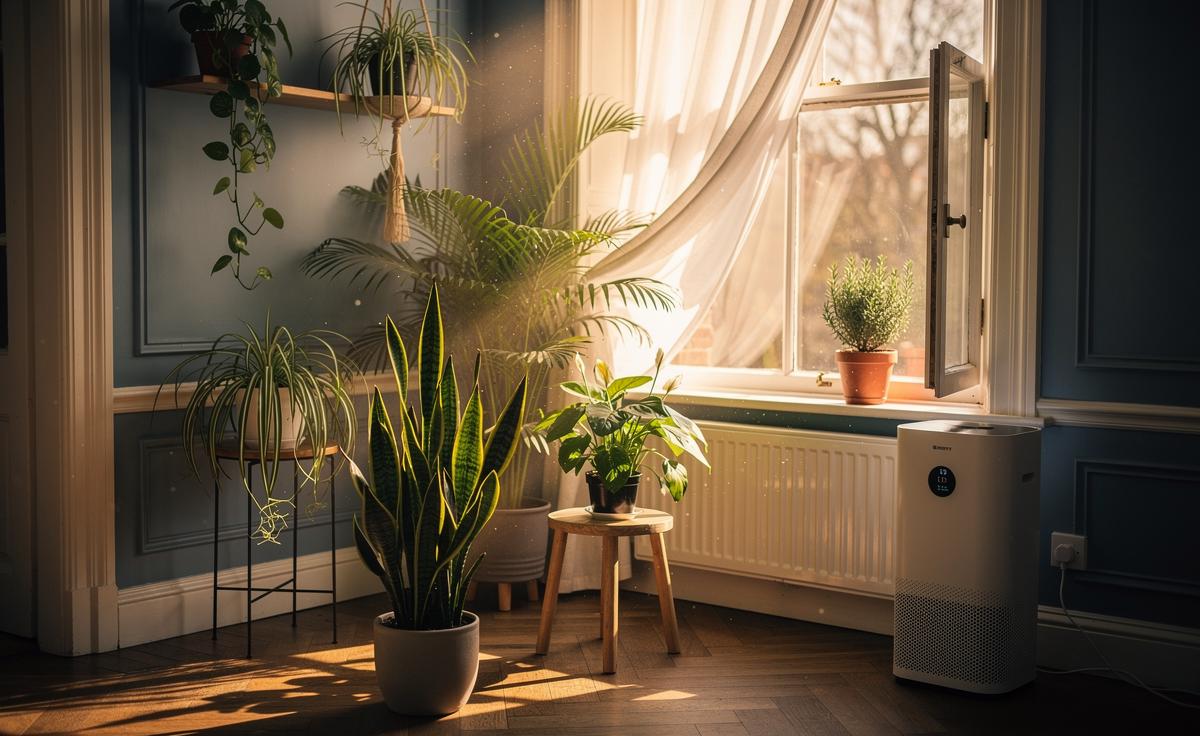
In a nutshell
- 🌿 Match plants to light and real UK conditions: snake/ZZ/pothos for low light, spider/areca/rubber for bright rooms; verify pet safety and favour a small, diverse mix over one big specimen.
- 🔆 Nail basics of placement, light, and water: target ~100–500 lux for low-light species and ~500–2000 for bright indirect; prioritise drainage, avoid overwatering, keep humidity near 40–60%, rotate pots, and wipe dusty leaves.
- 🪟 Plants complement, not replace, ventilation: open windows 10–20 minutes, run extractor fans, and add HEPA/carbon filters for particulates and odours; plants offer humidity moderation, dust trapping, and mood benefits.
- 🧰 Consistency beats intensity: weekly moisture/pest checks, monthly leaf-cleaning and salt flush, quarterly repotting; treat fungus gnats and mites calmly, space foliage, and move plants before medicating.
- 🏠 Practical setups work: a Bristol home used spider plants on a stairwell, a peace lily in the bathroom, and timed airing; herbs add fresh scent—engineer a home that breathes with simple, repeatable habits.
There’s a practical, leafy route to fresher-feeling air at home that doesn’t require expensive gadgets: strategically chosen indoor plants allied with smart ventilation habits. As someone who has tested philodendrons in a London studio and palms in a draughty Yorkshire terrace, I’ve learned that the right plant in the right spot does more than decorate—it nudges humidity toward comfort, catches dust on leaves, and delivers a subtle psychological lift. Plants are not magic air purifiers, but they are brilliant co-pilots. Below, I map out which species thrive in typical UK conditions, how to place and care for them, and when to back them up with simple, effective airflow tactics.
Choosing Plants That Work in Real Homes
Start by matching plants to your actual living conditions, not your dream conservatory. In a Manchester rental with a north-facing bay, I found snake plant (Sansevieria), ZZ plant (Zamioculcas), and pothos handled low winter light and radiator cycles admirably. In brighter south-facing rooms, spider plants, areca palms, and rubber plants build instant greenery while tolerating occasional neglect. Pick plants for light first, looks second. If you work from home, a scented rosemary or mint pot near your desk offers a crisp, herbal note that can make the air feel fresher, even as the real air-cleaning grunt work remains with ventilation.
Here’s a quick cheat sheet I use when readers ask what to buy for small flats vs. semi-detached family homes. It balances light needs, watering habits, and the often-overlooked question of pet safety. Clarity beats impulse buying, especially when garden-centre labels are vague.
| Plant | Light | Water | Benefit/Note | Pet Safety |
|---|---|---|---|---|
| Snake Plant | Low–Medium | Sparse; let dry | Tolerates neglect; architectural | Potentially toxic if chewed |
| ZZ Plant | Low–Medium | Sparse; drought-tolerant | Shiny leaves trap dust | Not pet-safe |
| Spider Plant | Bright indirect | Moderate | Easy, produces “pups” | Generally pet-safe |
| Areca Palm | Bright indirect | Evenly moist | Gentle humidity boost | Pet-safe |
| Peace Lily | Low–Medium | Keep lightly moist | Flowers; signals thirst by drooping | Not pet-safe |
Before you buy, check the mature size and confirm toxicity for pets and children. If space is tight, wall-mounted pothos or trailing philodendron shelves deliver greenery without stealing square footage. Aim for a small, diverse mix rather than a single monster specimen; diversity spreads risk and gives you different textures that trap different sizes of dust.
Placement, Light, and Water: Getting the Basics Right
Plants are quietly fussy about light angles. A “bright room” isn’t bright at the plant’s leaf level if it’s two metres from the window and behind a curtain. Use a phone light meter app to compare spots: you’re looking for 500–2000 lux for bright indirect light species and 100–500 lux for low-light dwellers. East or west windows are often friendliest in the UK; south windows may need a sheer to soften summer sun. Rotate pots quarterly to prevent lopsided growth and to expose all leaves to airflow.
Watering is where most people go wrong. Most houseplants suffer more from overwatering than underwatering. Stick a finger 2–3 cm into the compost; if it’s dry, water thoroughly until excess drains, then stop. Prioritise drainage: a cachepot without a drainage hole is an invitation to root rot. Bottom-watering (standing the inner pot in a tray to wick water up) is excellent for ferns and calatheas. In winter, central heating dries air; cluster plants, use a pebble tray, or run a small humidifier to keep relative humidity around 40–60% without fogging windows.
- Airflow: Keep plants away from radiators and cold draughts; gentle airflow reduces mould.
- Cleaning: Wipe leaves monthly with a damp cloth; dusted leaves “breathe” better and look sharper.
- Soil check: Refresh the top 2 cm of compost each spring to replenish nutrients.
Fresh Air Strategy: Plants Plus Ventilation
Here’s the honest bit: while the NASA Clean Air Study made headlines, later analyses suggest you’d need a jungle’s worth of pots to materially reduce indoor VOCs in a typical home. Plants enhance the feel of freshness but cannot replace ventilation or filtration. Your best results come from combining greenery with simple airflow habits that UK health bodies endorse. Use trickle vents or open windows for 10–20 minutes, especially after cooking and showering; run extractor fans; and consider a compact HEPA purifier for pollen and dust if allergies are an issue. Activated carbon filters target odours and some VOCs better than foliage alone.
- Pros: Subtle humidity moderation, dust capture on leaves, stress reduction, natural scent from herbs and citrus.
- Cons: Minimal VOC removal at normal plant densities; potential for pests if overwatered; some species are toxic to pets.
In a reader’s Bristol terrace, a combined approach worked: a spider plant cluster near a sunny stairwell, a peace lily in the bathroom for a gentler humidity curve, and a timed window-opening routine (7:30 a.m. and 7:30 p.m.) cut condensation on panes and made the home smell cleaner. Think of plants as the visible, uplifting part of an invisible airflow system. Add a sprig of rosemary by the hob and a bowl of lemon peels to amplify that “fresh” perception without masking problems like damp or poor extraction.
Low-Maintenance Routines and Troubleshooting
Consistency beats intensity. Build a simple routine that takes ten minutes a week and a half-hour each month. Weekly: check soil moisture, remove yellowing leaves, and inspect for pests. Monthly: dust leaves, flush pots with water to prevent salt build-up, and pivot plants for even light. Quarterly: assess roots; if circling or compacted, step up one pot size with fresh, airy compost. Small, regular interventions keep plants robust—and robust plants handle indoor air swings better.
Pest management is calmer than you think. For fungus gnats, let the topsoil dry and use yellow sticky traps; for spider mites, wipe leaves and increase humidity. Neem oil or a mild soap solution can help, but always test a leaf first. Prevent mould and mustiness by avoiding standing water in saucers and by spacing plants so leaves don’t constantly touch. For families, favour pet-safe options like areca palm and spider plant, and display riskier beauties (like peace lilies) out of reach. If a plant persistently struggles, move it before medicating it—placement is the gentlest cure. Keep notes, too; your home’s microclimate is unique, and a short log helps you spot patterns you can trust.
Bringing leafy allies indoors is about engineering comfort with living materials. Mix two or three tough species for your light levels, clean their leaves, water with restraint, and pair them with everyday ventilation to keep air feeling clear. Over time, you’ll tune the balance: one palm too many may tip humidity; one herb pot can transform the kitchen atmosphere. The goal isn’t a jungle—it’s a home that breathes. Which plants and small airflow tweaks will you test first to make your rooms feel brighter, lighter, and unmistakably yours?
Did you like it?4.6/5 (29)