In a nutshell
- 🌱 Honey aids germination by acting as a humectant that stabilises moisture and, via glucose oxidase, releases trace hydrogen peroxide to suppress pathogens and improve oxygen at the seed surface.
- 🍯 Preparation is key: use raw, unheated honey at 1–2% dilution in lukewarm water (30–40°C); soak most seeds for 30–120 minutes, then rinse lightly and sow promptly to avoid sticky residues.
- 🌿 Best use cases include trays prone to damping‑off, older seed lots, and staples like tomatoes, brassicas, and cucurbits; it’s a gentle alternative to harsh disinfectants for quicker, more uniform sprouting.
- ⚠️ Limitations: honey won’t bypass required stratification or hard seed coats needing scarification; overly strong mixes become osmotically stressful and can slow germination or invite mold.
- 🛠️ UK‑focused tips: prefer local raw honey, keep temps at 18–24°C, use peat‑free fine compost, increase airflow if mold appears, and test on a small batch to fine‑tune soak time and ratio.
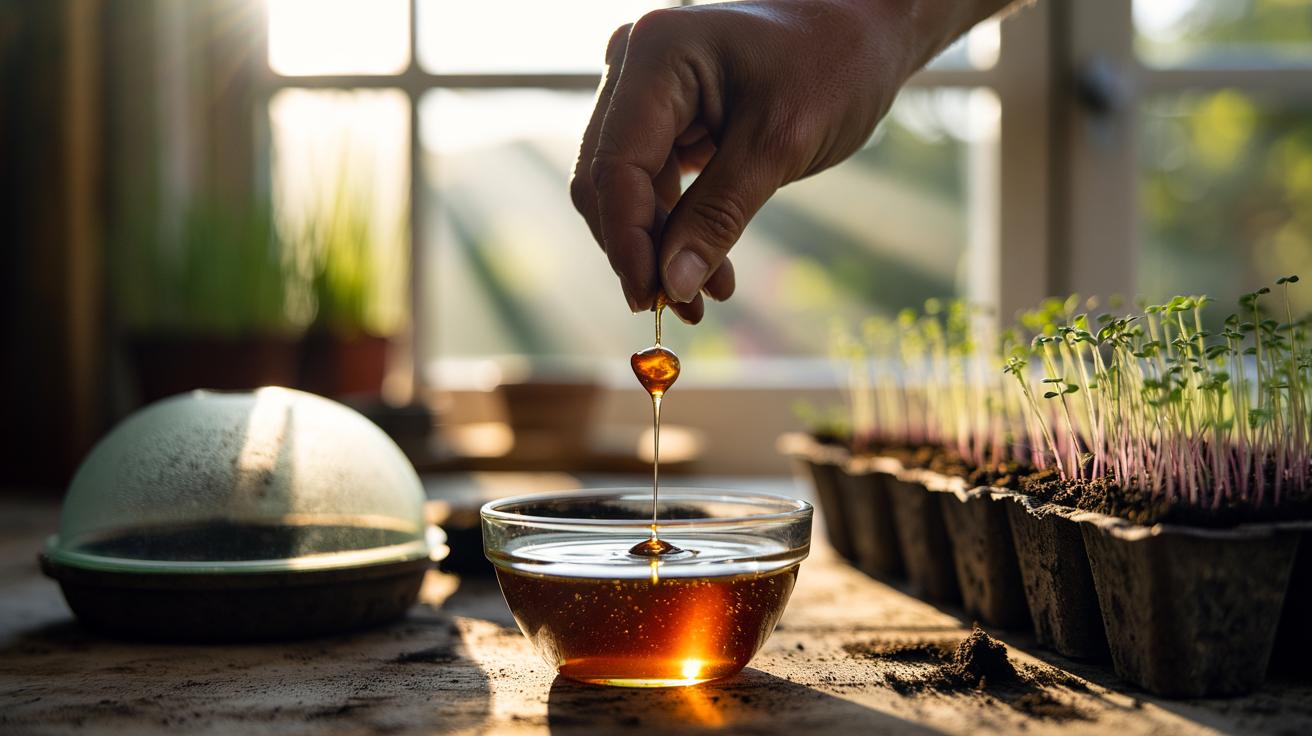
British gardeners are rediscovering a simple, natural helper: honey. Used as a gentle seed coating or diluted soak, it can lift germination rates, curb damping-off, and get trays moving quicker on chilly windowsills. It’s not magic. It’s chemistry and care. The sugars bind moisture; the enzymes release trace hydrogen peroxide that keeps pathogens at bay; the viscous film helps seeds stay evenly hydrated. Handled properly, honey speeds the first stages without the harshness of synthetic treatments. Whether you tend an allotment or a rented flat’s balcony, this sweet assist slips neatly into peat‑free, low‑input routines—and it smells better than bleach.
Why Honey Helps Seeds Wake Up Fast
Seeds need three things to break dormancy: water, warmth, and oxygen. Honey nudges all three. As a natural humectant, it draws and holds moisture right against the seed coat, limiting the wet‑dry swings that stall germination on radiators or drafty sills. Raw honey also carries glucose oxidase, an enzyme that, when diluted, trickles out tiny amounts of hydrogen peroxide. That mild antiseptic action suppresses fungi and bacteria implicated in damping‑off, while simultaneously elevating oxygen at the seed surface. This is the subtle trick: cleaner conditions and a better gas exchange without scorching delicate embryos.
There’s more. Honey’s trace minerals and acids tweak the micro‑environment’s pH, and its viscosity forms a whisper‑thin film that evens water uptake, preventing the shocks that come from over‑soaking. Old seed lots—parsnips, chillies, lettuce—often show improved early imbibition when honey is used correctly. Note the emphasis: correctly. Too concentrated, and the solution becomes osmotically stressful. Too hot, and enzymes are denatured. Get the dilution and temperature right, and honey can shorten the lag between “sown” and “shown.” For growers chasing uniform emergence, that matters as much as raw germination percentage.
How To Prepare A Honey Soak Or Coating
Start with raw, unheated honey. Aim for a 1–2% solution: roughly 1–2 grams (½–1 tsp) per 100 ml of lukewarm water. Stir until fully dissolved; keep water at 30–40°C to protect enzymes. For a quick pre‑soak, submerge seeds for 30 minutes to two hours. Harder seed coats—runner beans, sweetcorn—can sit up to 6–8 hours, but monitor them. If seed coats pucker or the solution smells yeasty, stop, rinse, and sow. Alternatively, use a light coating: mist seeds with water, tumble with a spoon‑tip of honey solution, then sow into pre‑moistened peat‑free compost.
After soaking, rinse seeds briefly in clean water to remove excess sugars that might attract gnats. Sow immediately at the recommended depth. Gentle bottom heat (18–24°C) accelerates most UK spring starts. For tiny, light‑dependent seeds—basil, petunias—skip deep covering; press onto the surface and use a clear lid to stabilise humidity. Do not exceed 2% honey unless testing on a small batch; higher concentrations can slow water intake and reduce germination.
| Seed Type | Honey Ratio | Soak Time | Notes |
|---|---|---|---|
| Brassicas (cabbage, kale) | 1% | 30–60 min | Rinse lightly; fast starters benefit from film. |
| Solanaceae (tomato, chilli) | 1–2% | 1–2 hrs | Improves uniformity in older seed lots. |
| Cucurbits (cucumber, squash) | 1% | 1 hr | Watch for swelling; sow promptly. |
| Beans/Peas | 1% | 2–6 hrs | Don’t over‑soak; risk of splitting. |
When Honey Works Best—and When To Skip It
Honey shines where microbial pressure is the enemy and moisture management is tricky: early spring trays, crowded propagators, and heirloom seed with variable vigor. Garden staples—tomatoes, brassicas, cucumbers—respond particularly well, showing quicker, more even emergence. If you’ve battled damping‑off, a properly diluted honey soak creates a gentler frontline than bleach dips or harsh fungicides. The mild peroxide release suppresses opportunists without sterilising everything, which keeps beneficial microbes in play once seeds hit compost.
But it’s not universal. Species needing cold stratification—many perennials, wildflowers—won’t shortcut dormancy with sugar. Very hard‑coated seeds (lupins, nasturtiums) respond better to scarification. Epiphytic orchids and ultra‑fine seed started on sterile media can suffer from any carbohydrate residue. And if you’re using very soft water and cool rooms, heavy honey mixes can turn syrupy, lowering oxygen and slowing starts. Rule of thumb: if a seed demands light to germinate or a specific dormancy break, respect that biology first. Use honey as a supportive nudge, not a substitute for proper pre‑treatments like chilling or nicking.
Quick Troubleshooting And Pro Tips For UK Growers
Seeing mold on trays? Reduce the honey ratio to 0.5–1%, extend airflow, and bottom‑water to keep surfaces drier. Seeds stalled after a long soak? You likely overshot the concentration or time—rinse, drain on kitchen paper, and move them to a warmer spot. Honey should assist imbibition, not drown seeds in sweetness. If in doubt, test on ten seeds before committing the whole packet.
Choose local raw honey when possible; supermarket blends are often heat‑treated, flattening enzyme activity. Keep temperatures steady: most veg seeds like 18–24°C; use a heat mat on unheated conservatories. Sow into peat‑free compost sieved for fine seed, and label trays to track what works. For day‑length‑sensitive subjects like lettuce, combine a brief honey dip with cool germination to avoid thermal inhibition. And storage matters: keep honey sealed and dark; enzymes persist longer that way. Small interventions—clean tools, fresh water, gentle rinsing—compound into big gains in germination speed and uniformity.
Honey won’t turn poor seed into champions, but as a natural, inexpensive aid it earns its jar space. The right dilution protects against early losses, stabilises moisture, and unlocks more uniform starts—ideal for tight UK growing windows and fickle spring weather. Think of it as a courteous usher at the germination gate, smoothing the queue rather than forcing it. Ready to try a 1% soak on your next tomato or kale sowing and compare the results side by side—what will you test first, and how will you measure the gain?
Did you like it?4.6/5 (30)