In a nutshell
- 🌱 Eggshells provide calcium that strengthens cell walls, supports steady growth, and reduces blossom end rot in fruiting veg.
- 🛠️ Preparation matters: dry, grind to a fine powder for steady release, or react with vinegar to make fast-acting calcium acetate.
- ⚖️ They gently buffer soil pH in acidic beds and work best alongside active microbes from compost for improved nutrient cycling.
- 💧 Results depend on consistent watering; prioritise root uptake over foliar sprays and pair shells with balanced feeding during flowering.
- 🔍 Skip myths (e.g., shells as slug barriers); use soil tests to avoid over‑liming and apply food‑safe, baked shells for hygiene.
Gardeners chasing bumper harvests often overlook a humble ally hiding in the kitchen: eggshells. These brittle crescents are a slow‑release source of calcium, a structural building block for plant cell walls and a quiet driver of resilience. Used thoughtfully, they can support steadier growth, reduce disorders such as blossom end rot, and nudge soil biology in the right direction. It isn’t magic. It’s chemistry, patience and good husbandry. Crushed, powdered, or reacted into a quick feed, eggshells can be tailored to the crop and the clock. Handled correctly, they help increase vegetable yield while cutting dependence on synthetic fertiliser. Here’s how to make them work.
Why Eggshells Boost Vegetable Yield
At heart, eggshells are about calcium carbonate. Roughly 95% of the shell is CaCO3, which plants convert to ionic Ca²⁺ as soil acids and microbes break it down. Calcium strengthens cell walls, orchestrates membrane function, and steadies root tips under stress. The result? Firmer tissues, less splitting, and more reliable flowering and fruit set. Tomatoes, peppers, aubergines and courgettes are prime beneficiaries because their rapidly expanding fruits are unforgiving of calcium shortfalls during critical weeks. Yield rises when microscopic failures—weak cell junctions, leaky membranes—are prevented before they cost fruit. That’s the quiet advantage eggshells bring when introduced ahead of peak demand.
There’s a second act. Finely prepared shells alter the soil micro‑environment. They add a gentle, localised buffering effect on soil pH in acidic beds and introduce pore‑space grit that improves aeration around the root zone. Better gas exchange means more active microbes and steadier nutrient cycling. It’s subtle, not seismic. In sandy, acid‑leaning allotments, that subtlety matters. Couple shells with even watering and organic matter and you reduce the swings—drying, salinity spikes, nutrient lock‑ups—that trip plants into stress. Healthy, unstressed plants convert sunlight into kilograms, not problems. That’s where the yield bump shows up: in consistency across the row.
How to Prepare and Apply Eggshells
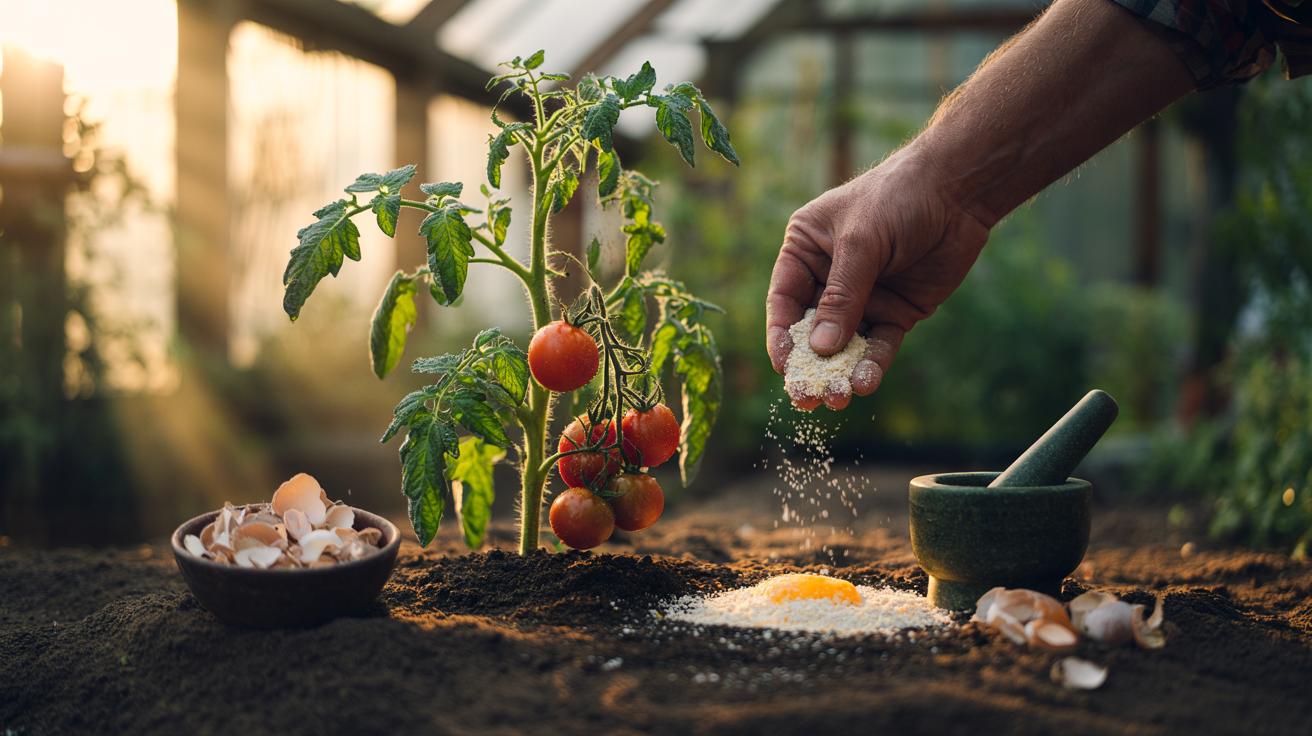
Preparation determines performance. Rinse shells, then dry fully—an hour in a low oven works—to make them brittle and hygienic. Grind to a fine powder with a mortar, rolling pin or blender; surface area dictates speed, and powder outpaces shards by months. For new transplants, mix 1–2 tablespoons per planting hole with compost. For established plants, top‑dress 30–50 g per square metre and lightly work in, then water. Want speed? Create a quick‑release calcium acetate by reacting powdered shells with household vinegar until bubbling stops, then dilute the resulting liquid 1:100 for a cautious root drench. Powder for steady release; acetate for urgency; coarse shell for long‑term conditioning.
| Method | Speed of Calcium Availability | Best For |
|---|---|---|
| Finely ground powder | Medium (weeks to months) | Tomatoes, peppers, cucurbits at planting |
| Vinegar‑reacted slurry | Fast (days) | Acute deficiency rescue; cautious root drench |
| Coarse crushed shells | Slow (months to years) | Long‑term soil conditioning; compost |
| Compost incorporation | Medium | Bed preparation; worm bins |
Two crucial caveats. First, calcium moves with water in the plant; uneven irrigation sabotages results more than any deficiency. Keep moisture consistent. Second, foliar calcium has limited mobility to fruit; prioritise root uptake and steady transpiration. Blend shells into your compost or wormery for balanced release, and avoid piling sharp shards—membranes and proteins feed microbes, but the carbonate needs time. Start early, grind fine, water evenly—then watch fruit set hold.
Soil Science: Calcium, pH, and Microbes
Eggshells raise calcium without dramatically altering pH—unless you add them by the bucket to already alkaline soils. In slightly acidic beds (pH 5.8–6.5), powdered shells dissolve faster as organic acids and root exudates nudge solubility. Microbial partners do much of the work: fungi and bacteria chelate ions, nibble the carbonate, and shuttle Ca²⁺ to root surfaces. That’s why shells tucked into active compost or mixed with mature composted manure perform better than sterile scatterings. The biology is the engine. Feed the microbes and they’ll feed your crop.
Solubility is slow, by design. Think weeks to months, not overnight. For container tomatoes on peat‑free mixes (often low in available calcium), a pre‑season charge of powdered shell plus a balanced organic fertiliser prevents early deficits. In clay soils with high baseline calcium or free lime, go gently—test with a simple kit and skip shells if pH exceeds ~7.2. Over‑liming risks locking out iron and manganese, yellowing leaves and undoing the good work. Where rain is soft and soils trend acidic, shells become a quiet buffer against seasonal swings. Mulch, moisture control, and shell‑powered calcium together produce fewer aborted flowers and firmer fruit.
Practical Tips, Myths, and Safety
Three habits pay off. Keep a jar of dried shells and only grind when needed to avoid clumping. Pair applications with consistent watering and a potassium‑balanced feed during flowering; calcium needs partners, not just presence. And rotate placements—into planting holes, as a fine side‑dress at first truss, then a light top‑up mid‑season if growth is vigorous. Food safety matters: bake shells to reduce pathogen risk before bringing them near the edible part of the plant. Clean, dry, and finely ground beats raw and chunky every time.
Now for myths. Crushed shells are poor slug armour; the evidence is thin and the grit softens quickly. Use barriers or traps instead. “Eggshell tea” made by soaking shells in cold water delivers negligible calcium because carbonate is barely soluble without acid. If you need a rapid fix, use the vinegar‑reacted route and apply sparingly to the root zone, not the fruit. Beware stacking fixes: adding Epsom salts won’t solve blossom end rot if calcium uptake is throttled by drought. Diagnose first—soil test kits are inexpensive and reveal whether pH or potassium is the real culprit. Eggshells are a tool, not a talisman; precision converts them into yield.
Used with intent, eggshells turn kitchen waste into plant strength. They fortify cell walls, buffer acidic beds, and support the microbial web that feeds roots, compounding small advantages into sturdier vines and heavier pickings. The trick is timing and texture: grind fine, start early, keep water even, and let biology do the heavy lifting. Pair shells with compost and measured feeding, and you’ll see steadier trusses, fewer blemishes, and a crop that shrugs off summer’s wobbles. Ready to trial a jar of powdered shell this season—and what results will you track to measure its impact on your vegetables?
Did you like it?4.7/5 (20)