In a nutshell
- 🌙 Overnight protection: crushed garlic releases allicin and volatile sulphur compounds that mask plant scents and irritate aphid sensors, keeping pests off foliage while you sleep.
- 🧄 How-to spray: use a quick simmer (5 cloves/1 litre) or cold steep (6–8 cloves/1 litre), add mild soap as a surfactant, strain, and spray until leaves glisten—especially the undersides.
- 🎯 Application strategy: apply at dusk to avoid scorch and protect pollinators, reapply after rain, repeat every 2–3 nights in heavy outbreaks, and pair with companion planting like chives and alliums.
- 🐞 Ecology and limits: a repellent, not a toxin—supports ladybirds, lacewings, and hoverflies; combine with water blasts and spot pruning; avoid open blooms and patch test tender plants.
- 📊 Practical outcomes: reduces settling and virus risk, buys recovery time, and fits a wildlife‑friendly approach; expect noticeably fewer curled, sticky tips by morning on new growth.
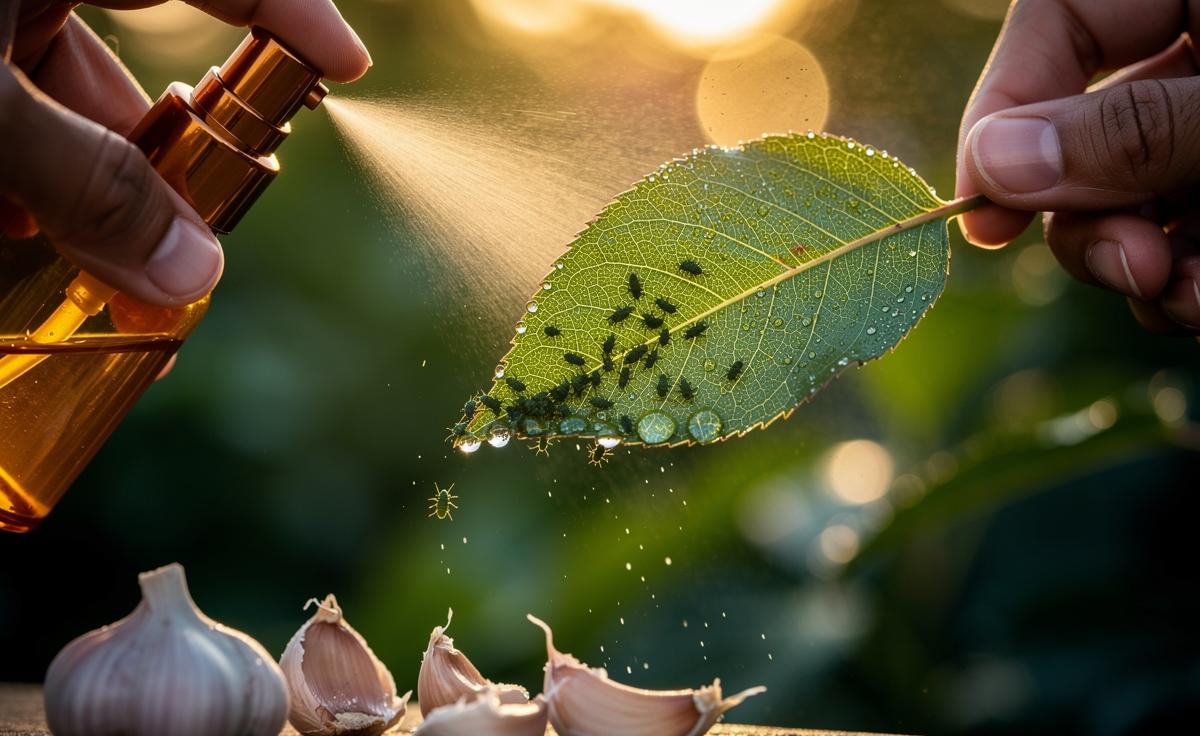
The simplest tricks are often the most effective. Gardeners battling sticky shoots and curling leaves know the culprit: aphids. These sap-suckers multiply fast and transmit viruses, yet a kitchen staple can tip the balance by morning. Garlic, crushed or brewed into a spray, releases a pungent cloud that aphids loathe. Applied at dusk, the strong aroma lingers through the cool night, disrupting aphids when they’re most settled on host plants. The result isn’t just fewer visitors; it’s calmer plants, less stress, and cleaner growth tips. Here’s why that smell matters, how to use it safely, and what to expect by sunrise.
Why Garlic’s Aroma Repels Aphids Overnight
Garlic’s defence is chemical. When you crush cloves, enzymes convert alliin into allicin, which swiftly morphs into volatile sulphur compounds like diallyl disulphide and diallyl trisulphide. These molecules broadcast a sharp, lingering odour. To an aphid’s antennae—finely tuned to find tender new growth—this cloud is hostile. It masks the sweet plant volatiles aphids home in on and may irritate their chemoreceptors, pushing them to drop or drift away. In effect, garlic makes your plants smell “wrong” to aphids. That’s repellent, not poison, and it works fast.
Night conditions amplify the effect. Cooler air, gentler breezes, and rising humidity help volatile compounds hang around the foliage rather than dispersing. Dew films can slow evaporation, keeping the micro-fog of garlic volatiles close to leaf surfaces where aphids cluster. Predators are less active in the dark, so a scent barrier matters even more. You’re buying quiet hours. By morning, much of the odour softens, and your garden is ready for daytime pollinators. Timing is the secret weapon here.
How to Make a Fast, Effective Garlic Spray
Two approaches work: a quick brew and a slow steep. For speed, smash 4–5 cloves of garlic, simmer in 500 ml water for 10 minutes, cool, strain, then top up to 1 litre. Add 1–2 ml of mild liquid soap as a surfactant so droplets cling under leaves. For a colder, gentler extract, crush 6–8 cloves into 1 litre of water, steep 12–24 hours, then strain. Either way, use fresh. The aroma is the active ingredient, and it fades.
Spray until leaves glisten, focusing on shoot tips and the leaf undersides where colonies feed. Avoid drenching soil. Test on one plant first; young, tender growth can be sensitive. If the mix smells weak, it is weak: increase clove count or reduce dilution. Do not overspray in bright sun, which can scorch foliage. Reapply after heavy rain and during peak infestations every 2–3 nights to maintain the scent curtain.
| Method | Ratio | Contact Time | Best Time | Notes |
|---|---|---|---|---|
| Quick simmer | 5 cloves / 1 litre | 10 min simmer | Dusk | Add 1–2 ml mild soap for spread |
| Cold steep | 6–8 cloves / 1 litre | 12–24 hours | Dusk | Gentler on tender leaves |
| Oil infusion | 1 bulb / 100 ml oil | 24–48 hours | Dilute 5 ml per litre | Clings longer; patch test first |
When and Where to Apply for Maximum Overnight Protection
Spray at dusk. This single habit transforms results. Evening application reduces phototoxic stress, avoids bees on flowers, and lets the aroma sit undisturbed through the stillest hours. Aim low and under leaves. Aphids prefer the succulent underside of new foliage and soft tips; that’s where your droplets must land. Short bursts. Controlled sweeps. Not a fogging.
Frequency depends on pressure. In a minor flare-up, one thorough evening can buy 2–3 quiet nights. Under heavy attack, repeat every 48 hours for a week, then taper to weekly maintenance. Reapply after rain or overhead watering. In greenhouses, ventilation matters: a light evening mist is enough—don’t saturate enclosed spaces. Pair with companion planting such as chives, garlic, and alliums at bed edges; their background odour raises the baseline deterrence, while the spray gives the overnight “shock”. Focus on new growth—protecting those tips protects the whole plant.
Evidence, Limits, and Safe Integration With Natural Enemies
Horticultural trials and farm practice show Allium volatiles deter sap‑sucking pests, aphids included. They don’t sterilise a crop; they tilt behaviour. That matters. Repellents reduce settling, feeding, and virus transmission, buying time for plants to recover and for predators—ladybirds, lacewings, hoverfly larvae—to find the stragglers. Use garlic as a front-line barrier, not a sledgehammer.
There are limits. Dense colonies anchored on stressed plants may shrug at scent alone. Combine tactics: finger-squash heavy knots, blast with water to dislodge, then restore the night barrier. Spot prune badly infested tips. On very delicate ornamentals, start with a weaker spray and patch test. Avoid direct spraying of open blooms to keep pollinator visits carefree. If you’re moving towards organic certification, garlic sprays fit neatly alongside soft soaps and horticultural oils, but avoid mixing them in one tank unless you’ve tested compatibility. The goal is balance: repel, disrupt, and let nature finish the job.
Garlic won’t turn a ravaged border into Eden overnight, yet it can decisively shift the nightly odds in your favour. It’s cheap, quick, and aligned with a lighter-touch, wildlife-friendly style of gardening. Apply at dusk, target the undersides, and keep the scent curtain refreshed after rain. Your reward is steadier growth and fewer curled, sticky tips by morning. Ready to try the kitchen remedy that works while you sleep—what plants will you protect first, and how will you judge success in your own patch?
Did you like it?4.4/5 (29)