In a nutshell
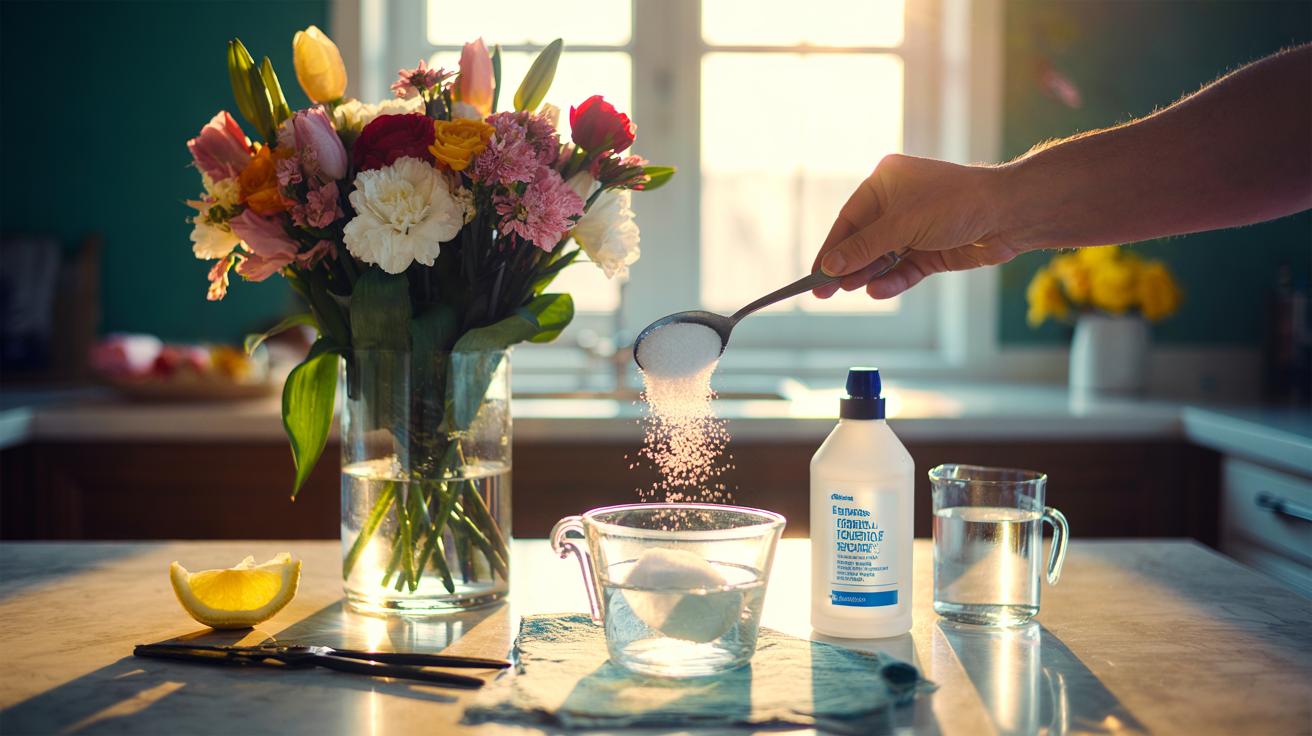
- 🌸 Sugar fuels cut flowers: a 1–2% sucrose solution supplies energy for bud opening, cell turgor and longer-lasting blooms.
- 🧪 Balance is essential: pair sugar with an acidifier (lemon juice/citric acid) and a tiny biocide (bleach) to prevent bacterial clogging and improve water uptake.
- ⚖️ Precise ratios: per litre, use 10–20 g sugar, ~5 ml lemon juice, and ~0.5 ml bleach; reduce sugar for tulips and daffodils, increase slightly for roses and woody stems.
- 🧼 Clean prep and maintenance: scrub vases, recut stems, remove submerged leaves, refresh solution every 48 hours, and keep arrangements cool and away from ethylene sources.
- 🌷 Flower-specific tips: condition daffodils separately, use low sugar for tulips, remove lily anthers, and watch for cloudy water as a sign to adjust the mix.
Any florist will tell you: a vase is a tiny ecosystem. Feed it right and flowers reward you with days of colour; get it wrong and petals slump by lunchtime. The simplest upgrade hiding in your cupboard is ordinary granulated sugar. It provides the energy cut stems can no longer draw from their roots, coaxing tighter buds to open and keeping older blooms glossy. Used with a light hand, it works quickly. Used recklessly, it fuels bacteria and slime. The trick is balance. Pair sugar with a mild biocide and a gentle acidifier, and that bouquet from the market suddenly looks like it came from a studio shoot.
Why Sugar Helps Cut Flowers Last Longer
Once severed, stems stop receiving the steady supply of carbohydrates manufactured by leaves. Their stored reserves are limited. A small dose of sucrose in the vase mimics that food stream, supporting respiration, water uptake and, crucially, the energy-intensive business of bud opening. In roses and carnations, supplemental sugar often means tighter heads unfurl fully rather than stalling half-open. It can also stabilise cell turgor, helping stems stay upright. Without an external energy source, many cut flowers tire quickly, even in perfectly clean water.
There is a catch. Sugar is also a banquet for microbes. Bacterial growth thickens the water, clogs xylem vessels and accelerates stem collapse. That’s why professional flower food always combines three elements: a carbohydrate (sugar), an acidifier (to lower pH and improve water flow) and a biocide (to suppress bacteria). Household substitutes can emulate this: sugar for energy, lemon juice or citric acid to acidify, a tiny dose of bleach to keep the water clear. Get the proportions right and you extend vase life; overdo any component and you shorten it. Species matter too. Tulips, daffodils and spring bulbs are sensitive and prefer weaker solutions than heavy-feeding roses or sunflowers.
The Right Recipe: Ratios, Water, and Add-Ins
Start with clean, tepid water. For most mixed bouquets, a 1–2% sugar solution works best: that’s 10–20 g sugar per litre (about 2–4 level teaspoons). Add an acidifier such as 5 ml lemon juice or 1/8 teaspoon citric acid per litre to bring the pH down. Finish with a cautious biocide: 0.5 ml unscented household bleach per litre (roughly 10 drops). Stir until dissolved. Err on the side of less sugar for spring bulbs and more for large, woody-stemmed blooms.
If you prefer imperial measures, mix 1 quart water with 1–2 teaspoons sugar, 1 teaspoon lemon juice and 1/8 teaspoon bleach. The chemistry is simple: lower pH improves hydraulic conductance; biocide suppresses bacterial load; sugar fuels metabolism and bloom development. Always test the mildest mix first, especially with delicate varieties. Watch the water. If it clouds quickly, your sugar is too high or the vase lacks hygiene. For very firm roses or peonies, a single day at the upper end (2%) can encourage opening, then revert to 1% for maintenance. Never pour bleach freely—more is not better and can scar petals.
Step-By-Step: Preparing and Maintaining the Vase
Begin clean. Wash the vase with hot, soapy water, rinse, then swish with a bleach solution. Rinse again. Sanitation buys you days. Trim stems by 1–2 cm at a 45-degree angle with a sharp knife or shears; remove any foliage that would sit below the waterline. For roses, recut under water to prevent air embolisms. Use tepid water for most flowers; go cooler for tulips and daffodils. Arrange loosely to allow air circulation around heads.
Top up with your sugar solution and place the arrangement away from radiators, direct sun and ripening fruit—the latter emits ethylene, which accelerates ageing. Refresh the solution every 48 hours, rinsing stems and the vase, and re-cutting by a few millimetres each time. Change the water before it clouds; don’t wait for trouble to appear. At night, move the bouquet to a cooler room to slow respiration. Remove spent blooms promptly; decaying material ramps up microbial load. If stems begin to droop, a quick triage—fresh cut, clean vase, new solution—often revives them within hours. For lilies, snip anthers to prevent pollen stains and extend petal life.
Common Mistakes and Flower-Specific Tips
Too much sugar is the classic error. It clouds water, breeds slime and causes stems to block. Over-bleaching is another: petals scorch and foliage yellows. Don’t mix sap-heavy daffodils immediately with others. Their mucilage can shorten the life of roses and tulips. Condition them solo for a day, then combine if you must. Keep scissors sharp; crushing stems worsens uptake. And avoid metal containers with acidified solutions, which can leach and discolour.
| Flower | Sugar per litre | Add-ins | Notes |
|---|---|---|---|
| Roses | 15–20 g | 5 ml lemon juice; 0.5 ml bleach | Warm water start; recut under water; remove guard petals. |
| Tulips | 5–10 g | 2–3 ml lemon juice; minimal bleach | Cool water; keep upright; low sugar to prevent flopping. |
| Daffodils | 5 g | Acidifier only for first 24 h | Condition alone; then mix with others if desired. |
| Lilies | 10–15 g | 5 ml lemon juice; tiny bleach | Remove pollen; avoid direct sun; moderate sugar aids opening. |
| Carnations | 10–15 g | Standard acidifier and bleach | Long-lived; benefit from steady low-dose sugar. |
Keep an eye on the waterline; top up with premixed solution rather than plain water to maintain balance. If your tap water is very hard, pre-boil and cool or use filtered water to avoid scale on stems. For a fragrance boost, a few sprigs of foliage add visual texture while not competing for sugar as aggressively as big-headed blooms. The golden rule: clean tools, modest sugar, regular changes. Master those, and even supermarket stems will look couture.
A teaspoon of sugar is not magic, yet in the controlled world of a vase it’s close. Pair it with an acidifier and a whisper of bleach, maintain hygiene and keep the room cool, and you’ll routinely add two, three, sometimes four extra days to your bouquet. That’s value, but also mood: a kitchen brightened, a desk softened, a window narrated by petals that don’t give up early. What mix will you try first, and which flowers are you most curious to test with a precise, home-made preservative?
Did you like it?4.7/5 (23)