In a nutshell
- 🧪 Why vodka works: Low-dose ethanol moderates ethylene-driven senescence and inhibits microbes that clog stems, slowing wilting and preserving colour.
- 🥄 Exact dosage: Add 1 teaspoon (5 ml) per litre of water; keep spirits clear and unsweetened. Too much alcohol dehydrates tissues.
- 🌿 Care routine: Start with a clean vase, trim stems at 45°, remove submerged leaves, place away from sun and ripening fruit, and refresh water every 48 hours with a light re-cut.
- 💐 Flower-specific tips: Roses, carnations, chrysanthemums, and alstroemeria respond well; tulips stay compact; orchids and lilies can be sensitive—test a single stem first.
- ⚠️ Common mistakes: Avoid sugary/dark spirits, don’t exceed the dose, and never mix vodka with bleach; consider a tiny sugar add-on only if needed.
There’s a whisper of mischief in the idea, yet a dash of vodka in a vase has earned a place in the florist’s quiet toolkit. The logic is deceptively simple: a tiny measure of alcohol slows the forces that hasten wilting, while keeping the water cleaner for longer. Garden roses, supermarket tulips, Delft-blue irises; they all fight the same enemies once cut. Bacteria. Ethylene. Evaporation. Here’s the unexpected twist: a clear spirit can help. Used correctly, vodka won’t intoxicate your bouquet—it will gently restrain the biology that steals colour, form, and fragrance. Curious, thrifty, and surprisingly effective, this unconventional addition preserves stems for days beyond their usual prime.
The Science Behind Vodka in a Vase
At heart, cut flowers are still living systems managing stress. They respond to damage and time by producing ethylene, a plant hormone that accelerates senescence—petal drop, yellowing, collapse. Low concentrations of ethanol, the active component in vodka, can disrupt parts of the ethylene pathway. In practical terms, that means a mild, temporary check on the biochemical signals that shout “age quickly.” Meanwhile, the same low dose changes the vase-water environment just enough to make life harder for microbes that cloud water and clog stems.
Bacterial populations present a second, fast-acting threat. They colonise cut ends, producing slimy biofilms that block the xylem—the narrow pipes that move water. When those pipes fail, petals desiccate. A little vodka creates a hostile setting for many common waterborne bacteria and yeasts, reducing their growth without damaging the flowers’ tissues. The outcome is subtle: slower wilting, brighter colour retention, and fewer drooping heads in the first critical days after arranging. Not all spirits are equal, though. Clear, unsweetened vodka is preferred because added sugars and botanicals in liqueurs or spiced drinks can actually feed microbes, undoing the benefit.
How to Use Vodka, Step by Step
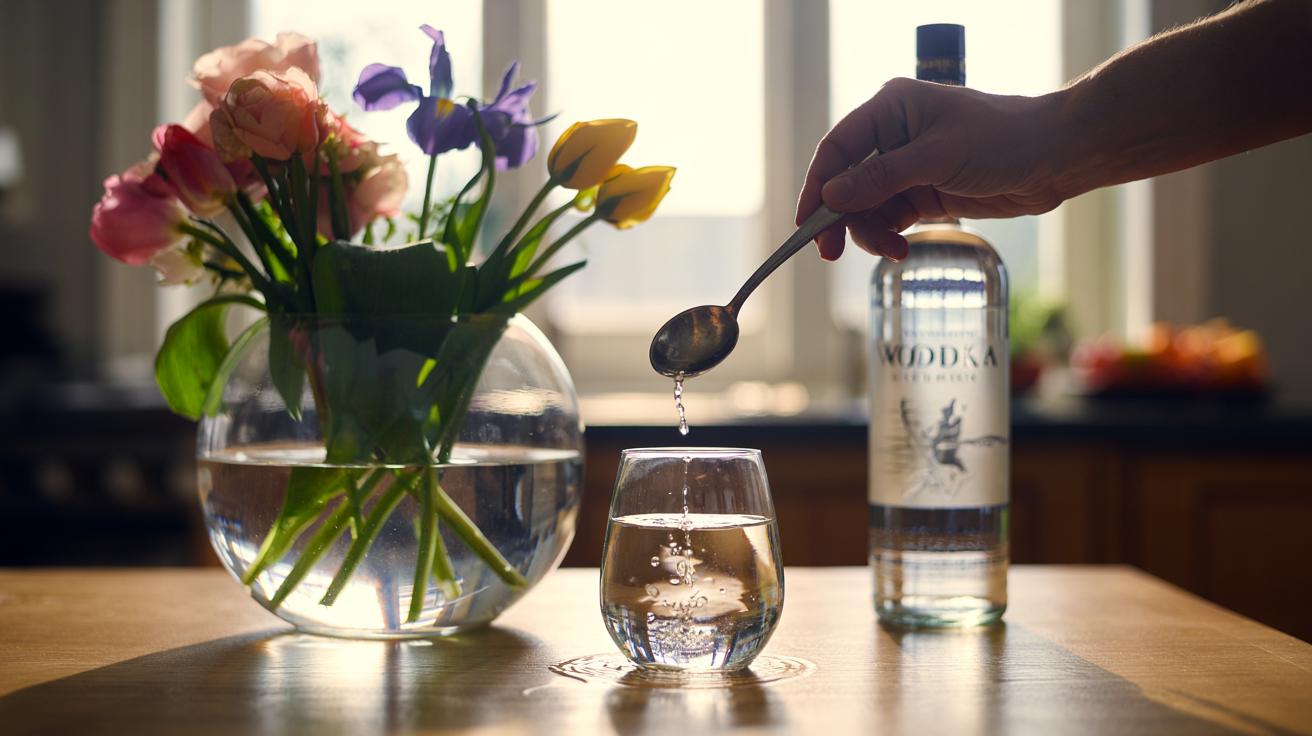
Start clean. Wash the vase with hot water and a drop of washing-up liquid, then rinse thoroughly. Trim stems at a 45-degree angle with sharp scissors or a knife, removing any leaves that would sit below the waterline. Fill the vase with cool, fresh water. Now for the measure: add roughly 1 teaspoon (5 ml) of vodka per litre of water. That’s all. Stir gently, arrange the flowers, and place the vase out of direct sunlight and away from ripening fruit, a strong source of ethylene.
Refresh the water every 48 hours. Re-cut stems by a few millimetres each time, especially if you notice any sliminess. If you want extra fuel for blooms that like a touch of sugar (roses respond well), add only a small amount. Do not increase the alcohol to “speed things up”—too much will dehydrate tissues and trigger premature wilting. And never mix vodka with bleach; keep them as alternatives, not partners.
| Vase Additive (per 1 litre water) | Why Use It |
|---|---|
| Vodka: 5 ml | Light antimicrobial effect; moderates ethylene-related senescence |
| Caster sugar: 5–10 ml (optional) | Energy source for some blooms; can shorten life if overused |
| Bleach: 1–2 drops (alternative, not with vodka) | Controls bacteria and algae; keep separate from alcohol |
Flower-by-Flower Tips and Myths
Roses, carnations, chrysanthemums, and alstroemeria usually respond well to a light vodka dose. They gain from cleaner water and a subtle check on ethylene, holding shape and colour for longer. Tulips are a special case: they keep growing in the vase, often bending toward light. Low alcohol can limit that stretch, keeping stems compact. Orchids and lilies, however, are more sensitive; many perform best with scrupulously clean water and minimal additives. Always test with a single stem if you’re unsure, especially for delicate or expensive varieties.
Two myths deserve correcting. First: “Any spirit will do.” Not quite. Dark or sugary spirits add nutrients for microbes and often contain flavourings that stain petals. Stick to clear, unsweetened vodka or gin, applied sparingly. Second: “More alcohol means longer life.” It doesn’t. Concentrations above a teaspoon per litre risk dehydration and tissue damage. The sweet spot is tiny yet potent: enough to trouble microbes and nudge hormones, not enough to stress the bloom. Combine that with good housekeeping—cool room, clean vase, regular trims—and you’ll often buy two to three extra days of beauty, sometimes more with sturdy varieties.
Vodka in a vase is a delightfully simple hack backed by plant physiology and common sense hygiene. It’s frugal, widely available, and easy to dose accurately in a home kitchen. Keep your routine gentle—clean vase, cool water, small measure of spirit, regular refresh—and the results are visible in the steadier posture of your favourite stems. Think of it as quiet maintenance for fleeting luxury. If you try it this week, which bouquet will you experiment with first, and how will you tweak the recipe for your local tap water and go-to flowers?
Did you like it?4.4/5 (22)