In a nutshell
- 🌿 Vinegar acts as a contact herbicide; its acetic acid disrupts leaf cell membranes, causing rapid desiccation—effective on seedlings, less so on deep-rooted perennials whose roots often survive.
- 🧪 Match strength to the job: household vinegar (~5%) for small weeds; horticultural vinegar (10–20%) for tougher foliage; add a few drops of a surfactant for better coverage and avoid salt to prevent soil damage.
- ⏱️ Prioritise timing and technique: spray on dry, sunny days, target young growth, apply precisely to leaves, and repeat after 7–10 days; combine with manual removal for persistent perennials.
- 🛡️ Safety first: wear PPE, don’t mix vinegar with bleach, shield ornamentals, and test surfaces—vinegar can etch concrete and stone and drift can scorch nearby plants.
- 🇬🇧 Mind UK regulations: only approved products can be sold as herbicides; household vinegar isn’t authorised for that use in public spaces—use it sparingly at home or choose approved acetic-acid products.
For gardeners keen to ditch synthetic sprays, vinegar promises a deceptively simple fix for stubborn weeds. Its punch lies in acetic acid, a common household ingredient with uncommon potency against soft, young foliage. Used with care, it scorches leaves, dries tissues, and topples seedlings before they set seed. Used carelessly, it singes prized plants and pits paving. This guide unpacks how vinegar works as a natural, contact herbicide, when it shines, and when it struggles. Expect practical advice, safety notes, and honest limits. Vinegar kills what it touches; roots often survive, so technique and timing matter. Here’s how to turn a pantry staple into a precise tool.
How Vinegar Kills Weeds on Contact
Vinegar’s action is brutally simple. The acetic acid lowers surface pH and disrupts cell membranes in leaf tissues, causing rapid desiccation. The waxy cuticle softens, water leaks from cells, proteins denature, and leaves collapse. You’ll often see bleaching or wilting within hours on a warm, dry day. It is non-selective and strictly contact-based: anything green, it burns; anything not hit, it spares. Soil microbes neutralise residual acidity quickly, so there’s little persistent activity beneath the surface.
This explains the dramatic difference between plant types. Seedlings and small annuals, with limited reserves, die fast because they can’t replace damaged foliage. Perennials like docks or dandelions, anchored by energy-rich roots, usually re-sprout. Vinegar singes the top, not the heart. Sunlight and heat intensify results by accelerating evaporation and tissue damage. A still, dry afternoon delivers the most visible “scorch.” Windy or rainy conditions blunt performance and spread risk to desirable plants.
Think of vinegar as a spot-treatment tool. It excels in cracks of paving, paths, and gravel where young weeds dominate and precision is possible. Do not expect it to clear an established, mixed border or a lawn without collateral damage. For dense perennial infestations, combine it with manual removal or repeated top-growth exhaustion.
Choosing the Right Strength and Additives
Household vinegar is typically 5% acetic acid. It will bronze small weeds, especially seedlings, when applied undiluted. Horticultural vinegar ranges from 10–20% and works faster on tougher foliage, but with sharply increased risks of skin and eye injury, as well as scorch to nearby plants. Adding a drop of surfactant (a few drops of washing-up liquid per litre) helps the spray spread and cling, reducing beading and improving coverage. Avoid adding salt: it boosts burn but raises soil salinity and can damage surrounding vegetation long after the weed has gone.
| Vinegar Type | Acetic Acid | Best Use | Efficacy on Weeds | Key Cautions |
|---|---|---|---|---|
| Household vinegar | ~5% | Seedlings, soft annuals | Good on small plants | Multiple reapplications often needed |
| Horticultural vinegar | 10–20% | Tougher leaves, quick results | Very fast top kill | Corrosive; PPE essential |
| Vinegar + surfactant | 5–20% + drops | Improved leaf coverage | Enhanced consistency | Do not add salt |
Practical ratios are simple. For 5% vinegar, use neat on tiny weeds or mix 3:1 (vinegar:water) for very tender growth to extend volume. With 10–20% products, reduce exposure risk by using the lowest strength that works. If you can’t apply precisely, you’re using too much strength for the site. A hand sprayer with a cone pattern or a foam applicator minimises drift and maximises contact.
Application Strategy: Timing, Technique, and Limitations
Timing beats brute force. Apply on a dry day with at least 24 hours rain-free, when temperatures are mild to warm. Hit the youngest growth you can find; cotyledons and fresh leaves suffer the deepest damage. Soak leaves thoroughly but avoid runoff. There’s no benefit to puddling the soil; roots won’t absorb it meaningfully. Midday sunshine accelerates the desiccation, turning a slow fade into a quick scorch. Spraying just before rain wastes effort and risks spread onto wanted plants.
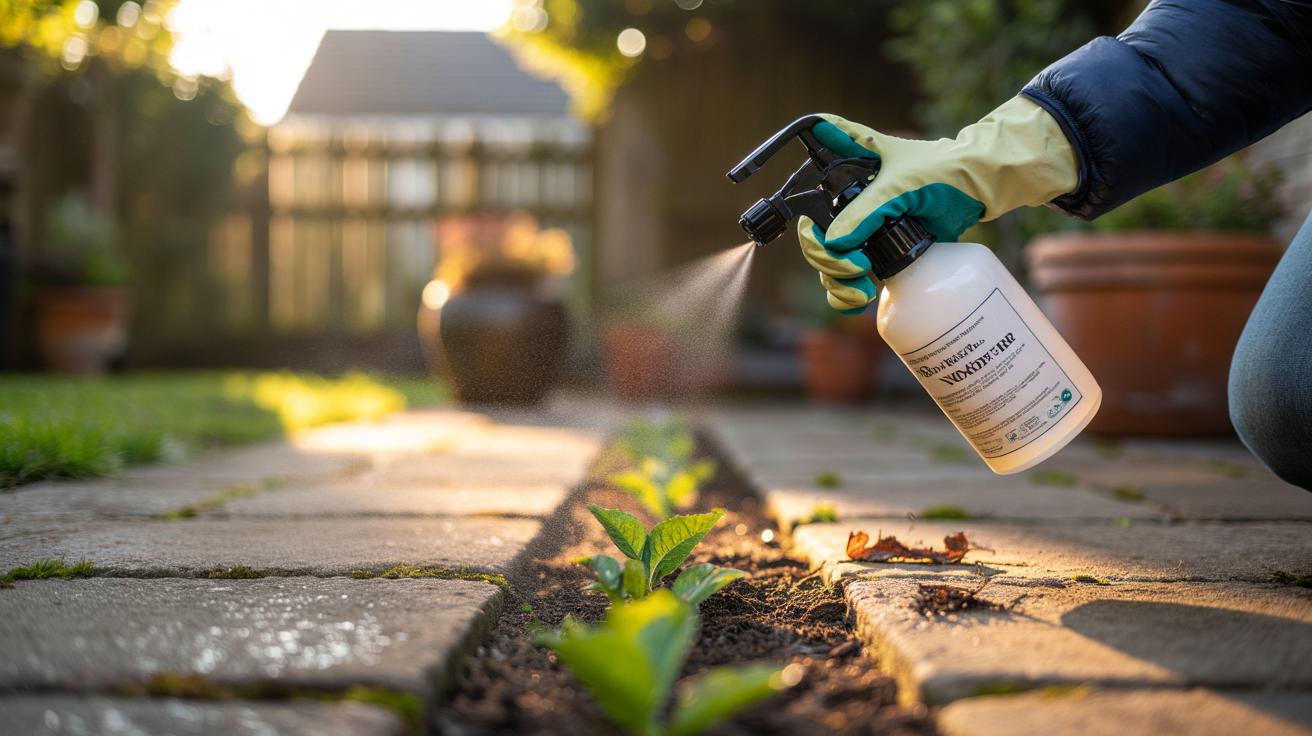
Technique is everything. Shield ornamentals with cardboard or a board. Work close to the target to prevent drift. On paved areas, wipe leaves with a sponge or brush to stay precise. Repeat after 7–10 days to catch re-sprouts or missed tissues. For deep-rooted perennials, pair vinegar with physical removal: slice the crown, lift as much root as feasible, then use vinegar to suppress any re-growth. Expect a cycle: green-up, scorch, green-up. Persistence, not a single heroic dose, wins.
Limitations are clear. Vinegar does not translocate; it cannot chase rhizomes underground. Thick, waxy leaves resist penetration without a surfactant. In shady, cool conditions, the effect softens. On very old, woody weeds, you may only singe margins. Choose it for fast cosmetic control on paths and seedlings, not as a silver bullet for entrenched perennials. Align expectations with biology, and you’ll be satisfied with the results.
Safety, Surfaces, and UK Considerations
Respect the chemistry. Even household vinegar can sting eyes and irritate skin; 10–20% acetic acid is corrosive. Wear gloves and eye protection, avoid inhaling mist, and keep children and pets away until leaves are dry. Never mix vinegar with bleach or products containing sodium hypochlorite—this can release dangerous chlorine gas. Store tightly sealed, away from metals; strong vinegar can corrode fittings and dull tools. Test on a discreet spot first: vinegar may etch concrete and mark natural stone.
Runoff matters. On gravel or tarmac, it’s rarely an issue. On porous or decorative paving, staining can occur. Direct spray away from lawns and beds unless you’re spot-targeting weeds between border plants with a guard. Dispose of leftovers by diluting and using on additional weeds; don’t pour concentrated vinegar into drains or watercourses. Keep labels for horticultural products and follow the manufacturer’s safety data.
In the UK, only approved plant protection products can be marketed as herbicides. Household vinegar isn’t authorised for that purpose, and public-space use may be restricted. For domestic gardens, small-scale spot use is common, but check local guidance and avoid application on public land or near waterways. When in doubt, choose an approved acetic-acid weedkiller or a mechanical method to stay firmly within best practice. Safety and precision protect both your garden and your legal footing.
Used thoughtfully, vinegar is a sharp, short-lived tool: devastating to tender weeds, kinder to soil life, and immediate in effect on sunlit days. It won’t replace systemic herbicides on deep-rooted perennials, but it can keep paths, patios, and gravel neat with minimal fuss. The winning formula is simple—right strength, careful timing, and meticulous aim, topped with repeat treatments where roots persist. Treat it as a scalpel, not a sledgehammer, and it rewards you with clean lines and fewer chemicals in the shed. Where in your garden would a precise, contact approach make the most difference next season?
Did you like it?4.6/5 (23)