In a nutshell
- 💡 Banana peel tea delivers a gentle potassium boost that drives water balance and sugar transport, supporting flowering and fruit set for higher vegetable yields.
- 🧪 Easy method: rinse and chop 3–5 peels, steep 24–48 hours or simmer 10 minutes, then strain; keep chilled and use within 3 days.
- ⚖️ Apply with care: soil drench 1:4 (tea:water) weekly and foliar spray 1:10 every 10–14 days; small, regular doses outperform heavy applications.
- 🍅 Best responders include tomatoes, peppers, aubergines, courgettes, and cucumbers; expect steadier fruit set and potentially 5–15% more pickings.
- ♻️ Stay safe and sustainable: avoid long, anaerobic steeps; don’t overapply K to prevent Mg/Ca antagonism; pair with compost or a balanced feed to maintain nutrient balance.
Across the UK’s allotments and back gardens, a simple brew is quietly changing harvest baskets: banana peel tea. It looks humble. It smells faintly sweet. Yet it delivers a concentrated hit of potassium that plants crave during flowering and fruit set. Gardeners are turning kitchen scraps into plant tonic, cutting waste and lifting vegetable yield at the same time. Not alchemy. Just practical biology. Used responsibly, banana peel tea offers a fast, gentle potassium boost without the harsh salts common in synthetic feeds. Here’s how it works, how to brew it safely, and the crops that respond best when you ladle this golden liquor around their roots.
Why Banana Peel Tea Works for Vegetable Yields
Potassium (K) drives water balance, sugar transport, and enzyme activation in plants. When tomatoes or courgettes shift from leafy growth to flowering, demand for K rockets. Banana peels contain readily soluble potassium compounds and traces of phosphorus, magnesium, and calcium. Steeped in water, these ions leach out, creating a mild liquid feed that supports strong stems, efficient stomata, and dense trusses of fruit. In short, K helps plants move carbohydrates from leaves to developing fruits. That’s yield in motion.
Unlike granular fertiliser spikes, a tea reaches the root zone quickly, especially in warm beds where microbes are active. It’s kinder, too. The solution is typically low in salts, reducing the risk of scorch. Gardeners report sturdier flower clusters, fewer aborted blossoms, and improved turgor during heat spells. Potassium does not build new tissue; it helps plants use what they’ve already produced, turning sunlight and leaves into pods, tubers, and fruit efficiently. Do remember balance. Too much K can nudge aside magnesium and calcium uptake, so this brew supplements compost and general feeds; it doesn’t replace them.
Soil biology plays a role as well. A light infusion of plant compounds can stimulate microbial activity around roots, subtly easing nutrient exchange. On sandy or container mixes, which leach quickly, the tea’s frequent, small top-ups suit the medium’s rhythm. Heavy clay? Apply less, watch drainage, and let biology do the lifting.
How to Brew and Dose Banana Peel Tea
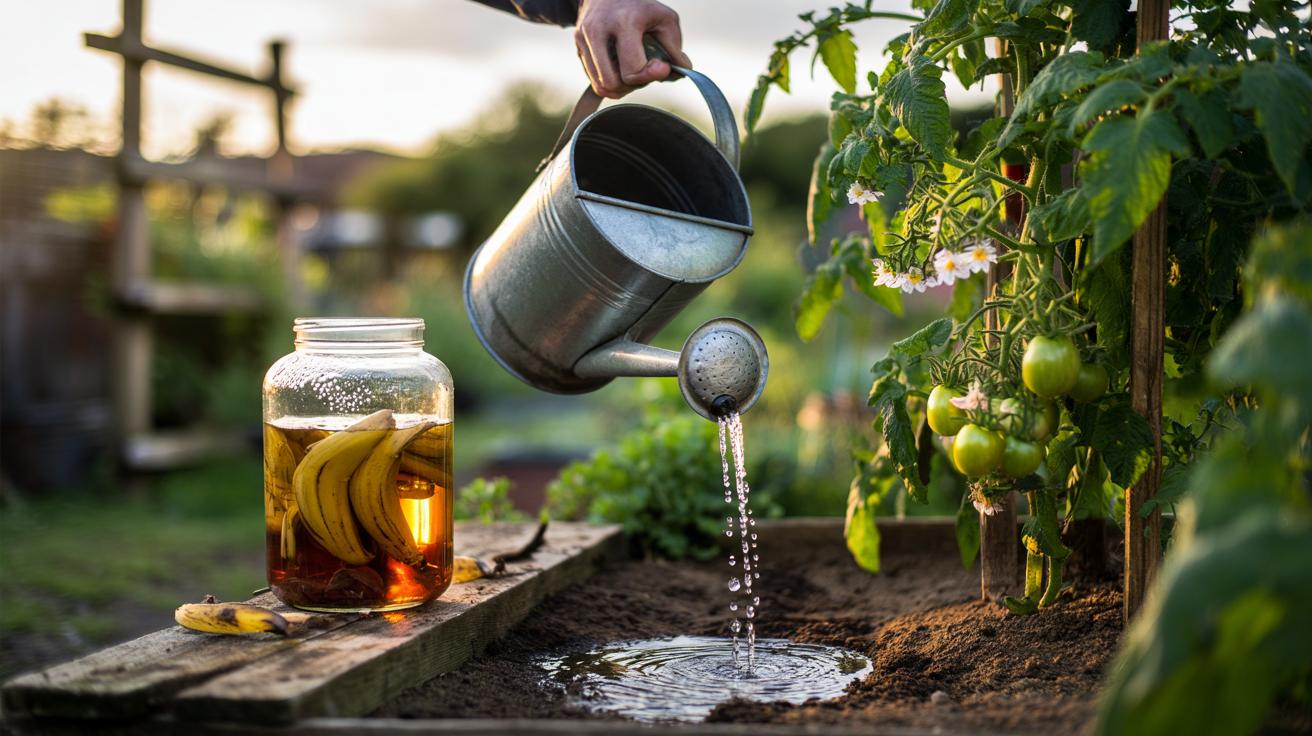
Start clean. Rinse 3–5 fresh peels to remove any residues. Chop to increase surface area. Submerge in 1 litre of rainwater (tap water is fine if rested to let chlorine dissipate). Cover loosely and steep 24–48 hours at room temperature. For speed, simmer the chopped peels for 10 minutes, cool, then strain. Either method works. The result: a tawny liquid with soluble potassium and light traces of other minerals. Strain carefully; sludge can clog watering cans. Avoid adding sugar or bread yeast—this isn’t a compost tea; excessive fermentation can harm roots and attract pests.
Always dilute before use. For soil drench, mix 1 part tea with 4 parts water. For foliar sprays, go gentler: 1:10, early morning or evening, never in hot sun, and avoid wetting open flowers. Store chilled for up to three days; once it smells sour or turns filmy, discard on the compost heap.
| Method | Dilution | When to Use | Notes |
|---|---|---|---|
| Soil drench | 1:4 (tea:water) | Weekly during flowering and fruit set | 250–500 ml per plant; water first if soil is dry |
| Foliar spray | 1:10 | Early morning/evening, every 10–14 days | Fine mist; avoid flowers and fruit; test on one leaf |
Small, regular doses outperform occasional heavy glugs. Container tomatoes, peppers, and aubergines respond especially well because their limited media lose K fast. Open-ground beds can take slightly larger volumes, but keep the cadence steady rather than sporadic.
Evidence in the Allotment: Crops That Respond and What to Expect
Tomatoes lead the pack. Gardeners consistently see fuller trusses and firmer skins when a banana peel tea regime begins at first flowering. Peppers and chillies, with long fruiting windows, show more continuous set. Courgettes and cucumbers? Improved plant stamina during hot spells, fewer aborted blossoms. Potatoes and sweetcorn also appreciate potassium, yielding more uniform tubers and stronger stalks, respectively. Leafy greens are different. They prioritise nitrogen, so the tea is less transformative—helpful for resilience, not a growth engine.
Expect subtle but real gains. Think tighter internodes and more fruits carried to maturity rather than oversized whoppers. Some UK plot-holders report 5–15% higher pickings across a month of peak harvests, with fewer blossom-end issues when calcium is adequate. Banana peel tea is a supplement, not a complete fertiliser, and it performs best alongside mature compost or a balanced organic feed. In alkaline soils, it’s neutral enough not to push pH; in acidic beds, it won’t fix acidity but won’t worsen it either.
Watch for signals. Dark, healthy foliage with vigorous flowering suggests the dose is right. Pale leaves with crisp margins can hint at magnesium competition if K is overused; answer with Epsom salts sparingly, or simply dial back the tea. Keep notes. Two watering cans a week for cherry tomatoes in containers might be perfect; beefsteaks in open soil could need less but longer. Your microclimate writes the rules.
Safety, Sustainability, and Common Mistakes
This brew is thrifty by design. You’re upcycling kitchen scraps, trimming fertiliser spend, and shrinking the bin. That’s circular gardening in action. Still, there are pitfalls. Don’t leave peels steeping for a week; anaerobic conditions foster off-odours and unwelcome microbes. Rinse peels first, especially if skins are waxed or heavily sprayed. If unsure, peel off any glossy coating or choose organic fruit. When in doubt, shorter steeps and proper dilution keep plants safe.
Overapplication is the big trap. Excess potassium can inhibit uptake of magnesium and calcium, risking interveinal chlorosis or blossom-end rot in susceptible crops. The cure is simple: moderate the tea, maintain soil moisture, and pair with a balanced base feed. Don’t pour concentrated tea on dry roots; pre-water, then drench. Keep the liquid off paths unless you like fruit flies. Any leftovers past their best should go to the compost where microbes will finish the job.
Environmentally, the footprint is tiny compared with mined potash or bottled liquids shipped long distances. Glass jar, rainwater, sunlight. That’s your kit. The most sustainable fertiliser is the one that works at low dose, on time, and with no waste. Used this way, banana peel tea earns its place in the shed beside the hoe and the twine.
Banana peel tea won’t turn a poor plot into Eden, yet it reliably sharpens the moment when flowers become fruits. Done well, it complements compost, steadies plants through heat, and nudges yields upward without drama. It’s cheap. Quick to make. Easy to tailor. As the season turns and trusses swell, a simple jar on the windowsill can be the difference between a good harvest and a great one. Will you test a measured banana peel regimen on just half your crop this month—and log the results like a pro?
Did you like it?4.5/5 (27)