In a nutshell
- 🌿 Garlic spray repels aphids by masking plant scents with sulphur-rich volatiles (like allicin), disrupting how aphids locate and swarm on growth.
- 🧄 Simple, safe DIY recipe: blend fresh cloves with water, add a mild soap surfactant and light oil, steep 12–24 hours, then strain thoroughly; use within 5–7 days.
- 🕒 Smart application: spray mornings/evenings, target leaf undersides, repeat every 3–4 days initially and after rain; patch-test on sensitive plants to avoid scorch.
- 🐞 Pollinator- and predator-friendly: a deterrent, not a toxin—avoid blooms; supports IPM by letting ladybirds, lacewings, and hoverflies mop up stragglers.
- 🧪 Practical limits and tactics: reduce heavy infestations first (hose or prune), then maintain the scent barrier; monitor with sticky traps and bolster plant health.
In Britain’s gardens, the smallest foes often do the greatest harm. Aphids, sap-sucking and swift-breeding, can twist tender growth and spread disease in weeks. Chemical quick fixes exist, yet many of us want a remedy that’s kind to soil life, bees, and the family dog. Enter the humble clove. A garlic spray sets up an odour barrier that confuses pests, not nature. It’s cheap, kitchen-simple, and surprisingly strategic. This is a deterrent, not a scorched-earth tactic, making it a perfect fit for eco-minded growers. Here’s how this aromatic shield works, how to mix it, and when to deploy for maximum protection.
Why Garlic Outsmarts Aphids
Aphids navigate by scent. They home in on the subtle perfumes of fresh growth and stress signals leaked by plants. Garlic upends that chemistry. When cloves are crushed or blended, they release allicin and other sulphur-rich volatiles such as diallyl disulphide and ajoene. These compounds don’t just smell strong to us; they scramble the semiochemical “map” that aphids use to locate leaves and to coordinate swarms. Think of garlic as a smokescreen for plant odours, masking the cues aphids require to land, probe, and feed.
Because the spray works by repellence rather than toxicity, it’s less likely to harm beneficial insects that don’t rely on the same cues, provided you avoid direct spraying of pollinators. Ladybirds, lacewings, and hoverfly larvae still patrol, clearing stragglers the scent barrier doesn’t deter. That synergy is the point. Garlic spray dovetails with Integrated Pest Management (IPM), reducing pressure so natural predators can finish the job. It’s also forgiving: residue breaks down quickly in light and air, which means fewer persistent chemicals in the soil food web. It doesn’t poison, it confuses and deters.
There are limits. Heavy infestations may need pruning or a targeted jet of water first. Rain also dilutes the barrier. But used early, at the first winged scouts of spring, garlic keeps colonies from taking hold. That’s a small intervention with outsized effect.
How to Make a Safe, Potent Garlic Spray
A good spray is simple, fresh, and well strained. Start with 4–6 large cloves of fresh garlic. Blitz them with 250 ml of water, then top up to 1 litre with cool water. Add 2–3 ml of unscented, biodegradable liquid soap as a surfactant, and 5 ml of light vegetable oil to help the solution stick to leaves. Steep in the fridge for 12–24 hours to extract the volatiles, then strain twice through fine mesh or muslin. Straining thoroughly is non-negotiable if you want to avoid clogged spray nozzles.
| Component | Amount (per 1 litre) | Role | Notes |
|---|---|---|---|
| Garlic cloves | 4–6, crushed/blended | Active volatiles | Use fresh, not jarred |
| Water | Up to 1 litre | Carrier | Rainwater or cooled, boiled tap |
| Mild liquid soap | 2–3 ml | Surfactant | Unscented, biodegradable |
| Light vegetable oil | 5 ml | Sticker | Optional but useful |
| Steep time | 12–24 hours | Extraction | Refrigerate while steeping |
| Shelf life | 5–7 days | Safety | Discard if cloudy or fermented |
Label the bottle and keep it chilled; make small batches to keep it lively. If your water is hard, use rainwater to avoid mineral films on leaves. For an extra nudge, add a pinch of chilli flakes to the steep (strain well). Never use heavily perfumed soaps or thick oils, which can scorch foliage and taint blooms. Finally, keep any concentrate away from children and pets, and wash hands after mixing. The aroma is pungent; the peace of mind is priceless.
Applying and Timing for Best Protection
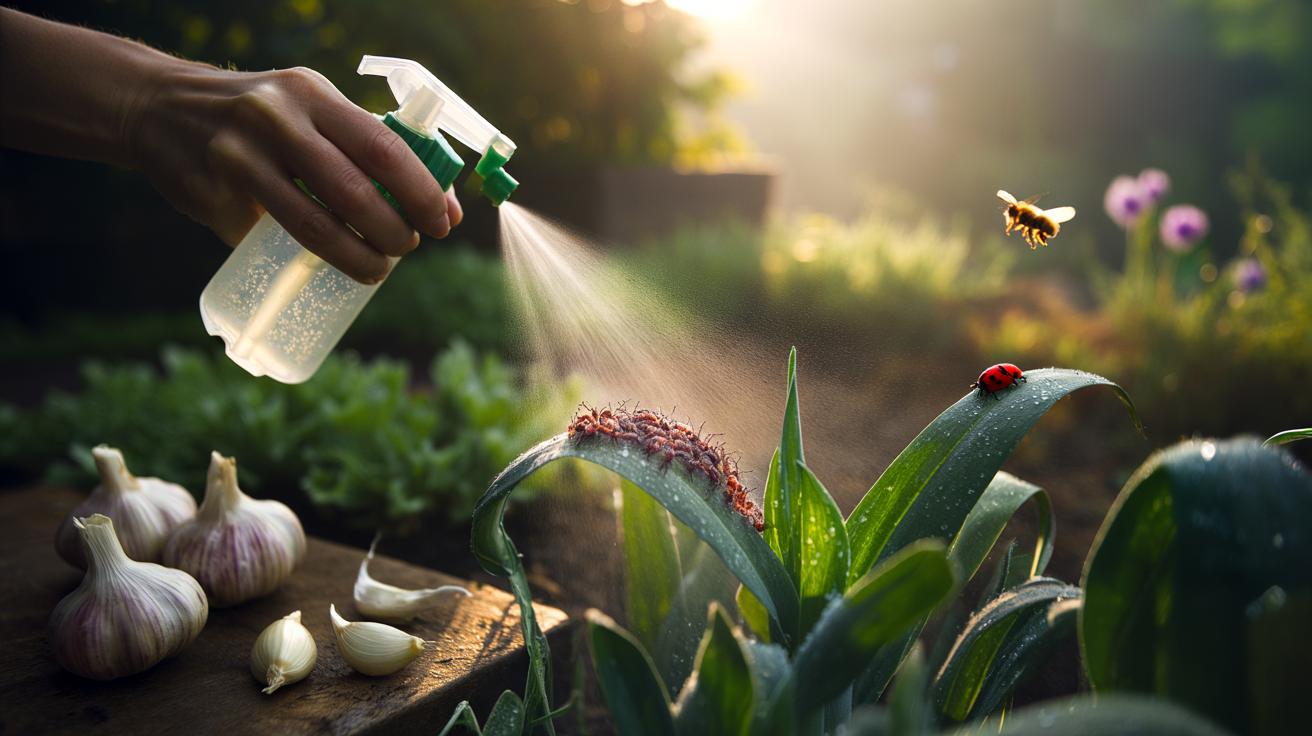
Timing decides outcomes. Spray in the early morning or evening, when temperatures are mild and bees are less active. Coat the undersides of leaves where aphids cluster; a fine mist beats a drench. Begin at the first signs—curled tips, sticky honeydew, or a few winged scouts—and repeat every 3–4 days for two cycles, then weekly as pressure drops. Reapply after heavy rain or overhead watering, because the scent barrier washes away.
Protect allies while you defend plants. Avoid open flowers to spare pollinators, and keep the nozzle moving to prevent pools on tender growth. On hot, bright days, test first; garlic plus midday sun can mark soft leaves. Always perform a patch test on one leaf 24 hours ahead on sensitive plants like fuchsias or young brassicas. If infestation is heavy, knock colonies back with a sharp hose blast, prune badly hit tips, then maintain the garlic spray routine. That one-two punch restores balance without chemicals.
Fold this tactic into broader stewardship. Encourage predators with mixed planting, let a few nettles stand for ladybirds, and keep stress down with regular watering and mulch. Sticky traps help monitor flying arrivals. Garlic spray narrows the door; nature’s helpers close it. The result is resilience you can smell before you see: crisp growth, clean buds, and fewer aphid-born diseases making mischief.
Garlic won’t change the weather, but it will change the odds. A safe odour barrier buys time for your garden’s living defences to reassert themselves, keeping sap-suckers off balance and leaves unblemished. It is cheap, quick, and oddly satisfying, especially when you can skip harsh products and still harvest pristine roses, beans, and brassicas. Used early and regularly, this simple spray turns prevention into a habit rather than a chore. Where will you deploy your first batch—on the roses, the soft tips of broad beans, or the kale bed that always seems to tempt spring aphids?
Did you like it?4.4/5 (21)