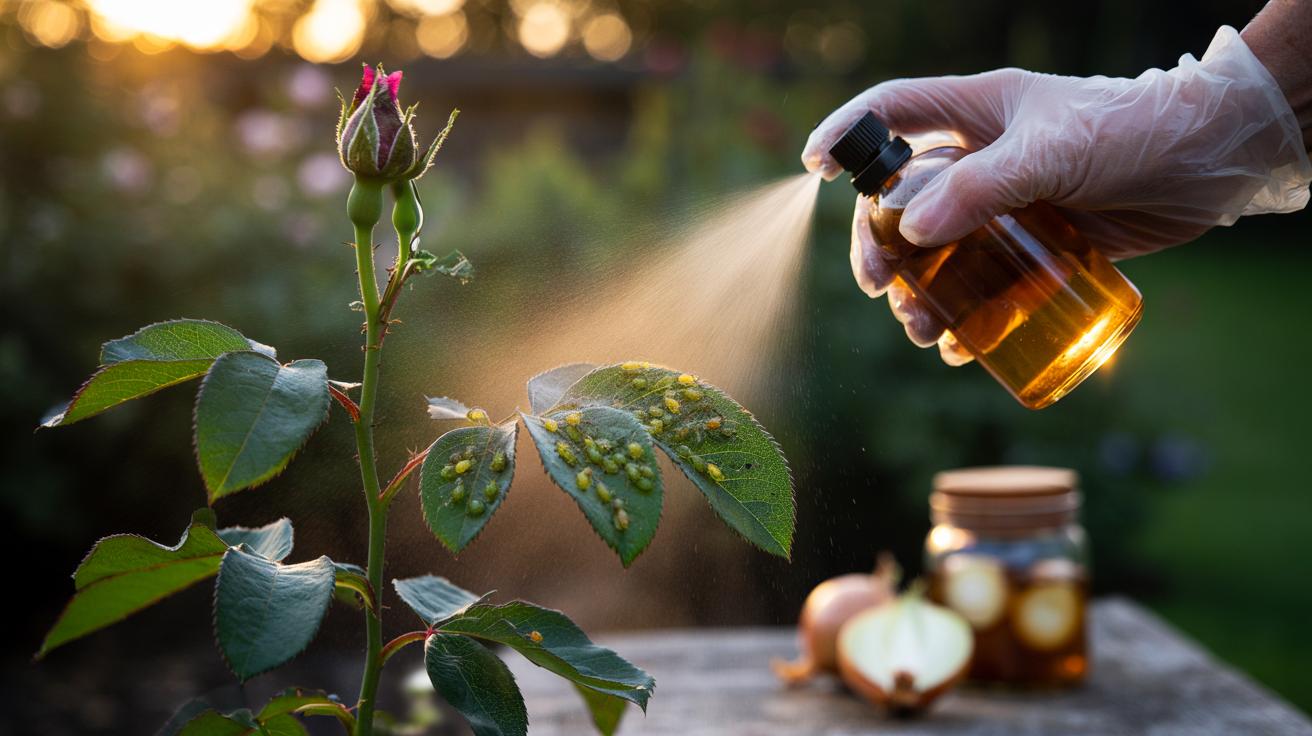
In a nutshell
- 🧅 Onion water repels aphids by flooding foliage with volatile sulfur compounds that mask plant scents and disrupt aphid signalling, prompting them to disperse.
- 🧪 Simple method: steep 2 onions in 1 litre of hot water for 4–12 hours, strain, add a drop of mild soap, patch-test, and spray at dusk on leaf undersides.
- 🌙 Overnight edge: cooler, humid air helps onion volatiles linger, cutting clusters by morning and reducing honeydew and ant protection of aphids.
- ⚠️ Use wisely: it’s a deterrent, not a knock-down pesticide; avoid midday spraying, protect sensitive plants, and discard leftovers after 48 hours.
- 🌼 Integrated approach: combine with manual removal, companion planting, soft soap sprays, and support for natural predators to keep infestations in check.
Gardeners swap a million tricks, but few are as old-school and oddly effective as onion water. This sharp, kitchen-born infusion can nudge a colony of aphids off roses, brassicas, and beans with startling speed. The secret isn’t magic. It’s chemistry, smell, and timing. When used at dusk, the brew’s volatile sulfur compounds bloom in the cooler air, muddling aphid signals and masking the plant scents they home in on. It’s cheap. It’s quick. And, crucially, it’s gentle on most plants when used wisely. Think of it as a pungent smoke screen that persuades pests to leave rather than a toxic hammer that wrecks the whole ecosystem.
How Onion Water Works Against Aphids
Aphids find hosts by sniffing out plant volatiles and responding to alarm pheromones from their kin. Onion water disrupts both. Onions release a suite of organosulfur compounds—including thiosulfinates and the eye-watering syn‑propanethial‑S‑oxide—that create an olfactory fog. To an aphid’s delicate antennae, that fog can overwhelm the cues that indicate a nutritious sap-flowing leaf. When their sensory map collapses, their feeding becomes inefficient, and they disperse. The result is less clustering, less honeydew, less stress on the plant.
There’s another angle. The infusion’s acidity and trace phenolics, such as quercetin, leave leaves tasting and smelling “wrong” for soft-bodied pests. You’re not poisoning the plant or the insect; you’re making the buffet unappetising. Crucially, the effect is short-lived but intense, which suits a spray‑in‑the‑evening routine. Overnight humidity helps the scent cling to foliage. By morning, numbers often drop noticeably. Expect the biggest wins on young nymphs and freshly arrived winged aphids that haven’t settled.
A Quick, Reliable Recipe and Application Steps
Use what you have. Two medium onions, roughly chopped, into a jug or bucket. Add one litre of hot (not boiling) water. Cover and steep for 4–12 hours—overnight is ideal. Strain through a fine mesh or cloth. Optional but helpful: add one drop of mild liquid soap to help the infusion spread across waxy leaves. Decant into a clean spray bottle. Always test on a single leaf and wait 24 hours before treating the whole plant. Some tender ornamentals can be fussy.
Spray at dusk, coating the undersides of leaves where aphids congregate. Avoid open blooms to protect pollinators. Repeat every 2–3 days for a week, then weekly as maintenance. Rinse leaves with plain water if you see any scorch, and never spray in full midday sun. Dispose of leftovers after two days; freshness matters for the scent profile that does the heavy lifting.
| Parameter | Recommendation |
|---|---|
| Onion-to-Water Ratio | 2 medium onions : 1 litre water |
| Steep Time | 4–12 hours (overnight best) |
| Application Time | Dusk or early morning |
| Add Surfactant | 1 drop mild soap per litre (optional) |
| Shelf Life | Up to 48 hours, refrigerated if possible |
| Frequency | Every 2–3 days, then weekly |
Why Results Often Appear Overnight
Timing is everything. At night, cooler temperatures and higher humidity slow evaporation, letting the onion volatiles hang close to foliage for longer. Aphids feed almost continuously, but their exploratory movements spike when conditions change. The sudden scent barrier around a host plant during those hours pushes them to move on—especially winged adults scouting for better sap. You wake to fewer clusters, cleaner shoots, and leaves that look less puckered.
There’s also a cascade effect. Disrupted feeding reduces sticky honeydew, which in turn discourages ants that often “farm” aphids and defend them from predators. The night-time window gives ladybirds, lacewings, and hoverfly larvae a clearer run at any stragglers by morning. The method doesn’t promise a total wipe-out; it nudges the balance back in your favour. For heavy, entrenched infestations, pair onion water with gentle manual removal—gloved fingers, a firm water jet, or pruning of the most colonised tips.
Safety, Limitations, and Smarter Garden Integration
Onion water is a deterrent, not a pesticide in the strict, knock-down sense. It shines in early outbreaks and as a preventive veil during peak aphid seasons. But it can mark or scorch sensitive foliage, especially in heat or bright sun. Always patch-test. Don’t drench soil repeatedly; while onions aren’t broadly harmful, stagnant solutions can sour and invite fungal issues. Keep sprays away from cut flowers and indoor fabrics—the aroma lingers.
Think bigger than a bottle. Strengthen plants with balanced watering and avoid nitrogen surges that produce the soft growth aphids love. Mix tactics: soft soap sprays for contact control; companion planting with chives, garlic, and marigolds; habitat for natural enemies; reflective mulches under vulnerable veg. Rotate homemade brews—garlic, chilli, or neem-based products—to prevent habituation. And embrace waste-wise gardening: onion skins and ends work just as well in your infusion, turning peels into pest pressure relief. That’s frugal, circular, and kinder to beneficial insects than heavy-handed chemicals.
Used with care, onion water is a fast, frugal fix that tilts the night in your favour. It won’t replace good husbandry or helpful predators, but it buys time and breathing space for stressed plants. A few minutes of chopping and steeping can spare a rosebud or rescue a row of beans. The method scales, too—window box or allotment alike. Will you try the dusk spray this week, and if you do, which plant will be your first test case?
Did you like it?4.3/5 (21)