In a nutshell
- 🌿 Coffee grounds deter, not kill: aroma compounds, gritty texture, and residual caffeine create a sensory barrier that nudges slugs, ants, and aphids away.
- 🐌 Apply thinly and strategically: sprinkle light rings around plants, keep grounds off stems, refresh after rain, or use a weak “coffee wash” on foliage after spot-testing.
- 🧪 Evidence and limits: results vary; spent grounds are near neutral pH, may briefly tie up nitrogen, and work best as short-lived deterrents rather than a standalone solution.
- 🛡️ Integrate with gentle controls: pair with copper tape, wool pellets, companion plants, and beneficial insects for resilient, eco-friendly pest management.
- ⚠️ Safety first: avoid thick mats that crust, compost when unsure, and keep fresh grounds away from pets due to caffeine toxicity.
Britain’s gardens are under siege from slugs, sap-suckers, and stealthy night diners. Yet the answer might be in your kitchen caddy. Spent coffee grounds—earthy, aromatic, and widely available—can act as a subtle but effective deterrent to several unwelcome visitors, adding a sustainable twist to pest management. The idea is simple: leverage scent, texture, and chemistry to make beds and borders less attractive, without synthetic sprays. It isn’t a silver bullet. But used thoughtfully, this everyday by-product helps tip the balance. The trick lies in applying just enough, in the right places, at the right time, while keeping soil health—and curious pets—front of mind.
The Science Behind Coffee’s Pest Repellent Power
What’s in those dark granules that pests dislike? First, aroma. Volatile compounds lingering in spent grounds—think residual caffeine, phenols, and roast-derived notes—create a scent landscape that can confuse or repel foraging insects. Ants, which rely on chemical trails, may hesitate to cross fresh deposits; aphids sometimes divert when foliage carries a coffee wash. Second, texture. Grounds are gritty. For soft-bodied pests such as slugs and snails, abrasive particles can be discouraging, especially when surfaces are dry. There’s also chemistry: caffeine in high concentrations is toxic to slugs and many insects, though spent grounds contain only modest residues.
The key mechanism is deterrence, not eradication. You’re building a sensory barrier that nudges pests away from tender leaves and ripening fruits. That said, biology and weather complicate outcomes. After rain, scent fades and the grit softens, narrowing the effect window. Soil microbes quickly start digesting grounds, reducing their punch but adding slow organic matter. Crucially, coffee grounds don’t “acidify” soil dramatically when used sensibly; spent grounds typically hover near neutral. Think of them as a transient, renewable nudge—best combined with other gentle defences for resilient, chemical-light gardening.
Practical Ways to Use Grounds Around the Garden
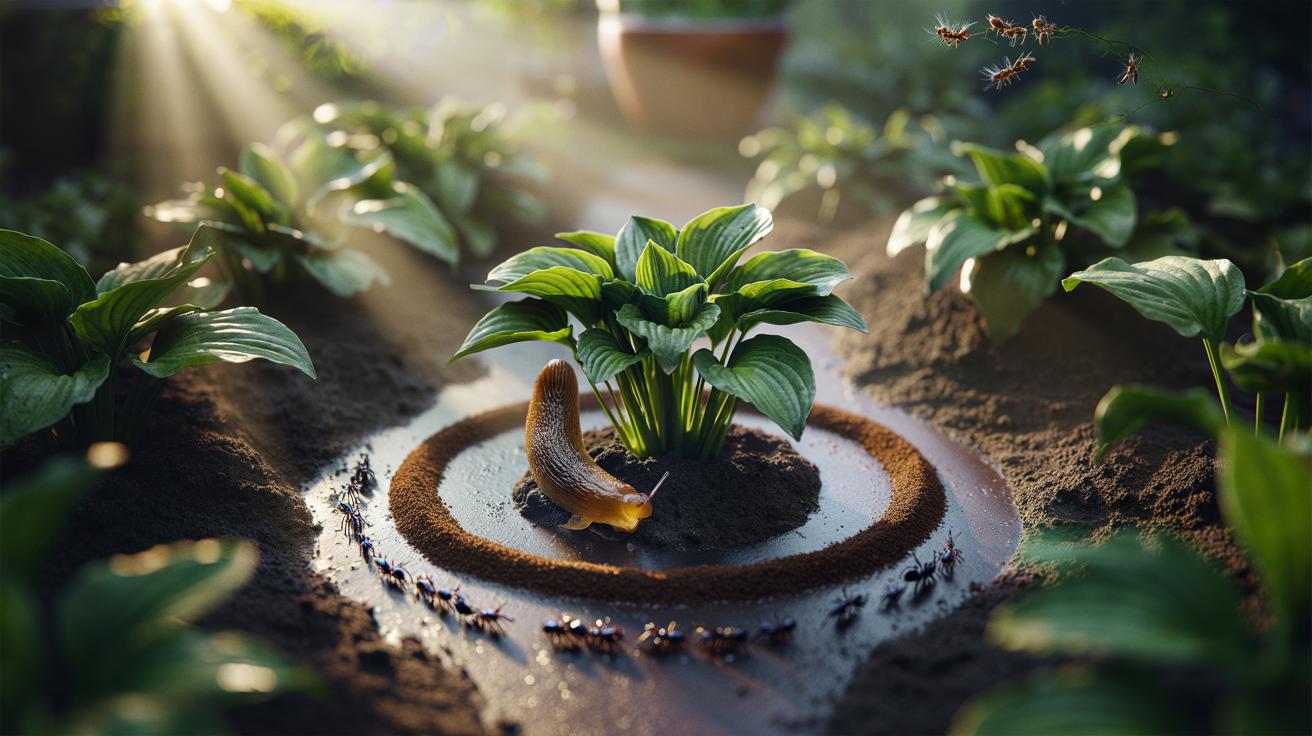
Start small and strategic. For seedlings or prized hostas, sprinkle a thin ring of grounds 2–3 cm wide around the base, leaving a 2–5 cm gap from stems to prevent moisture build‑up. Keep the layer feather-light—no more than a dusting you can still see soil through. Do not pile thick mats of grounds; they can crust, shed water, and smother delicate roots. For beds, broadcast a handful per square metre, then blend lightly into the top centimetre of soil or cover with leaf mulch. This reduces clumping while extending the aroma’s reach.
To refresh scent without overloading soil, reapply weekly in slug season or after persistent rain. For foliage susceptible to aphids, a very weak “coffee wash” (grounds steeped in cool water for a few hours, strained, and sprayed on non-scorching days) can provide short-lived masking effects—trial on a leaf first. Composting remains an excellent route: add grounds as a green nitrogen source, balanced with shredded cardboard or dry leaves. Then use the finished compost widely. If pets roam the plot, store fresh grounds out of reach; caffeine can be harmful to dogs and cats. Apply, observe, adjust—that’s the rhythm.
| Pest | Why Coffee Helps | How to Apply | Caveat |
|---|---|---|---|
| Slugs & Snails | Gritty texture; residual caffeine | Thin perimeter ring; refresh after rain | Heavy rain reduces effect quickly |
| Ants | Disrupts scent trails | Dust across entry points and along runs | May relocate, not eliminate colonies |
| Aphids | Aroma masking on surfaces | Very weak spray on leaves; spot test | Temporary; reapply as needed |
Evidence, Limits, and Safety Considerations
What does the evidence say? Lab studies show caffeine can incapacitate molluscs and some insects, but the concentration in spent grounds is far lower. That’s why results in gardens are mixed—deterrence, not knockdown. Informal trials by allotment groups often report fewer slug bites where fresh grounds are maintained, especially around lettuces and hostas. Yet earwigs or flea beetles may ignore them entirely. Set realistic expectations: coffee grounds reduce pressure, they don’t solve infestations.
Soil care matters. Thick, wet layers can become hydrophobic when they dry and may temporarily tie up nitrogen as microbes feast, slowing growth in very lean soils. Keep layers thin and incorporate lightly or cover with airy mulch. The pH myth persists, but most spent grounds measure close to neutral; they won’t acidify a bed on their own. Safety-wise, dogs are the big consideration—keep bags sealed and avoid leaving piles; caffeine and theobromine can be toxic. Avoid direct, heavy use around tiny seedlings that crave airflow. If mould appears, fork in and spread out. When in doubt, compost first: the heap evens out variability and amplifies benefits.
Teaming Coffee With Other Gentle Controls
Layering tactics boosts reliability. Pair coffee grounds with physical barriers: copper tape around pots, wool pellets, or sharp grit bands. These deter contact-feeding slugs while coffee provides a scent and texture hurdle. For aphids, bring in allies—ladybirds and hoverflies—by planting nectar sources like alyssum and fennel. A targeted soap spray on heavy colonies, followed by a light coffee wash, can interrupt reinfestation cycles. Water early, not late; dry evenings encourage slug sorties.
Crop choices and spacing help too. Tougher-leaved varieties shrug off damage better, and free airflow frustrates fungal follow-ons. Companion plants such as marigold and basil release their own signals, broadening the garden’s aromatic shield. Mulch smartly: mix a dusting of grounds into leaf mould or compost for a friable blanket that nurtures soil life while maintaining deterrent notes. Small, consistent actions beat occasional heroic measures. Keep notes—what you applied, when rain fell, which beds improved. Patterns emerge, guiding precise, low-input defence. This is the heart of modern, eco-friendly pest management: iterate, integrate, and let the ecosystem shoulder more of the load.
In the end, coffee grounds are not magic—they’re a nimble, sustainable tool that makes your garden just a bit less welcoming to slugs, ants, and sap-suckers. Used thinly, refreshed regularly, and paired with clever barriers and beneficial insects, they punch above their weight while enriching soil over time. Keep pets safe and avoid heavy deposits, and you’ll find the balance between deterrence and soil care. Have you tried grounds in different beds and seasons, and if so, what combinations of tactics gave you the most noticeable drop in damage?
Did you like it?4.4/5 (27)