In a nutshell
- 🧪 The fix is simple chemistry: sucrose restores energy, osmosis and turgor pressure lift petals, but watch for bacteria and biofilms that clog xylem—hence the need for an acidifier and tiny biocide.
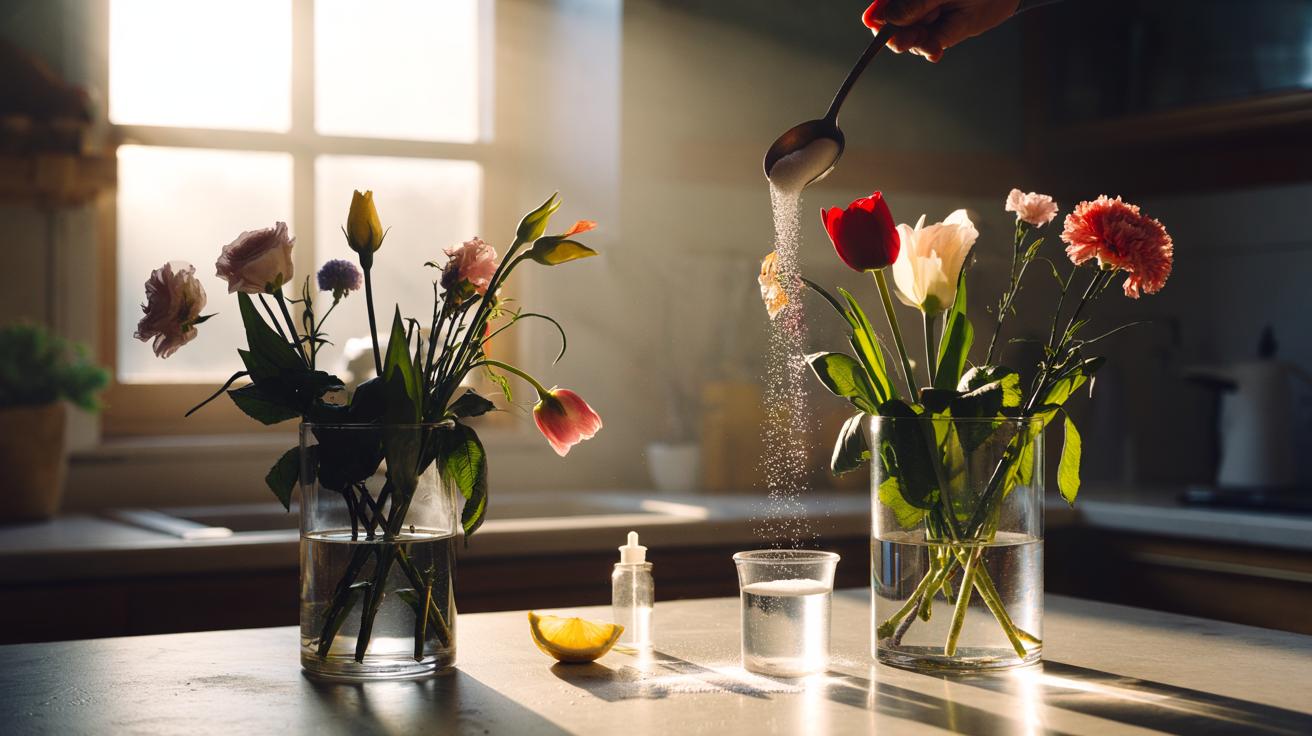
- ⚗️ Use a reliable home mix: 1–2% sugar (2 tsp per litre) + 1 tsp lemon juice + 1/8 tsp bleach in clean, warm water; re-cut stems and strip submerged leaves for a perk-up in 15–60 minutes.
- 🌹 Works best for energy-hungry cuts—roses, carnations, tulips, peonies—while daffodils need time alone and proteas prefer low sugar; if water clouds, scrub the vase, recut, and consider a brief hot-water dip.
- 🧼 Prioritise hygiene and handling: sanitised glass vases, solution changes every 48 hours, daily micro-cuts, correct water temperature by species, and keep foliage above the waterline to suppress microbial growth.
- 💡 Tune the details for longevity: aim for pH 3.5–4.5, use minimal bleach, recut under water to avoid air, and adjust sugar by flower weight—feed the bloom, restrain microbes, manage water flow for standout, longer-lasting arrangements.
Cut flowers flag for one simple reason: they’ve been severed from their food source. A vase is no meadow. Yet, there’s a quick, almost mischievous repair hidden in every kitchen cupboard. A small dose of sugar can jolt stems back to life, sending water racing up the xylem and rebuilding their lost turgor pressure. The effect can be fast. Sometimes minutes, often under an hour. Not magic. Chemistry. Still, results hinge on dose, hygiene, and timing. Re-cut stems, clean the vase, and get the proportions right for the swiftest lift and longer-lasting blooms. Here’s why it works—and how to do it well.
The Science: Sugar, Osmosis, and Turgor
Freshly cut flowers still respire. They burn stored carbohydrates to fuel cell repair, petal colour, and scent. In transit and on shop shelves, those reserves dwindle. Add a modest sucrose source to the vase and you replenish their energy, powering water uptake and maintaining membrane function. Sugar also raises the solution’s osmotic potential, gently drawing water into cells until petals firm. The visible change—droop to poise—often follows the restoration of turgor, the internal pressure that keeps tissues taut. Think of it as inflating a botanical balloon with water, then keeping it inflated with energy to manage cell pumps.
There’s a snag. Bacteria adore sugar, too. They breed on stem ends, building sticky biofilms that clog xylem vessels and cause the dreaded “bent neck”. That’s why commercial flower food isn’t just sugar. It blends a carbohydrate, an acidifier to keep pH low, and a tiny biocide to control microbes. Mimic that balance at home and you’ll get the perk without the penalty. Use sugar to feed the bloom, but restrain microbes and you’ll keep the water highways open.
Quick Fix: A Kitchen Formula That Works
For most mixed bouquets, aim for a 1–2% sugar solution: about 5–10 g per 500 ml of warm, clean water. Add an acidifier and a whisper of disinfectant. A reliable home brew is 2 tsp sugar, 1 tsp lemon juice, and 1/8 tsp household bleach per litre. Stir until dissolved, then pour into a sanitised vase. Re-cut stems at a sharp angle, 1–2 cm up, and strip any leaves that would sit below the waterline. Get those three moves right and many droopy heads lift within 15–30 minutes.
| Vase Volume | Sugar | Acidifier | Bleach | Typical Response |
|---|---|---|---|---|
| 500 ml | 1 tsp (approx. 1–2%) | 1/2 tsp lemon juice | 3–5 drops | 15–45 min perk-up |
| 1 litre | 2 tsp (approx. 1–2%) | 1 tsp lemon juice | 1/8 tsp | 30–60 min perk-up |
Use slightly warmer water for woody stems like roses and lilies; cool water helps bulb flowers such as tulips keep their line. If the room is hot, shade the vase while the tonic takes effect. Don’t overdo the sugar. Above 3% you invite cloudiness, odour, and sudden collapse as bacteria bloom. Clear water, correct dose, and sharp stems: that’s your fast track to revived flowers.
When Sugar Helps—and When It Hurts
Sugar is brilliant for energy-hungry cuts that have travelled far or opened late, including roses, carnations, lisianthus, and alstroemeria. These species respond to added carbohydrates with improved floret opening and colour retention. Tulips and snapdragons perk up, though they still twist toward light. Peonies gain from sugar as buds unfurl. But some flowers are awkward customers. Daffodils exude a sap that shortens the life of companions; let them stand alone for a few hours before mixing. Proteas and some natives dislike rich sugar levels; keep doses low.
If stems feel slimy, see bubbles, or water clouds within a day, you’ve fed microbes, not petals. Fix it. Dump the solution, scrub the vase with hot soapy water, rinse, and remake the mix at 1–2%. Re-cut stems. If necks are already bent, try a hot-water dip (40–43°C for 30–60 seconds) before placing in your sugar solution to clear embolisms. Too much sugar is as risky as too little; balance keeps the xylem open and the bloom upright. Avoid folk hacks like aspirin or copper coins—they adjust pH or tarnish metal, but don’t supply clean, usable carbohydrates.
Pro Tips to Keep Blooms Standing Proud
Think like a florist. Start clean, stay clean. Use a glass vase, sanitised, and change the solution every 48 hours. Keep foliage above the waterline, cut stems daily by a few millimetres, and rotate the vase away from direct sun and radiators. Night-time cool helps. So does airflow. For roses, strip thorns carefully to prevent micro-wounds in the water. For tulips, sleeve them loosely with paper for an hour after conditioning to set their posture. Small, repeated acts of care compound into dramatic longevity.
Match the mix to the bloom. Heavy-headed stems tolerate a touch more sugar; delicate spring flowers prefer less. Acidify to around pH 3.5–4.5 with lemon juice for clearer uptake, and keep bleach minimal—enough to deter bacteria, not enough to scent the room. If a stem still sulks, recut under water to avoid air entering vessels, then give it 20 minutes in your fresh solution. The payoff is visible: petals that hold, colours that sing, and arrangements that last well beyond their receipt.
So yes, a pinch of sugar can be a tiny triumph, transforming sagging stems into poised, drink-happy blooms with startling speed. Feed the flower, tame the microbes, and manage water flow: that trio explains the trick, far more than myth or luck. Keep a measured spoon by the sink and a lemon on standby, and you’re equipped for almost any bouquet crisis. The chemistry is simple; the craft is in the details. Which flowers will you test tonight, and what tweaks will you make to perfect your own vase-side formula?
Did you like it?4.5/5 (22)