In a nutshell
- 🌱 Rice water revives wilted plants by gently feeding soil microbes with starches and amino acids, boosting nutrient availability without the burn risk of strong fertilisers.
- 🧪 Safe prep and use: rinse or soak rice, strain, and apply at a 1:2–1:3 dilution to the root zone; never use salted or seasoned cooking water and always let excess drain.
- 🧊 Storage and hygiene: refrigerate fresh rice water for 48–72 hours max, discard if sour-smelling, and clean tools to prevent biofilm build-up.
- 🚫 When to skip: avoid on succulents and cacti, seedlings, or cases of root rot; don’t combine with recent synthetic feeds; stop and flush if odours or no improvement appear.
- 🧬 Fresh vs fermented: fresh is the safer quick tonic, while fermented offers a stronger microbial boost but needs heavier dilution (1:4–1:6) and very sparing use.
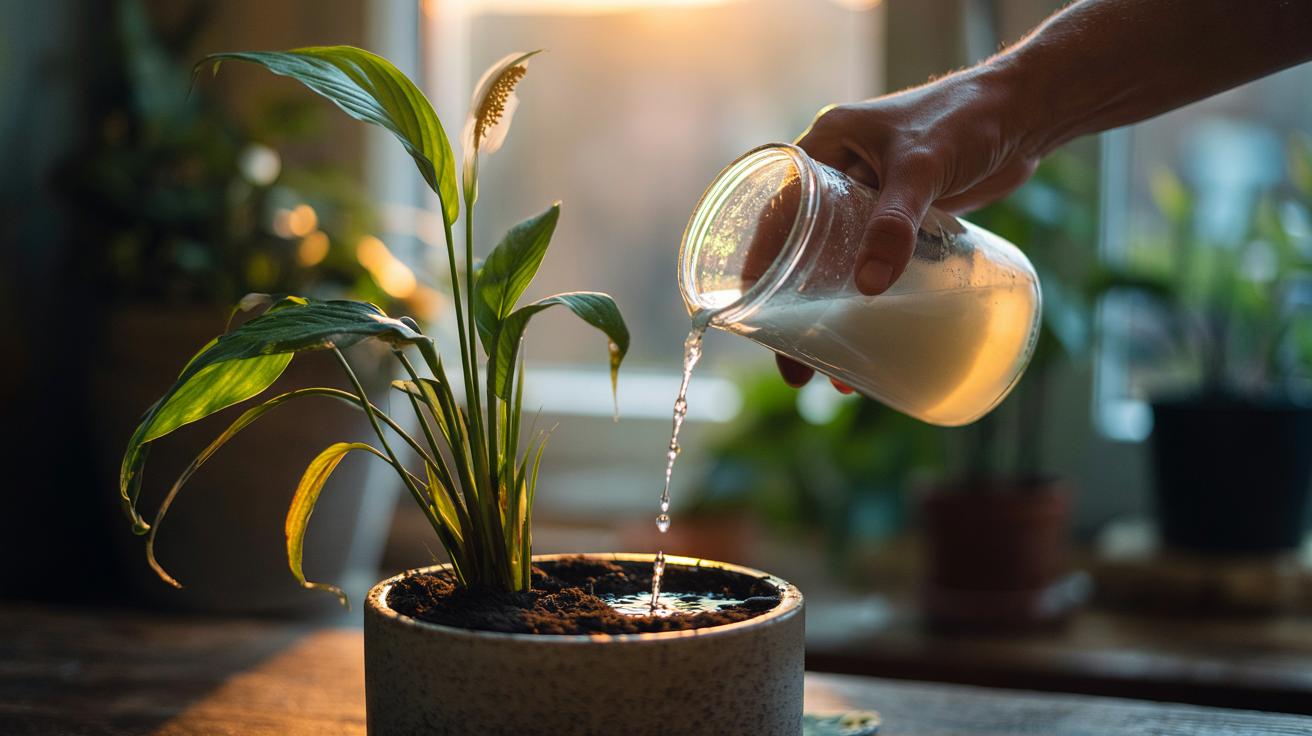
It sounds like folklore. A splash of cloudy water left over from cooking rice, and your wilting spider plant perks up. Yet gardeners from Manila to Manchester swear by it, and with good reason. Rice water carries a gentle cocktail of carbohydrates, amino acids, and trace minerals that can wake up flagging roots without the burn risk of synthetic feeds. Used thoughtfully, it acts as a mild tonic that coaxes new growth and restores turgor after stress. Think of it as a quick pick-me-up rather than a full meal. Here’s how to use rice water to revive tired plants—safely, quickly, and with results you can see.
How Rice Water Works on Tired Houseplants
Wilt signals trouble underground. Roots may be dehydrated, nutrient-starved, or stunned by heat. Rice water helps on three fronts. First, the dissolved starches and simple compounds feed beneficial soil microbes. Those microbes, in turn, unlock nutrients already present in your potting mix, improving availability of nitrogen and phosphorus without spiking salts. Second, a whisper of amino acids and micronutrients supports root metabolism, nudging the plant to rebuild fine root hairs—the tiny absorptive points that make all the difference after drought. Third, the solution slightly improves water retention around the rhizosphere, so each sip counts.
It is not a miracle fertiliser, but a gentle catalyst. Because the nutrients are dilute and largely organic, the risk of leaf scorch or osmotic shock is low. That makes rice water ideal when a plant is already stressed. You get a nudge, not a shove. The mildness is precisely the point: a small push toward balance while the plant regains footing.
There’s also a micro-ecology story. Fresh rice water often carries lactic bacteria from the grain surface. In modest amounts, they can outcompete pathogens in the pot, crowding the root zone with friendly life. Healthy roots live in a bustling, not sterile, soil community. The knock-on effect? Better resilience during heatwaves and a faster rebound after a missed watering.
Preparing and Applying Rice Water Safely
Start simple. Rinse one cup of plain white or brown rice with two cups of clean water, agitating for 30–60 seconds until the liquid turns milky. Strain. That’s your fresh rice water. For a stronger brew, soak the rice for 20–30 minutes and strain. Never use salted, oiled, or seasoned cooking water—kitchen flavour is plant poison. Stronger isn’t better; clarity beats concentration when roots are fragile.
For application, dilute 1 part rice water with 2–3 parts plain water (1:2–1:3). Water the soil thoroughly, then let excess drain. Aim for the root zone, not the leaves. Do not leave pots sitting in runoff, and do not pour rice water onto already soggy soil. For wilted but otherwise healthy tropicals—pothos, peace lily, philodendron—one treatment is often enough to trigger visible perk-up within 24–48 hours. Repeat only after two to three weeks if growth remains slow.
Storage matters. Fresh rice water keeps in the fridge for up to 48–72 hours in a clean, sealed jar. Past that, fermentation accelerates and the mix can go sour. If it smells aggressively like vinegar or rotten eggs, discard it. Clean your watering can between uses to avoid biofilm build-up. When in doubt, make a new batch; the ingredient cost is pennies, and freshness reduces risk.
| Type | How to Make | Dilution | Best Use | Watch-outs |
|---|---|---|---|---|
| Fresh | Quick rinse or 20–30 min soak; strain | 1:2 to 1:3 (rice water:water) | Fast perk-up after minor drought | Short shelf life; keep chilled 2–3 days |
| Fermented | Leave strained rice water loosely covered 24–48 hrs | 1:4 to 1:6 | Microbial boost for tired potting mixes | Odour, acidity; avoid on delicate or succulents |
When to Use It—and When to Skip It
Use rice water when wilting stems from simple underwatering, heat stress, or nutrient sluggishness in mature, leafy houseplants. It shines with tropicals that relish organic inputs: monsteras, ferns, calatheas, and herbs like basil. Apply in the morning on warm days so excess moisture evaporates quickly. Think of it as triage for tired but salvageable plants, not a cure for systemic disease.
Skip it in a few scenarios. If leaves are yellowing from root rot, adding organic solution can worsen the anaerobic party. For succulents and cacti, the extra carbs invite fungi; give them bright light and sparse, plain water instead. Avoid on seedlings under two weeks old, where delicate roots prefer sterile conditions. And do not use after a heavy feed with synthetic fertiliser; the combined load can stress roots.
Watch the plant, not the calendar. Perk-up within a day or two? Great—switch back to normal watering. No response, or a sour smell from the pot? Stop immediately, flush with clean water, and improve drainage. A small soil refresh—replacing the top 2–3 cm with fresh, airy mix—often pairs well with the rice-water nudge, preventing compaction and restoring oxygen to the root zone.
Fermented vs Fresh: Choosing the Right Brew
Fermented rice water is a different beast. As naturally occurring lactic acid bacteria multiply, pH drifts slightly acidic and microbial populations spike. That can be helpful in potting mixes that have gone tired and inert, jump-starting biological activity that mobilises micronutrients like iron and manganese. But potency brings risk. Always dilute fermented rice water more heavily—at least 1:4—and introduce it sparingly. One light application per month is ample for most houseplants.
Fresh rice water is the safer default. It delivers a mild carbohydrate pulse without dramatic microbial shifts, making it the better choice for quick revivals and routine maintenance. Fermented blends suit experienced tinkerers who can read their soil and adjust. If you try fermenting, keep the jar loosely covered at room temperature for 24–48 hours, then refrigerate and use within three days. Any rancid or sulphurous odour is a red flag—discard and start over. Your goal is gentle support, not a science experiment gone wrong.
Rice water won’t replace a good care regime—light, drainage, and correct watering are still king—but it earns a spot in the toolkit. It’s frugal, low-risk, and can turn a limp plant around while you address deeper issues. Less is more, and consistency beats heroics. Try a small, diluted dose on one struggling plant and observe. If it perks up, scale cautiously. If not, troubleshoot roots and soil first. After all, the best revivals begin below the surface. Which plant on your windowsill deserves a gentle rice-water rescue this week?
Did you like it?4.5/5 (29)