In a nutshell
- 🌱 The science: sugar water supplies instant carbohydrates that power respiration and ion pumps, restoring cellular turgor pressure and improving water uptake via osmosis.
- 🧪 Ratios and additives: For cut flowers use 1–2 tsp sugar/L (woody stems 2–3 tsp/L), add a pinch of citric acid and about 1/4 tsp bleach/L; for houseplants, one-time only at ≤1 tsp/L with no bleach.
- 🛠️ Method: Clean the container, re-cut stems at an angle, place deep in the solution, and keep in a cool, dim space overnight; if still limp, re-cut under water and refresh the mix.
- ⚠️ Cautions: Sugar fuels microbes—watch for slime or odour, change cloudy water, and avoid using on succulents/cacti or plants with fungal/gnat issues; for potted plants, treat once and flush later.
- 🎯 Results and aftercare: Expect perkier stems and lifted heads by morning, but remember rescue is temporary—address causes like heat stress, underwatering, blunt cuts, or dirty containers, and consider balanced flower food.
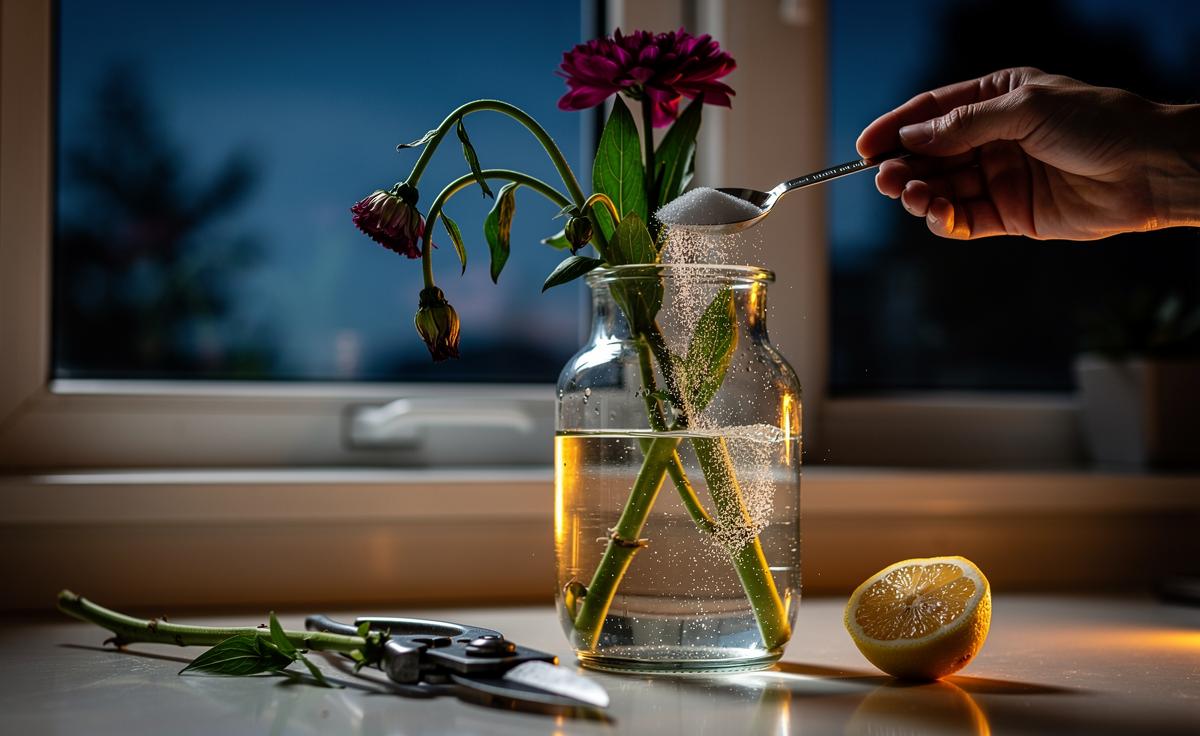
Wilted stems look tragic by dusk, then spring back by dawn. It feels like magic, yet there’s a simple trick behind the turnaround: sugar water. For cut flowers and certain soft-stemmed houseplants in short-term distress, adding a dash of sucrose to clean water can restore turgor pressure and perk up flagging blooms. The effect is swift. Overnight, even tired roses stand straighter, foliage firms, colour returns. Not snake oil, but careful chemistry. Used sparingly and correctly, sugar water can act as a stop-gap rescue that buys your plant valuable time. Here’s how the science works, what ratios to use, and when to say “no” to sweetness.
The Science Behind Sugar Water and Stem Turgor
Plants power cellular repair with carbohydrates. After cutting, a stem’s own reserves run down quickly, which is why vases see droop and petal collapse. Add a modest dose of sucrose and you supply an immediate, digestible fuel. The stem metabolises the simple sugars, driving respiration, ion pumps, and the water-moving machinery that rebuilds pressure within cells. That restored pressure—turgor—is what makes a floppy stem stand tall again. Equally vital is osmosis: a slightly higher solute concentration in the vase can encourage water uptake, pulling moisture up the xylem like a siphon.
There’s a catch. Sugar is just as tasty to microbes as it is useful to stems. Bacteria bloom, clogging vascular tissue and souring the water. This is why florists pair sugar with an acidifier and a trace of disinfectant; both suppress biofilm and keep conducting vessels open. In living potted plants, sugar in the soil fuels fungi and gnats, so the approach is different. Think controlled, surface-level hydration or a brief, dilute rescue only. Sugar water excels with cut flowers and soft herbaceous cuttings; for rooted houseplants it’s a last resort.
Overnight Rescue: Preparation and Method
Start clean. Rinse a vase or jar with hot water, then cold. Trim 1–2 cm from the stem ends at a sharp angle; for woody stems, split or lightly crush the base to open more xylem. Mix lukewarm water with 1–2 teaspoons of sugar per litre. Add a pinch of citric acid or lemon juice to lower pH, plus about 1/4 teaspoon of unscented household bleach per litre to hold bacteria at bay. Clarity matters—if the solution clouds, change it.
Place the stems deep in the solution and move them to a cool, dim space. Darkness slows photosynthesis, diverting energy to repair rather than growth. Avoid heat sources and draughts. In many cases—roses, tulips, dahlias—the difference by morning is striking: petals regain shape, foliage de-crumples, heads lift. If a stem still sulks, re-cut under water and refresh the solution. For rooted houseplants that have flagged after sudden heat or missed watering, skip the bleach and use a very weak mix—no more than 1 teaspoon sugar per litre—applied as a single, light watering or a brief 10–15 minute soak. Never make sugar feeds routine for potted plants.
Ratios, Results, and Cautions
Precision prevents mishaps. Too much sugar draws water out of cells—exactly the opposite of what you want. Aim for 0.1–0.2% sugar for most cut flowers, nudging to 0.3% for carbohydrate-hungry blooms like dahlias. Keep stems and water scrupulously clean, and change the solution after 12–24 hours if you need a second night. Watch for slime or smell; either signals microbial bloom and blocked uptake. For houseplants, use sugar sparingly and once only, then flush with plain water a few days later.
Some plants are exceptions. Succulents and cacti don’t want sugary baths. Nor do plants with fungal issues or gnat infestations. In those cases, focus on hydration, temperature, and light. Consider pairing sugar water with a commercial flower food when available; those formulas balance sugar, biocide, and acid for you. And remember the big picture: revive tonight, then fix the cause—heat stress, underwatering, stale cuts, or dirty containers—tomorrow. Rescue is temporary; good care is the cure.
| Use Case | Sugar Ratio (per litre) | Additives | Duration | Expected Result |
|---|---|---|---|---|
| Cut flowers (soft stems) | 1–2 tsp (0.1–0.2%) | Pinch citric acid + 1/4 tsp bleach | Overnight | Improved turgor, open petals |
| Cut flowers (woody stems) | 2–3 tsp (0.2–0.3%) | As above | Overnight, repeat once if needed | Lifted heads, firmer stems |
| Potted plant emergency | 1 tsp max | Optional pinch citric acid, no bleach | 10–15 min soak or light water | Subtle perk-up; one-off only |
Sweetness can be a saviour when used with care. A measured dose of sugar water, a clean container, and a cool night are often enough to restore stem vitality and buy time for proper aftercare. The real victory is not the overnight miracle, but preventing tomorrow’s wilt with sharp recuts, fresh water, and steady conditions. Will you try the sugar solution tonight—and if you do, which tired bloom or houseplant will you nominate for a midnight revival experiment?
Did you like it?4.5/5 (27)